Filipe Lins Duarte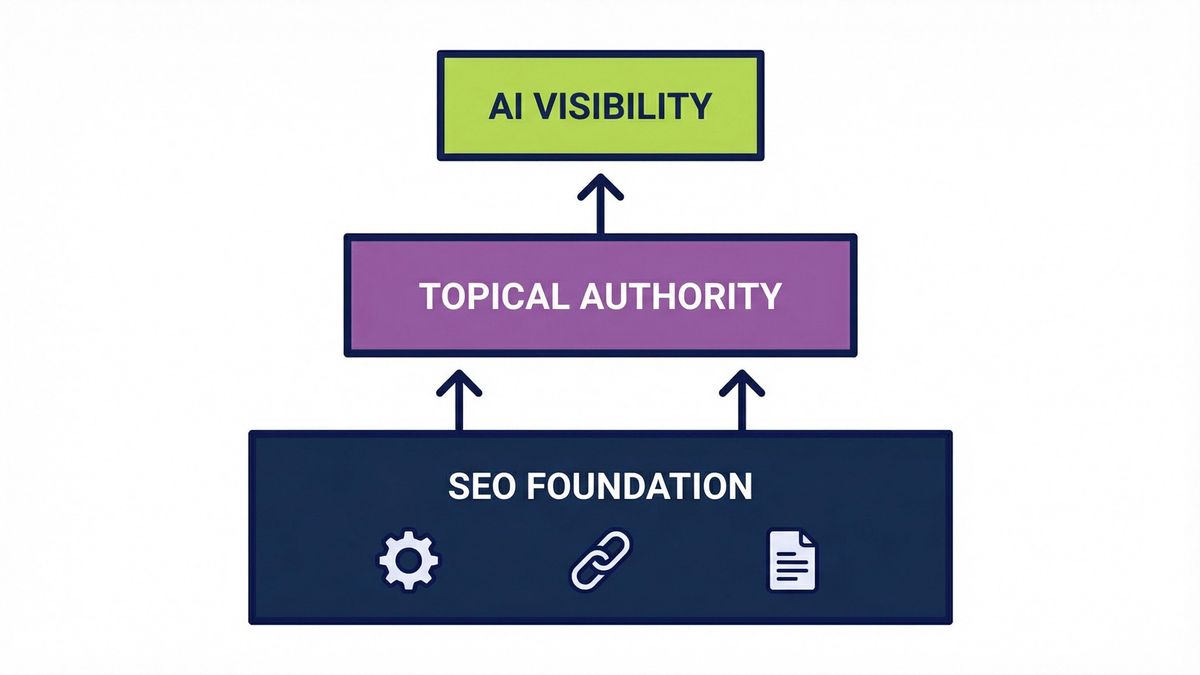
Every few years, someone declares SEO dead. It happened when social exploded. It happened when voice search was supposed to kill keywords. And it is happening again now, louder than before, because of AI.
The questions hitting marketing teams' inboxes are real: should we keep investing in organic search? Does ranking on Google still matter when ChatGPT is answering questions directly? Is the SEO budget better spent elsewhere?
The honest answer is that SEO not only still matters but for most brands it matters more than ever. The "why" is where most of the current conversation is getting it wrong.
Google Is Still the Search Giant
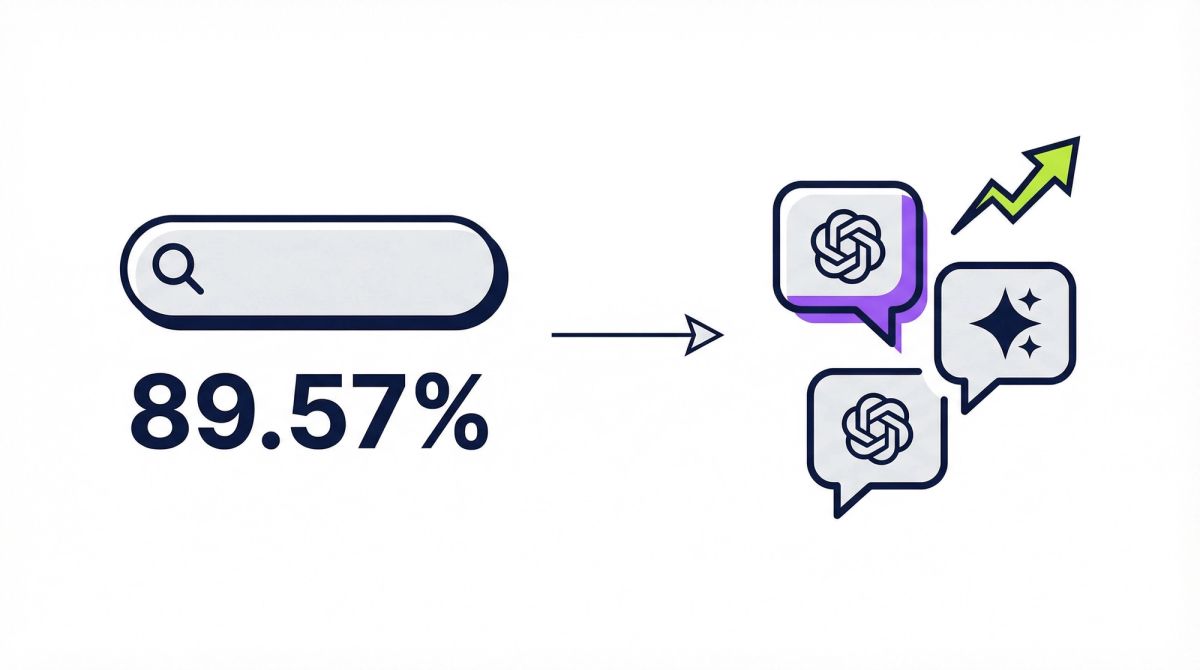
Let's start with the baseline. As of July 2025, Google holds 89.57% of the global search market. Here is how that breaks down across the major platforms:
| Search Engine | Global Market Share |
|---|---|
| 89.57% | |
| Bing | ~4% |
| Yahoo | ~1.3% |
| All others (incl. AI-native tools) | <6% |
In raw volume terms, Google processes roughly 8.5 billion searches per day. ChatGPT, the clear leader in AI chatbot traffic, processes somewhere between 10 and 15 million queries per day at optimistic estimates. That is not a rounding error. That is a fundamentally different scale.
Google's desktop market share has also declined modestly in recent years, with Statista recording it as low as 79.1% in March 2025, the lowest figure ever captured in their tracking data. Whether that specific reading reflects a regional dip or a genuine trend, the direction is clear: alternatives are gaining ground at the edges, and the share Google would have taken for granted is no longer automatic.
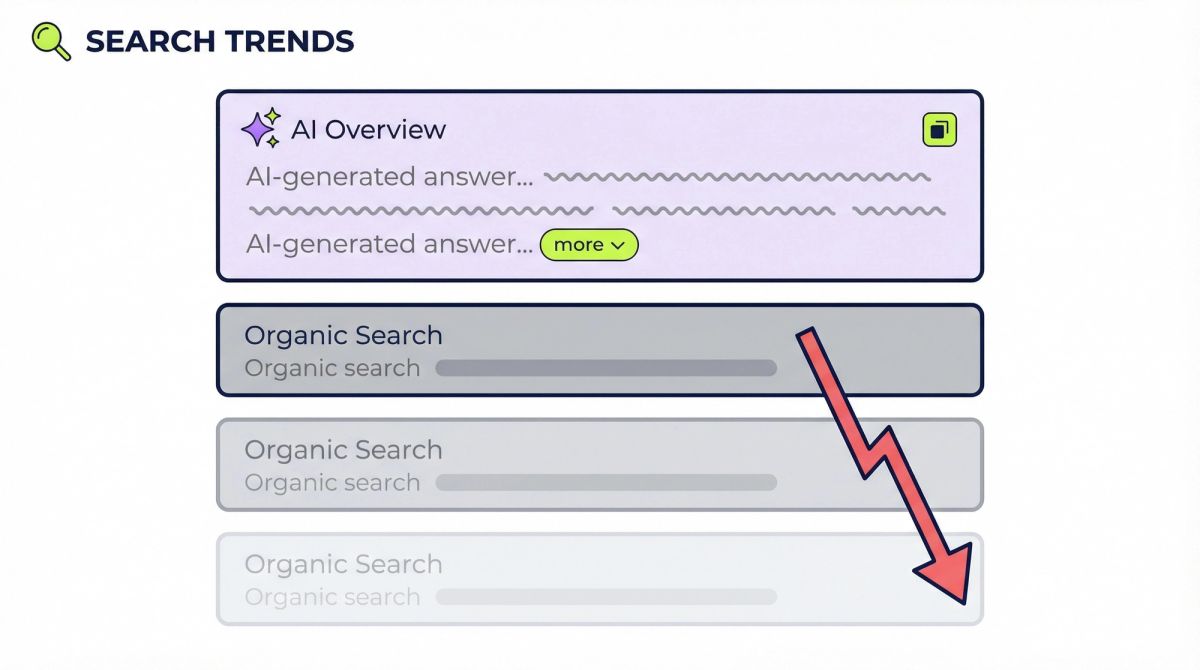
More urgently for SEOs: according to research from ALM Corp and The Digital Bloom, organic click share dropped 11 to 23 percentage points across multiple verticals between January 2025 and January 2026. Health, finance, and informational categories took the hardest hits. Google's own AI Overviews are answering queries directly on the results page. The traffic is still flowing through Google. More of it is just stopping there.
I think the mistake most teams make is treating this as a binary signal, either "SEO is fine" or "SEO is over." Neither is true. The channel is intact. The reward structure is changing.
AI Search Is Growing Faster Than Anyone Expected
While Google is still the ocean, AI search tools are becoming significant rivers.
As of July 2026, ChatGPT holds 52.7% of the generative AI chatbot market, Google Gemini is at 27.7%, and Claude at 10.3%. Microsoft Copilot has fallen to 1.3% and Perplexity sits at 2.0%. Those are not small numbers.
The referral traffic from these tools is now measurable. According to Search Engine Land, LLM-referred sessions grew 527% year over year as of August 2025, from a small baseline, but the trajectory is unmistakable. For most brands, LLM-referred traffic still represents a fraction of overall organic volume, but it is the fastest-growing acquisition channel in the stack.
And there is a quality signal in that data worth paying attention to. According to Semrush, visitors arriving from LLM tools convert 4.4 times better than visitors arriving from organic search. This is most likely because LLM recommendations represent higher-intent traffic. Someone who got a recommendation from an AI assistant and clicked through is not browsing. They are evaluating. The intent is categorically different.
What is happening is a shift in how people express search intent. Conversational AI is capturing the "help me think through this" queries. Google is still capturing "I need to find X right now." Both matter. Neither is disappearing.
The Part Most People Get Wrong: AI Visibility Runs on SEO
This is the argument most discussions in 2026 are still missing. AI visibility is not a replacement for SEO. It is built on top of it.
I would argue this is the single most underrated insight in the current conversation about AI search. Not because it is complicated, but because the marketing industry has a habit of framing new channels as replacements rather than layers. Taking a layered approach also helps businesses evaluate what is a good ROAS by measuring how AI search and other marketing channels work together to drive conversions and maximize overall campaign performance.
LLMs are trained on crawlable content. ChatGPT, Gemini, Claude, Perplexity: these models learned what they know by processing massive amounts of publicly available text. If your website is not crawlable, not indexed, and not producing quality content that earns links and trust signals, you are invisible to the training data. You cannot appear in AI answers for a topic you have no documented authority on.
Topical authority and AI citations are strongly correlated. Brands that rank well across a cluster of related keywords on Google tend to be cited more frequently in AI answers on that topic. The causation is not perfectly isolated, but the pattern is consistent: the same signals that drive Google rankings appear to influence AI citation patterns. Both systems reward depth, trust, and relevance. If you want to dig into the mechanics, we have written a detailed breakdown of how topical authority works in AI search.
Backlinks are trust signals for both. The same off-page signals that tell Google a source is trustworthy flow through to how AI models weight and cite content. A site with strong editorial backlinks from credible publications is more likely to appear in AI-generated answers than a site with thin content and no external validation.
Technical SEO still determines accessibility. A site that loads slowly, has crawl errors, uses JavaScript-heavy rendering that blocks bots, or has thin duplicate content is going to rank poorly on Google and be poorly represented in AI training corpora and real-time retrieval systems like Perplexity's live web search. You cannot fix AI visibility without fixing the technical foundation first.
Structured content is LLM-friendly content. Clear headers, concise direct answers before elaboration, schema markup, FAQ sections, clean HTML structure: all the good SEO writing principles from the last decade translate almost perfectly to content an LLM can parse, quote, and cite. Both Google's ranking algorithms and LLM summarisation systems reward content that is well-organised and directly answers questions.
What some are now calling Generative Engine Optimization (GEO) is really SEO with a few extra layers. Optimising for citation rather than just ranking, building entity recognition through consistent brand mentions, structuring content so AI summaries quote you accurately. But the foundation is identical. If your SEO is solid, you have a base to build AI visibility from. If your SEO is neglected, you are starting from zero on both channels.
According to Abner Molina, founder of Doc Digital SEM, the brands winning in AI search are not replacing SEO. They are strengthening the crawlable, structured, entity-rich content that LLMs depend on, then layering citation tracking, prompt testing, and authority building on top. A strong LLM SEO strategy connects technical SEO, topical depth, digital PR, and AI visibility tracking into one system designed for both search engines and AI-generated answers.
What Is Actually Changing in SEO in 2026
The fundamentals are stable. But the way success is measured, and the types of content that perform, have shifted considerably.
Zero-click is real and accelerating. Google's AI Overviews now appear across a wide range of informational queries. Someone searching "what is domain authority" is likely getting an answer in the AI Overview box before they ever see a traditional result. The organic click share data from ALM Corp captures the downstream effect: drops of 11 to 23 percentage points across verticals in a single year. That is not gradual erosion. That is a structural shift in where informational queries resolve.
The new KPI is citations, not just rankings. A brand that ranks third for a keyword but gets cited in AI Overviews and ChatGPT answers is extracting more brand value from search than a brand that ranks first but does not appear in AI-generated responses. AEO (Answer Engine Optimization) focuses specifically on getting content cited in AI-generated answers, as distinct from traditional SEO which optimises for rankings and clicks. The measurement frameworks differ: SEO success is tracked through positions and click-through rates, while AEO success is tracked through citation frequency and LLM referral traffic. For a closer look at how those differ in practice, the comparison between SEO and AEO is worth reading.
Brand authority and entity recognition matter more. Google and LLMs both want to know: who is this, and are they a real recognised entity? Wikipedia mentions, consistent brand information across the web, authoritative press coverage, verified profiles: all of these entity signals are becoming more critical as AI systems try to distinguish credible sources from noise. In my experience working with brands on AI visibility, the ones struggling most are often those that skipped entity-building for years. Whether that pattern holds universally across all industries I cannot say, but among the brands we work with at Peekaboo, the correlation is strong.
Transactional queries are holding strong. “Buy noise cancelling headphones under $200” is not a query AI Overviews will answer definitively. It drives users to specific pages. Strong product visuals for ecommerce store pages can play a major role in converting that audience.
The traffic hit is concentrated on informational long-tail queries. If your strategy has been heavily weighted toward top-of-funnel informational content, that is where you need to rethink. Transactional and navigational content is holding up well.
The long-tail informational content model is under serious pressure. If your site relies on 500-word "what is X" articles, that model is struggling. AI is simply better at answering those questions than a listicle. The content that survives goes deeper: original data, unique perspectives, expert opinions, documented case studies, and proprietary insights that AI cannot generate from its training data.
What This Means for Your Strategy
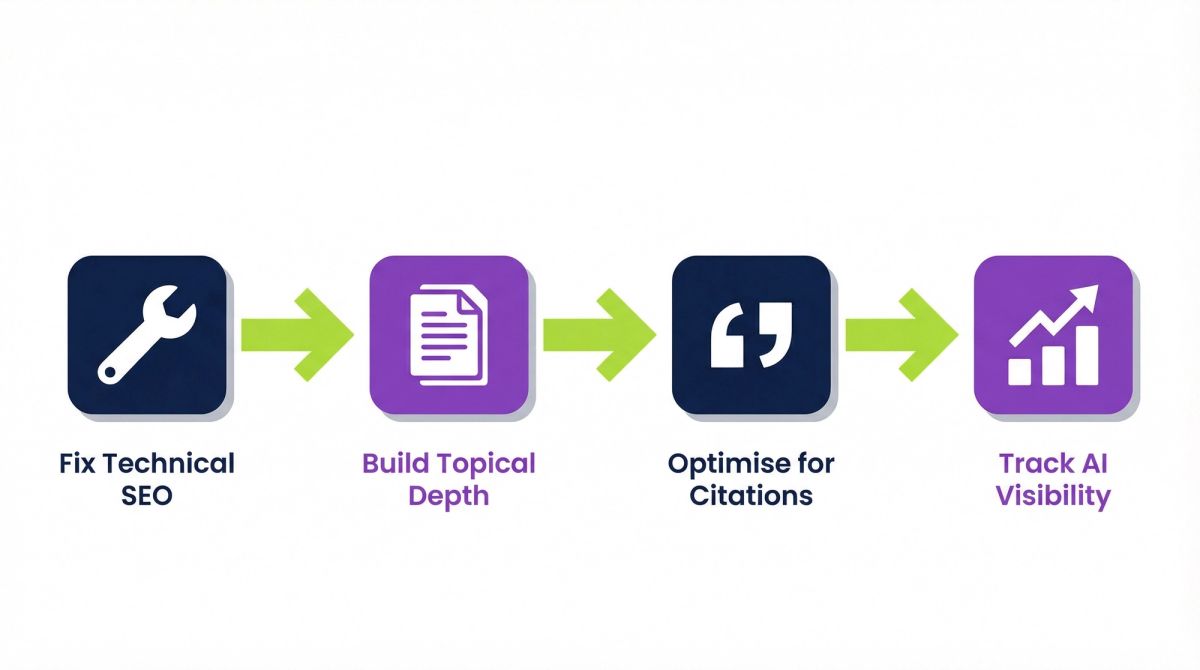
Do not abandon SEO. Technical health, crawlability, internal linking, site architecture, and page speed are the infrastructure that determines your visibility across every surface, including AI. If your technical foundation is weak, fix it before anything else.
Prioritise depth over breadth. Generally, one thorough, well-sourced, expert-level piece on a topic outperforms ten thin articles on adjacent topics in both rankings and AI citations. The optimal balance depends on your audience and content distribution capacity, but as a default, depth compounds in ways breadth does not.
Write in a way that a language model can quote a sentence from your content and have it stand alone as a useful answer, much like a well-crafted output from an AI book writer that is built to be clear, precise, and self-contained.
Add AI visibility tracking as a measurement layer. Ranking reports are no longer sufficient to capture the full picture of your search presence. You need to know how your brand appears across AI search surfaces, whether ChatGPT recommends you when someone asks about your category, whether Gemini cites you when discussing your topic area. Understanding how to measure AI visibility is a practical starting point. Tools like AI Peekaboo are built specifically to track this layer, monitoring brand visibility across ChatGPT, Gemini, Perplexity, and Google AI Overviews, and giving you the data you need to optimise for citations, not just rankings.
That measurement layer is where Peekaboo sits for SEO agencies. It exposes a REST API and an MCP server, so an AI assistant can answer questions about brand visibility on request, and because it connects to Google Search Console and Analytics 4, citation data lands next to the rankings and traffic you already report on.
Build the brand signals that AI systems trust. Earn coverage in authoritative publications. Maintain consistent brand information across the web. Develop relationships with industry voices who reference your work. These activities have SEO value and AI citation value. The two are the same investment.
The Verdict
SEO still matters enormously in 2026. Google commands nearly 90% of global search traffic, processes 8.5 billion queries daily, and remains the primary discovery surface for most products, services, and information on the internet. The case for abandoning SEO is not supported by data.
But the definition of SEO success is genuinely changing. Ranking first for a keyword in a world where AI Overviews answer the query before users reach organic results is worth less than it was two years ago. A brand that is invisible in AI-generated answers is leaving a significant and growing share of high-intent discovery on the table.
The brands winning in 2026 are not choosing between SEO and AI visibility. They are understanding that AI visibility is SEO's next evolution. And they are building for both.
Frequently Asked Questions
Does SEO still matter in 2026?
Yes, and for most brands it matters more than ever. Google holds 89.57% of the global search market as of July 2025 and processes 8.5 billion queries daily, so it remains the primary discovery surface for most products and services.
How much of the search market does Google still hold?
Google holds 89.57% of the global search market as of July 2025. Bing sits at roughly 4%, Yahoo at about 1.3%, and all other engines including AI-native tools together account for under 6% of global search.
How fast is AI search actually growing?
Fast, but from a small baseline. As of March 2026 ChatGPT holds 60.4% of the generative AI chatbot market, Gemini 15.2% and Copilot 12.9%. Perplexity grew 370% year over year in 2025, and LLM-referred sessions grew 527% year over year as of August 2025.
Which content is losing the most traffic to AI answers?
Informational long-tail content is taking the hit. Transactional and navigational queries are holding up well, because a search like buy noise cancelling headphones under $200 is not something AI Overviews answer definitively, so it still sends users to pages.
Should I move my SEO budget into AI visibility instead?
No, the data does not support abandoning SEO. AI visibility runs on the same content and authority signals SEO builds, and LLM-referred traffic is still a fraction of organic volume for most brands, even though it is the fastest-growing channel in the stack.