How to show up in AI Search: Topical Authority
Everyone in marketing is asking the same questions:
"Which prompts do we rank for in ChatGPT?"
"How visible are we across AI answers?"
Stop chasing individual prompts. AI systems think in topics, not keywords. Learn how to build topical authority that makes your brand the trusted source AI models cite across entire subject areas.

Everyone in marketing is asking the same questions:
"Which prompts do we rank for in ChatGPT?"
"How visible are we across AI answers?"
"What's our LLM score this week?"
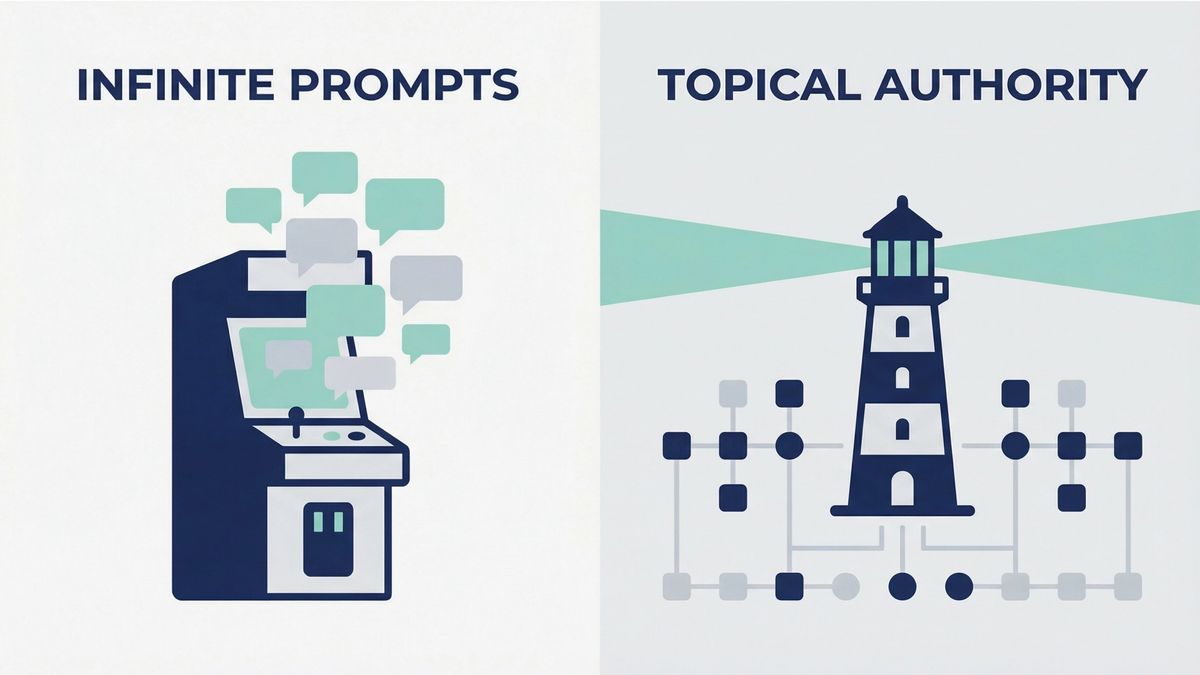
That framing misses the point. AI systems don't think in prompts. They think in topics.
Prompts are infinite, ephemeral, and user-specific. Topics are stable, learnable, and defensible. If you want durable visibility in AI search, you don't track individual questions; you track whether your brand shows up consistently across an entire topic space. That's the fundamental shift marketers need to make:
This article breaks down why prompt-chasing fails, what actually influences AI citations, and how your team should rethink measurement for the new era of search.

For years, SEO has been about identifying high-intent keywords and creating content to rank for them. It's tempting to apply the same logic to AI search by treating prompts as the new keywords. But this approach is flawed from the start.
Unlike a finite set of high-volume keywords, prompts are limitless. Every user asks questions in a slightly different way, using unique phrasing, context, and conversational history. Trying to track and rank for every possible variation is an impossible, never-ending game of whack-a-mole. You might show up for "best CRM for startups," but disappear for "which CRM is good for a new business?" even though the intent is identical.
The problem goes deeper than just volume. Prompts are also highly contextual. The same question asked by two different users can yield completely different answers based on their previous conversation history, location, and even the time of day. This makes prompt-level tracking not just impractical, but fundamentally unreliable as a measurement framework.
Focusing on individual prompts forces you into a reactive cycle, constantly chasing ephemeral queries instead of building a lasting presence. It's a strategy built on sand. The alternative is to shift your focus to the underlying topics that drive those prompts.
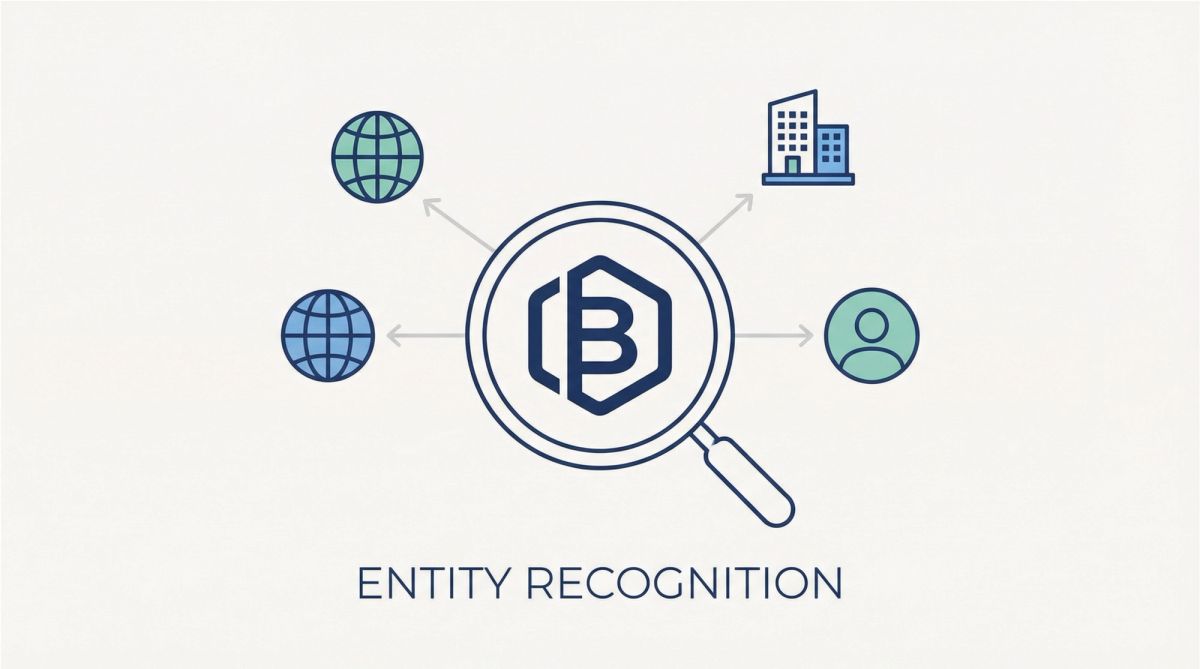
Large Language Models (LLMs) like ChatGPT and Gemini don't just fetch answers; they build a web of understanding by connecting concepts, entities, and information into a vast knowledge graph. They don't just learn that your brand name is associated with a specific string of words; they learn what your brand is and what it's an authority on.
To become a trusted source for an LLM, you need to demonstrate deep expertise across a specific subject. This is what we call Topical Authority. It's built on a few core pillars:
When you build topical authority, the AI doesn't just learn to cite you for one prompt. It learns to trust you as a reliable source for an entire category of questions. You stop chasing individual queries and start owning the entire conversation.

One of the most important types of content for building topical authority is what we call Bottom-of-Funnel (BoFu) content. This is content that targets users who are already in the decision-making phase and ready to take action. In the context of AI search, BoFu content is especially powerful because it aligns perfectly with how users interact with LLMs.
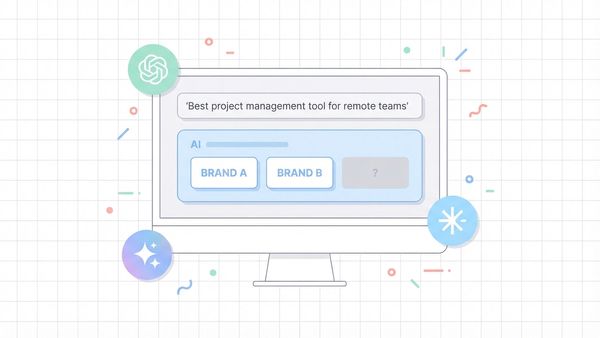
When someone asks ChatGPT or Gemini a question like "What's the best project management tool for a small team?" or "What are the top alternatives to Asana?", they're not looking for a broad overview. They're looking for specific recommendations, comparisons, and actionable next steps. This is high-intent, decision-stage content, and it's exactly where AI models are most likely to cite authoritative sources.
BoFu content includes:
The reason BoFu content is so effective for AI visibility is simple: it directly answers the questions users are asking. And because these questions are high-intent, the AI is more likely to provide detailed, specific answers that include citations and recommendations. If you've built strong topical authority around these decision-stage topics, you'll be the source the AI turns to.
At Peekaboo, we've seen this play out in real time. By creating comprehensive "best alternatives to" and "best tools for" articles across our core topics, we've been able to capture high-intent traffic from users who are actively evaluating AI visibility solutions. These articles don't just rank well in traditional search; they're the content that AI models cite when users ask for recommendations.
So, how do you decide which topics to focus on? It's not about picking the broadest category possible. It's about finding a niche where you can become the undisputed expert. Here's a simple framework:
At Peekaboo, we faced this exact challenge. Instead of trying to rank for every possible prompt related to AI visibility, we decided to focus on a specific niche where we knew we could be the best: white-label solutions for agencies.
We knew agencies were a core customer segment, and they had a unique need that wasn't being fully addressed by other tools. So, we set out to build topical authority around it. We created a dedicated landing page for our white-label features, wrote blog posts comparing the best white-label tools, published case studies showing how agencies use our platform, and ensured our pricing and feature set clearly catered to agency workflows. We didn't just mention "white-label" once; we made it a central part of our identity.
The result? We started getting inbound leads from agencies who told us they found us by asking ChatGPT questions like, "Which AI visibility tools offer white-labeling for clients?" They didn't search for our brand name or a specific keyword. They asked a question about a topic, and because we had established ourselves as an authority on that topic, the AI recommended us. We didn't chase the prompt; we owned the subject.
This shift requires a new approach to measurement. Instead of tracking thousands of individual prompts, you should be tracking your visibility across a curated set of topic clusters. For each topic, you should monitor:
By focusing on these metrics, you move from a reactive, short-term strategy to a proactive, long-term one. You stop playing a losing game and start building a durable, defensible moat in the new landscape of AI search.
The era of keyword ranking is giving way to the era of topical authority. Chasing individual prompts is a distraction from the real work: building a brand that AI models recognize as a trusted expert in a specific domain. By focusing your efforts on owning subjects, creating comprehensive content (especially high-intent BoFu content), and building strong trust signals, you can move beyond the frantic chase for visibility and build a lasting presence that drives business results. The question isn't whether you rank for a specific prompt today; it's whether you're the authority on the topics that matter tomorrow.
I'm Filipe, the CEO & Co-Founder of Peekaboo. I lead all commercial and customer facing functions here at the company. I am obsessed about making sure our customers are heard and have a great experience with us!