Why Your Content Isn’t Getting Indexed (and How to Find Out for Free)
February 23, 2026
7 min read
F
By Filipe Lins Duarte
'Crawled, currently not indexed' with no explanation? Google Search Console won't tell you quality issues, but Bing and Yandex will. Bing's Content Quality flag explicitly shows rejected pages. Yandex distinguishes Low-Value (thin content) from Low-Demand (no search volume).
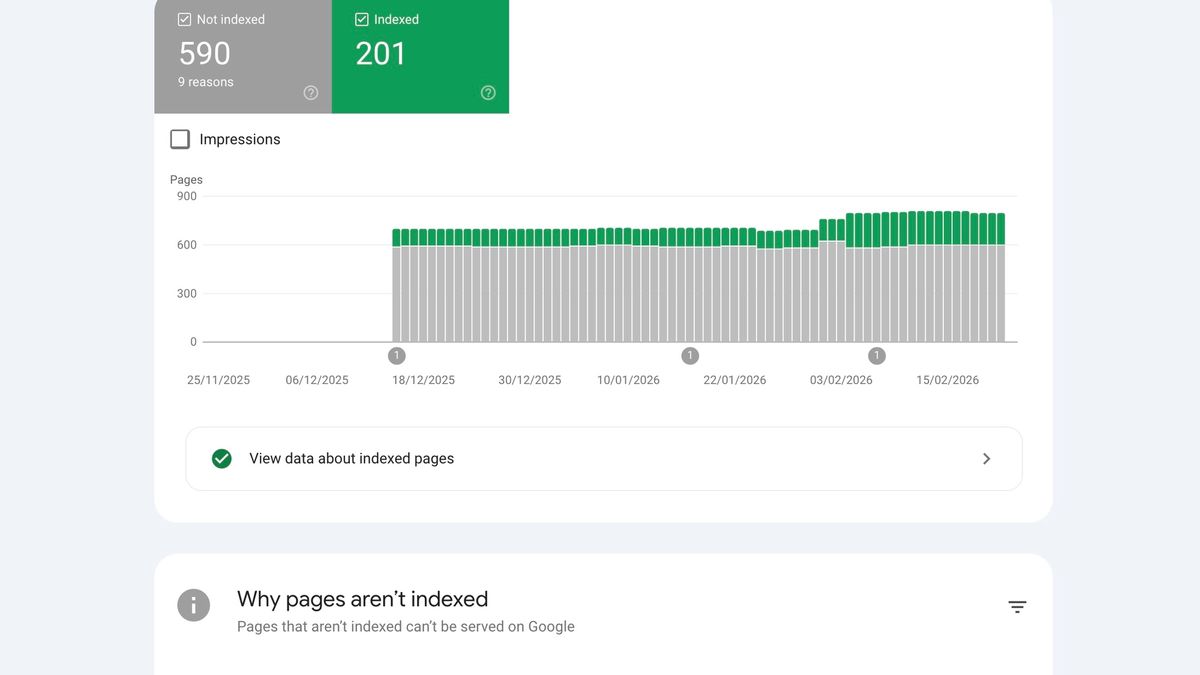
If you’re in SEO, you know the frustration. You publish a new page, submit it to Google, and you get back the same vague message: “Crawled, currently not indexed.” That’s it. No explanation. No reason. You’re left completely in the dark.
Indexing problems generally fall into two categories: technical issues and quality issues. Technical problems, like a robots.txt block or a noindex tag, are usually straightforward to fix. Quality issues are much harder to diagnose. While Google’s that their algorithms look at “overall website quality,” Google Search Console (GSC) never actually tells you which pages are dragging your site down. This article focuses on how to diagnose those tricky quality-related problems.
While Google keeps its quality signals locked away, two other major search engines, Bing and Yandex, give you the diagnostic data you need for free. Most SEOs are so focused on Google that they never even think to check them. Here’s how you can use these tools to finally understand why your content isn’t making the cut.
Check robots.txt: Make sure you don’t have a Disallow rule that is accidentally blocking the URLs you want indexed.

Check for noindex Tags: Inspect the HTML of your page and make sure there isn’t a <meta name="robots" content="noindex"> tag present.
Review Core Web Vitals: While not a direct indexing block, pages with extremely poor performance can sometimes be deprioritized. A quick check in GSC is a good idea.
If you’ve ruled out these basic technical problems, it’s time to dig into the quality signals.
Use Bing Webmaster Tools to Uncover Content Quality Issues
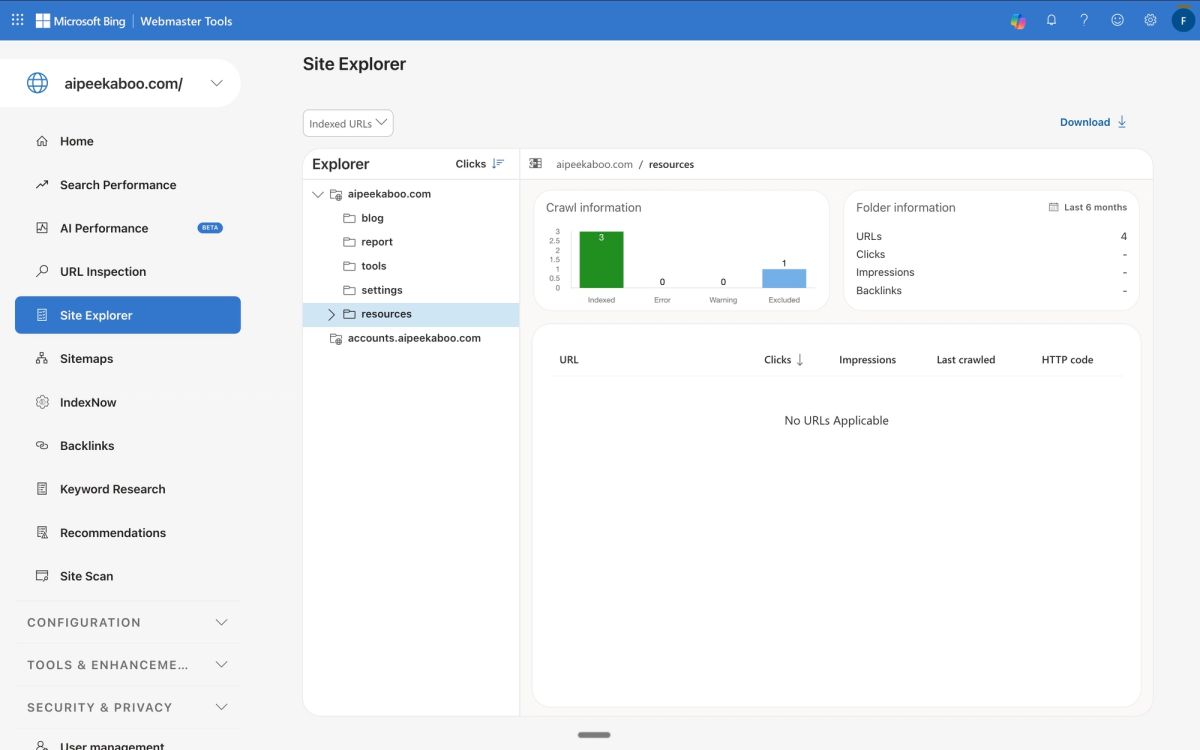
While GSC is intentionally vague, Bing Webmaster Tools gives you a surprisingly clear signal. Inside the Sitemaps section, you’ll find the XML Sitemap Coverage Report. This report looks similar to Google’s, but it has one critical difference: a status called “Content Quality.”
This isn’t some generic “excluded” status. It’s an explicit flag that tells you Bing’s crawler reviewed your page and rejected it specifically because it didn’t meet its content quality standards. It gives you a list of the exact URLs that Bing considers low quality. This is the kind of transparency that SEOs have been asking Google for for years.
Actionable Step 1: Find Your Low-Quality Pages with Bing
Verify Your Site: If you haven’t already, set up your site in Bing Webmaster Tools. It’s free and you can import your GSC settings to get started in minutes.
Navigate to the Sitemap Report: In the left-hand menu, go to Sitemaps. Click on your sitemap to open the coverage report.
Look for the “Content Quality” Flag: In the “Excluded” tab of the report, you’ll see a list of reasons why pages aren’t being indexed. Look for the “Content Quality” category.
Analyze the URLs: Export the list of URLs that Bing has flagged. Cross-reference this list with the “Crawled, currently not indexed” report in GSC. Any URL that appears on both lists is almost certainly being held back by a quality issue.
Get Even More Granular with Yandex Webmaster Tools
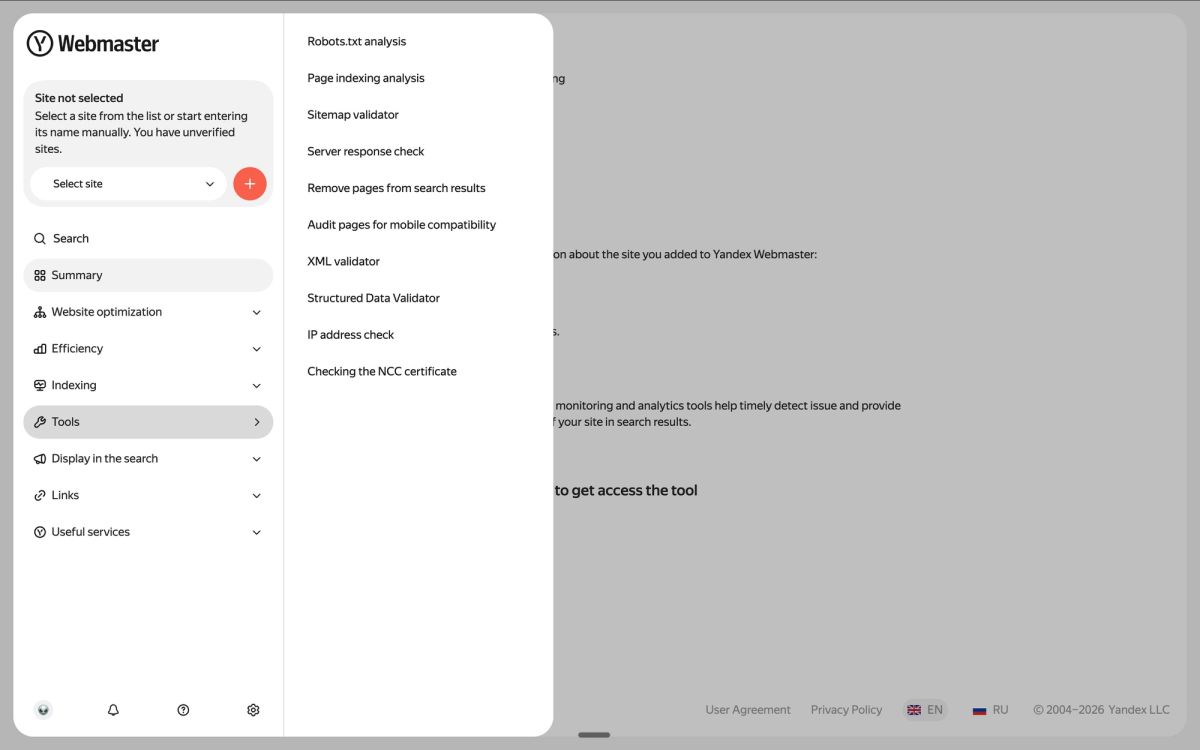
Yandex, Russia’s largest search engine, takes this transparency a step further. In Yandex Webmaster Tools, under Indexing → Searchable pages → Excluded pages, you’ll find a status called “Low-value or low-demand pages.”
This is where it gets really interesting. Yandex doesn’t just lump all non-indexed pages together. It separates them into two distinct categories:
Low-Value Pages: These are pages that have technical or quality problems like duplicate or thin content.
Low-Demand Pages: These are pages that might be well-written, but are excluded because nobody is actually searching for them.
This distinction is incredibly powerful. On top of that, Yandex provides a Site Quality Index (SQI), which is a score that lets you compare the overall quality of your site directly against your competitors.
A Decision Framework: What to Actually Fix
Finding the data is just the first step. Here’s a simple framework to turn these diagnostics into action.
If Yandex Flags a Page as...
It Means...
Your Action Plan
Low-Value
The content itself is the problem.
1. Consolidate or Improve: Combine multiple thin pages on the same topic into one comprehensive resource. 2. Rewrite for Depth: Add more detail, examples, and unique insights. 3. Fix Structural Duplicates: Use canonical tags to fix issues from faceted navigation.
Low-Demand
The content might be good, but it doesn’t align with user search queries.
1. Re-do Your Keyword Research: Find related queries with actual search volume. 2. Reposition the Content: Re-angle the existing content to target a more popular keyword. 3. Evaluate Intent: Make sure the page format matches what the user expects to find.
How to Prioritize Your Fixes
If you have hundreds of flagged URLs, don’t try to fix them all at once. Prioritize your efforts for the biggest impact.
Start with the Double Offenders: Any URL flagged in both Bing and Yandex should be at the top of your list.
Sort by Traffic Potential: Use a keyword tool to estimate the search volume for the target keywords of your flagged pages.
Common Mistakes to Avoid
Don’t Just Delete Low-Demand Pages: A page with no search demand might still get direct traffic or have valuable backlinks. Consider consolidating or redirecting it instead.
Look for Patterns, Not Just Pages: If you have 50 flagged product pages, it’s likely a template issue. Fix the system, not just the symptoms.
Don’t Obsess Over a Few URLs: Focus on improving the overall quality signal of your domain, not just a handful of pages.
Making It a Habit: How Often to Run This Audit
This isn’t a one-time trick; it’s a recurring health check. Treat this as a quarterly audit. Every three months, export the data from both tools and track the changes. Are you reducing the number of low-quality pages? Is your SQI score improving? This turns a simple diagnostic into a powerful system for continuous improvement.
Why This All Matters for SEO and AI Search in 2026
In 2026, being visible in traditional search results (aka SEO) is only half the battle. The real prize is being cited as a source in AI-generated answers, and that’s where these quality signals become critical. When you ask a question to an AI like Microsoft Copilot, it doesn’t just pull an answer out of thin air. It generates a Bing search query based on your prompt, analyzes the top-ranking pages from that search, and uses them to construct its answer, often with citations.
This is the mechanism. The Bing search index is the direct pipeline for what appears in Copilot. If your page is flagged by Bing for “Content Quality,” it gets deprioritized or excluded from the index. When Copilot runs its search, your page won’t be among the top results, and therefore it will never be used as a source. This is what “invisible to AI” means in practice. It’s not that your page is literally blocked from the AI, but it’s functionally invisible because it fails the initial quality check that determines which pages get to be part of the conversation.
As more users turn to AI for answers, being excluded from these platforms is a massive blind spot. The quality bar is higher for AI citations than it is for traditional search rankings. Bing’s new AI Performance report in Webmaster Tools makes this connection explicit, showing you exactly how often your content is being used in AI answers. By using the quality signals from Bing and Yandex, you’re not just fixing old indexing issues; you’re ensuring your content is ready for the next generation of search. The answers are there. You just have to know where to look.
Share this article
F
Filipe Lins Duarte
I'm Filipe, the CEO & Co-Founder of Peekaboo. I lead all commercial and customer facing functions here at the company. I am obsessed about making sure our customers are heard and have a great experience with us!