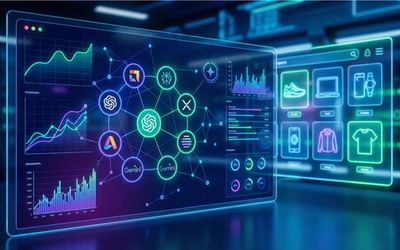
Ask a merchant right now whether they can pay to get their products in front of shoppers inside ChatGPT, and you'll get three different answers depending on who you ask and which week it is. OpenAI has spent most of 2026 insisting that ChatGPT's shopping recommendations aren't ads and aren't for sale. At the same time, it's been quietly building an actual advertising business, and by May 2026 that business had grown a shopping-specific arm. Both things are true, and the confusion is understandable because OpenAI has drawn a line between two things that look almost identical from a user's chat window.
This is a dated timeline of what's confirmed, sourced to OpenAI's own statements and reporting from outlets that verified it, plus a clear read on what's still speculation as of August 29, 2026. I'll flag every claim as confirmed or not so you're not making a media budget decision off a headline someone half-read.
The short answer
Yes, ChatGPT has ads, and yes, some of them now target shopping intent specifically through a product-feed ad format. No, that's not the same system that decides which products show up in ChatGPT's organic shopping answers. OpenAI maintains, in writing, that regular product recommendations inside ChatGPT are selected for relevance and are not sponsored. Whether that separation holds up cleanly over time is a fair thing to be skeptical about, and I am, but as of today it's the company's stated policy and there's no confirmed reporting that contradicts it.
The confirmed timeline
Here's what actually happened, in order, with dates you can check yourself.
- January 16, 2026: OpenAI publishes a blog post titled "Our approach to advertising and expanding access to ChatGPT," announcing it will begin testing ads in the US for Free and the newly launched ChatGPT Go tier. This is a general ads announcement, not a shopping-specific one.
- February 9, 2026: The pilot goes live. Ads appear as a labeled "Sponsored" card below the model's response, shown only to logged-in adult users on Free and Go in the US. Plus, Pro, Business, and Enterprise subscribers stay ad-free, and OpenAI excludes ads near sensitive topics like health and politics. OpenAI's own line, repeated in multiple statements since: "Ads do not influence the answers ChatGPT gives you."
- March 6, 2026: OpenAI scales back native Instant Checkout, the feature that let US shoppers complete an Etsy purchase without leaving the chat window. According to reporting from Search Engine Land, the company found that most users researched products in ChatGPT but finished buying elsewhere, and shifted the checkout step toward connected retailer apps instead of building it natively. This is a separate story from advertising, but it matters here because it freed OpenAI to lean harder on ad revenue instead of transaction fees for monetizing shopping.
- May 5, 2026: OpenAI opens self-serve access to its Ads Manager for US businesses, removing the high minimum-spend requirement that had gated the pilot to large advertisers only.
- May 12, 2026: This is the one that actually answers "is ChatGPT bringing ads to shopping." Digiday reported that OpenAI rolled out automated product feed campaigns built specifically for retailers, generating ads directly from a merchant's existing catalog data instead of requiring a manually built ad for every SKU. The setup deliberately mirrors Google Shopping campaigns, retailers can reportedly repurpose the same structured feed they already send to Google. Criteo is named as OpenAI's first ad tech partner on this, and the platform is described as able to handle up to a million SKUs per advertiser.
- July 22, 2026: OpenAI fully launches "Advertise in ChatGPT" as a public self-serve platform, with Best Buy, Lowe's, and VistaPrint named as early advertisers already running campaigns. Ads still appear as clearly labeled, tinted boxes below the response, shown only to Free and Go tier users, and targeting is described as based on conversation context and chat memory rather than third-party cross-web tracking.
So is there a dedicated "ChatGPT shopping ads" product?
Yes, as of May 2026, and it's worth being precise about what it actually is. It's not a bidding auction sitting inside the same shopping carousel that shows organic product recommendations, at least not according to anything OpenAI has confirmed publicly. It's a feed-based ad format built for retailers, similar in structure to how Google Shopping or Meta's catalog ads work: you give OpenAI a structured feed of your catalog, it generates ad creative automatically, and the resulting sponsored placements show up as labeled cards, distinct from the model's own product picks.
The practical implication for a merchant is that you now have two separate levers, not one. There's the organic lever, whether ChatGPT's shopping research and product-card logic decides your listing is relevant enough to surface unprompted, which depends on things like your Schema.org Product markup, review data, and feed accuracy. And there's the paid lever, running an actual ad campaign through the OpenAI Ads Manager, which is a media buy you control directly, in the same way you'd manage a Google Shopping or Meta catalog campaign today.
What OpenAI keeps insisting isn't true
OpenAI has been unusually repetitive about one specific claim, and it's worth quoting because it's the crux of most of the confusion online: product recommendations and Instant Checkout results in ChatGPT are described as selected independently for relevance, not influenced by advertising relationships, and not sponsored. That statement predates the ads product and has been restated since. If you've read a claim online that says brands can now "pay to appear" in ChatGPT's actual shopping recommendations, that's not what's been confirmed. What's confirmed is a separate, clearly labeled ad unit sitting alongside those results, not baked into the ranking logic behind them.
I'd treat that separation the way I treat Google's own claim that paid search doesn't affect organic rankings: probably true as a hard technical wall today, worth watching closely as ad revenue pressure increases. OpenAI has committed to roughly $1.4 trillion in infrastructure spending over the next several years, and that number alone tells you the incentive to blur that line eventually is real, even if nothing confirmed says it's happened.
What the early data shows about how often you'll actually see these ads
A study by SE Ranking, based on 50,006 commercial prompts run in July 2026 across 20 niches, found ChatGPT shows a sponsored ad on 25.94% of commercial-intent prompts overall. That's roughly one in four, which is a meaningful chunk of purchase-adjacent conversations already carrying paid placements less than seven months after the pilot started. The same study found real category variance: healthcare-adjacent prompts triggered ads 28.69% of the time, about ten times the rate Google's AI Mode showed ads for comparable healthcare queries, while pet and travel prompts stayed low, around 2.6% and 4% respectively.
Worth flagging directly: that 25.94% figure is across all commercial prompts, not specifically shopping-intent ones, and I haven't found a comparably rigorous, dated, third-party study isolating the ad rate for pure product-shopping queries specifically. Anything you see claiming an exact shopping-only ad-appearance percentage right now should be read as an estimate, not a verified figure, until someone runs that narrower study.
| Claim | Status as of Aug 29, 2026 | Source |
|---|---|---|
| General ads exist in ChatGPT (Free/Go tiers) | Confirmed | OpenAI, Jan 16 & Feb 9, 2026 |
| Self-serve ad platform is public | Confirmed | OpenAI, launched July 22, 2026 |
| A dedicated shopping/product-feed ad format exists | Confirmed | Digiday, May 12, 2026 |
| Organic shopping recommendations are sponsored/pay-to-play | Not confirmed, OpenAI states the opposite | OpenAI public statements |
| Instant Checkout was scrapped because of ads | Not confirmed, likely coincidental timing | Search Engine Land, Mar 6, 2026 |
| Ads directly influence which products the model recommends | Not confirmed, OpenAI denies this | OpenAI public statements |
How this connects to Instant Checkout's rocky year
It's tempting to draw a straight line from "Instant Checkout underperformed" to "so OpenAI pivoted to ads instead," and there's a plausible strategic logic to that read, but it's not something OpenAI has stated as cause and effect. What is confirmed is the sequence: Instant Checkout launched with Etsy in September 2025, expanded toward Shopify merchants, then got scaled back in March 2026 after OpenAI found low actual usage and shifted transaction handling toward connected apps rather than native in-chat checkout. Two months later, the shopping-specific ad product shipped. Reasonable people can read that timing as OpenAI hedging its commerce monetization by leaning on advertising instead of transaction fees, and Debra Aho Williamson, an industry analyst quoted in the Digiday piece, made almost exactly that comparison, describing the move as similar to what Google, Meta, and Amazon already do. But treat that as informed interpretation, not an OpenAI-confirmed strategy statement. If you want the deeper mechanics of how Instant Checkout works and what changed with it, we've covered that in a separate breakdown of ChatGPT Instant Checkout.
What this actually changes for brand visibility strategy
If you're an ecommerce brand or an agency managing several, here's the practical read, not the speculative one.
- Your organic shopping visibility work doesn't change. Clean structured data, accurate feeds, and genuine review volume are still what determines whether ChatGPT's shopping research surfaces your products unprompted. That's a separate system from the ad platform, and nothing confirmed changes that today.
- A new paid channel exists, and it behaves like Google Shopping did in its early years. If you already maintain a structured product feed for Google or Meta, standing up a ChatGPT shopping ad campaign is a smaller lift than it sounds, since the format was built to reuse that same feed.
- Budget-wise, this is still early enough to be cheap relative to where it'll land. Early-stage ad platforms with limited inventory and light competition tend to have favorable costs before demand catches up, which was true of early Amazon Sponsored Products and early TikTok ads too.
- Don't confuse ad spend with visibility optimization. Buying a ChatGPT shopping ad gets you a labeled sponsored slot for as long as the campaign runs. It does nothing for whether the model actually recommends your brand unprompted in a normal shopping conversation, which is the harder, more durable kind of visibility and the one our full guide to ChatGPT shopping is built around.
- Watch how other retailers are already navigating both tracks. Walmart's arrangement with OpenAI is a useful case study in running a major retail partnership across both the discovery and transaction layers simultaneously, and we broke down exactly how that deal is structured in our Walmart x OpenAI partnership piece.
What's still genuinely unconfirmed
A handful of claims circulating in trade press and LinkedIn threads as of late August 2026 don't have a solid primary source behind them yet, and I'm flagging them here specifically so this article doesn't become one more link in that chain. There isn't a verified, dated statistic for what share of pure shopping-intent (as opposed to general commercial-intent) prompts currently show an ad. There isn't confirmed reporting on exact cost-per-click or cost-per-action pricing for the shopping-specific feed campaigns, only that cost-per-click buying launched first and cost-per-action was described as in development as of the July 2026 self-serve launch. And there's no confirmed statement from OpenAI about whether or when ad-free paid tiers like Plus or Pro might eventually see shopping ads; every public statement to date has said the opposite, that paid subscribers stay ad-free.
If any of that changes, it'll be worth a follow-up post with the update dated clearly, which is the standard I'd hold any source to before making a media plan decision off of it.
The bottom line
ChatGPT shopping ads exist in a real, confirmed, feed-based form as of May 2026, running on a public self-serve platform since July 2026, with Best Buy and Lowe's among the named early advertisers. They sit next to, not inside, the organic shopping recommendations OpenAI still describes as unsponsored and relevance-based. Both the paid channel and the organic ranking logic matter for a brand's ChatGPT visibility, but they're two different projects with two different playbooks, and conflating them is the fastest way to either overspend on ads that don't fix a real discoverability gap, or underinvest in the ad channel because you assumed it didn't exist yet.
If you want a clear read on where your brand currently stands in ChatGPT's organic shopping results, separate from any ad spend, email me at filipe@aipeekaboo.com or grab 30 minutes on my calendar. AI Peekaboo tracks exactly that kind of visibility across ChatGPT, Perplexity, and Google's AI answers, and I'm happy to walk through what we're seeing for your category.