Filipe Lins Duarte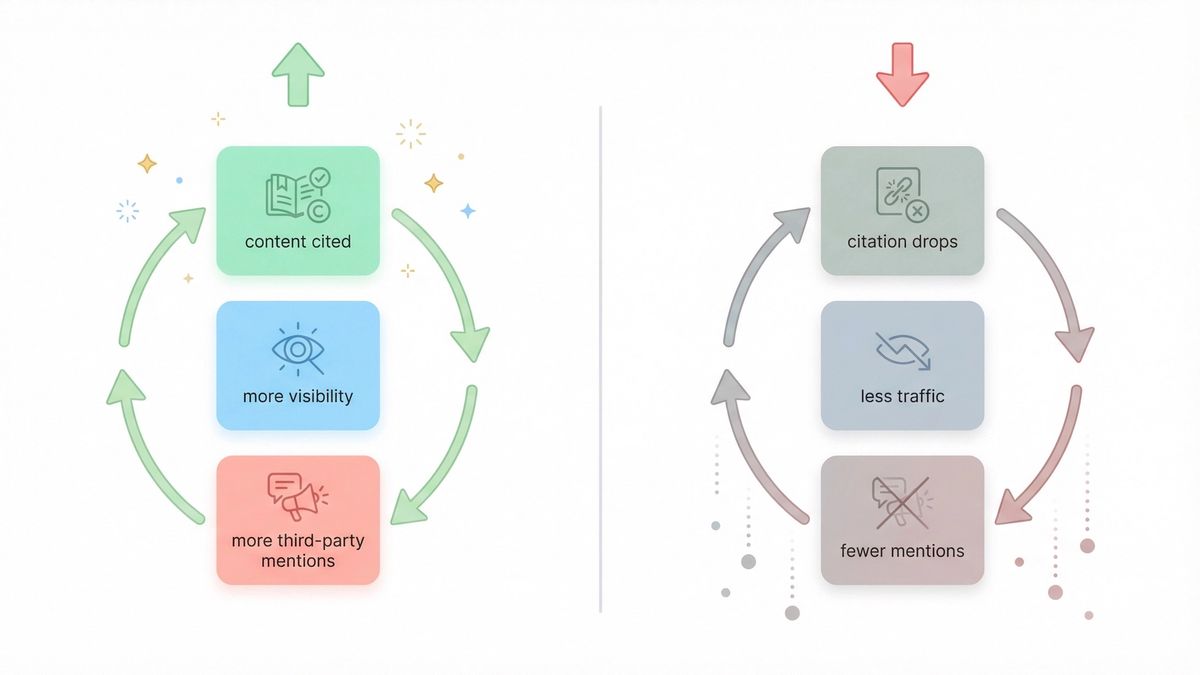
The brands showing up in ChatGPT and Perplexity answers are pulling 35% more organic clicks and 91% more paid clicks than the ones that aren't. Google AI Overviews now appear in more than half of all searches, and AI-referred traffic grew 527% between January and May 2025. If you're still treating this as something to get ready for, you're already behind.
What I see most often is that brands don't realize they've lost citations until something painful surfaces: a sales rep asking why leads have dried up, a client who can't find the brand in Perplexity, a quarterly review where the numbers just don't add up. By then, the gap has been compounding for weeks. AI citation loss isn't random though. The same patterns come up again and again, and most of them are fixable once you know where to look.
Here's how to figure out what actually happened, and what to do about it.
First, Confirm You've Actually Lost Citations
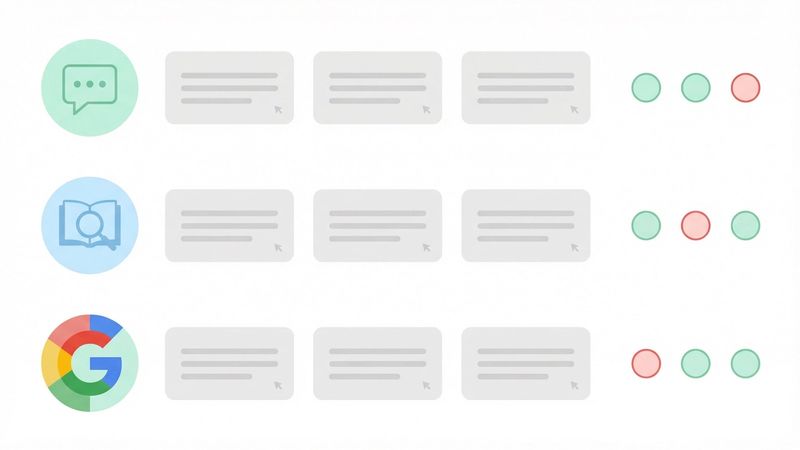
Many brands skip straight to making changes without confirming the problem first. That's how you end up spending a month fixing content on a platform that was citing you fine all along.
Go to each platform and run the kinds of prompts your customers would actually type:
- "[Category] tools for [your target audience]"
- "Best [your product type] for [use case]"
- "How do I [solve the problem your product solves]"
Run each prompt three to five times on separate days, not just once. Only 30% of brands appear consistently from one answer to the next, and just 20% stay present across five consecutive runs. One gap is noise. A consistent pattern is the actual problem.
Note which platforms cite you and which don't. The 89/11 rule is real: only 11% of sites get cited by both ChatGPT and Perplexity. Invisible in one but visible in the other isn't one problem. The causes are different, and so are the fixes.
Doing this manually across three platforms every week isn't realistic. AI Peekaboo monitors citation frequency across ChatGPT, Perplexity, Gemini, and Google AI Mode in one place, so you can see exactly which platforms dropped you and when. Before committing to any monitoring tool, check whether the data it surfaces actually reflects real model behavior. The methodology behind citation tracking varies more than most tools let on.
The Four Reasons Brands Lose AI Citations
Your content hasn't been refreshed in 3+ months
Pages not refreshed quarterly are 3x more likely to lose citations. Over 70% of pages that earn AI citations were updated in the last 12 months. For commercial queries it's even sharper: 83% of citations go to pages refreshed in the last year, 60% to pages refreshed in the last six months. I think most brands underestimate how aggressively AI systems treat stale content. It's not like Google, where an old page can hold a ranking for years. These models actively deprioritize anything that looks like it hasn't been touched recently.
ChatGPT's recency filter is more aggressive than most people expect. 76.4% of its citations come from content published or updated in the last 30 days. Perplexity runs a real-time index, so stale content can drop almost immediately after something fresher covers the same ground. Three months without updating a page and both platforms have already moved on.
The thing that catches a lot of teams off guard: this applies to existing pages, not just new ones. A page that's been ranking well in traditional search for two years can quietly drop out of AI citations just because nothing on it changed. AI systems also inject the current year into queries about 28% of the time. An article from 2023 that hasn't been touched since has very little chance of showing up for anything that implies recency, and most queries do.
Your heading structure is inconsistent or broken
Logical heading structure correlates with 2.8x higher citation likelihood. 87% of pages that consistently get cited use a single H1, and around 80% use lists throughout. I'd argue heading structure is the most underrated fix in this whole list, because it's fast, it costs nothing, and most teams haven't done it properly.
The reason this matters so much is that AI models don't read pages the way people do. They're extracting structured information. A wall of paragraphs gives them very little to work with. A clear H1, descriptive H2s that say what's in each section, bullet points where there's a list of things: that's what makes a page easy to cite. The pages that get cited most aren't always the best-written ones. They're the clearest ones.
Related to this: 44.2% of all LLM citations come from the first 30% of a page. If your strongest claim or most important proof point is buried three scrolls in, it's probably not making it into AI responses. Front-load the good stuff.
AI trusts what others say about you more than what you say about yourself
85% of brand mentions in AI responses come from third-party sources, not the brand's own site. You're 6.5x more likely to get cited because someone else wrote about you than because of anything you published yourself. Your owned content matters, but it's not what AI models are primarily pulling from.
The tricky part is that third-party presence is fragile in ways that are hard to monitor. A G2 review gets removed. A press piece gets taken down. The site that used to mention you does a content audit and you're cut. None of these feel significant on their own, but they quietly reduce the corroboration AI models use to validate your brand, and you probably won't notice until citations have already dropped.
There's also the entity confidence issue. ChatGPT needs to exceed an internal confidence threshold to cite a brand. That threshold is built on how consistently your name, description, and category appear across sources. If your homepage says 'Acme Software Inc.', G2 says 'AcmeSoft', and Reddit threads just say 'Acme', the model has no reliable way to confirm they're the same thing. It won't cite you rather than risk getting it wrong.
You're treating all AI platforms the same
This is probably the most common strategic mistake I see: brands pick one approach and apply it everywhere. ChatGPT and Perplexity work in fundamentally different ways. What earns you citations in one can be almost irrelevant to the other.
ChatGPT runs on a mix of pre-trained knowledge and selective Bing integration. Domain authority doesn't move the needle the way it does in Google. The pages that get cited most in ChatGPT have less traffic, fewer keywords, and fewer backlinks than the median. What they have is semantic clarity and consistent entity corroboration across multiple sources. You can do everything right in traditional SEO and still be invisible in ChatGPT.
ChatGPT doesn't generate answers in isolation — it searches Bing first. The search terms it uses, called fan-out queries, reveal exactly which topics and sources your category relies on. If you're not showing up there, you won't be cited.
Perplexity is almost the inverse. Real-time index, citations can appear within 24 hours of publishing. Reddit accounts for 46.7% of its citations, which tells you a lot about where you need to be. Community presence, forum discussions, actual users talking about your product: that's the fuel for Perplexity visibility in a way it simply isn't for ChatGPT.
Google AI Overviews are more predictable. 93.67% of citations come from top-10 organic results. If you're not ranking, you're not getting cited. Which means traditional SEO investment does carry over here, unlike with the other two.
One strategy, three platforms. That's the mismatch that creates patchy, inconsistent visibility and makes the root cause hard to diagnose when things go wrong.
The Fix Workflow
The good news: you probably don't need to rebuild anything from scratch. Most citation recovery comes from systematic updates to what already exists, plus fixing a handful of structural things that are easier to address than they look.
Step 1: Freshness audit
Pull all your core pages and sort by last-modified date. Anything untouched for 90-plus days that targets a keyword relevant to your product goes on the list. You don't need a full rewrite. Update the stats, add an example that's more recent, sharpen the intro so it reflects how the topic is talked about now. That's usually enough to reset the freshness signal.
Prioritize in this order: pricing pages, comparison pages, category landing pages, how-to guides. These are the pages AI systems pull from most when someone asks a commercial question.
Step 2: Entity consistency check
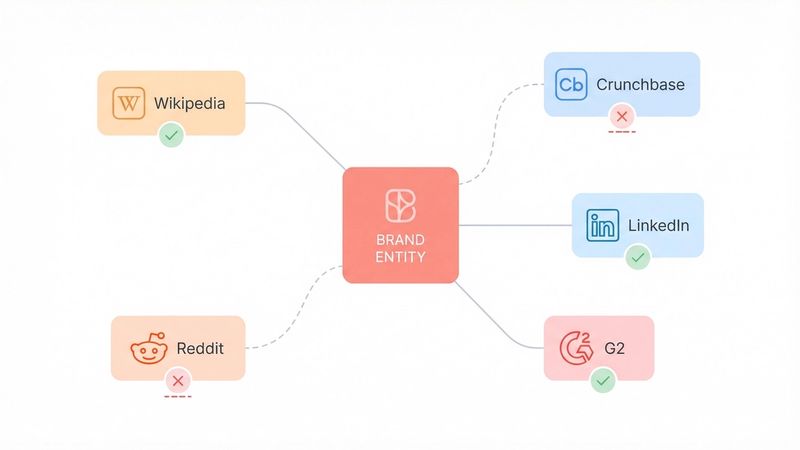
Search your brand name and look at what the first five or six results actually say. Pull up your Wikipedia page if you have one, Crunchbase, G2, LinkedIn. Write down every variation of your name, category description, and positioning that appears across all of them. Most brands are surprised how inconsistent it is.
Here's a straightforward before/after:
Before: 'Acme Software Inc.' (homepage), 'AcmeSoft' (G2), 'Acme' (Wikipedia), 'Acme Software' (LinkedIn)
After: 'Acme Software' used consistently across homepage, About page, G2, Wikipedia, LinkedIn, schema markup, and all product pages.
ChatGPT needs an entity match above 95% across sources before it will cite a brand with confidence. Name variations that seem minor to a human are enough to put you below that threshold. Visual consistency matters just as much as naming consistency. Using the same logo across your website, social profiles, business directories, and review platforms reinforces your brand identity and makes it easier for users to recognize your business. If you're refreshing your visual identity or launching a new brand, an AI logo creator can help you quickly develop a professional logo that remains consistent across every touchpoint.
While you're at it, run your site through Google's Rich Results Test. Zero critical errors is the baseline for reliable LLM parsing. Broken structured data means models can't extract the signals they need to confidently match your brand to what they already know about it.
Step 3: Content structure scan
Go through every high-priority page and check it against this structure. Here's what a page that gets cited consistently actually looks like:
Example: a SaaS tool comparison page
H1: Best Project Management Tools for Remote Teams (2026)
H2: What to Look For
- 3-sentence intro defining the problem being solved
- 4-5 evaluation criteria as bullets
H2: Top Tools Compared
- Brief overview, then H3 for each tool
H2: Pricing Side by Side
- Table or bulleted tier breakdown
H2: Which Tool Fits Your Setup?
- Specific buyer scenarios (if you're a team of 5, if you need Jira integration, etc.)
One H1, descriptive H2s that say what's in the section, lists throughout, and your most important claim in the first third of the page. That's it. It's not a complex formula, it's just the structure that makes pages easy to parse.
- One H1, with your main claim or target keyword
- H2 headings that say what's in the section, not tease it
- At least one list per major section
- Your strongest claim or proof point in the first third of the page
If your intro spends three paragraphs building context before saying anything specific, cut it. Models pull from the top first.
Step 4: Third-party presence audit
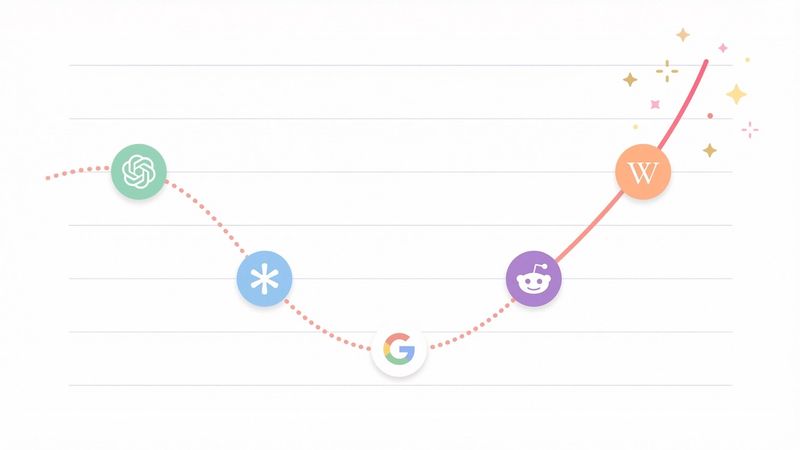
Make a list of every platform where your brand should realistically have a presence: G2, Capterra, Product Hunt, Reddit, relevant forums, analyst reports. Then check: are your listings current? Do they use the same brand name and description you've standardized everywhere else? Are there obvious platforms you're completely absent from?
If your product category has active Reddit communities and you're not mentioned in them, that's specifically a Perplexity problem. Not a reason to manufacture fake presence, but a reason to actually participate: answer questions, join discussions, show up in the places Perplexity indexes most heavily.
For ChatGPT, Wikipedia and Wikidata matter more than review platforms. So does being in Bing's Knowledge Graph, and having coverage from sources that carry genuine authority: TechCrunch, industry analyst reports, established review publications. If none of those mention you, ChatGPT has almost nothing to corroborate your brand against. It doesn't mean it won't cite you, but the confidence threshold becomes much harder to clear.
Step 5: Platform-specific monitoring
Once you've made changes, don't try to track recovery by running manual prompts. It's not a reliable method and the platforms update at completely different speeds. Measuring citation recovery properly means separate monitoring per platform: Perplexity can reflect changes within 24 hours, while ChatGPT's data cycles are much slower. Treating them the same way means you'll misread what's working.
Why This Compounds If You Ignore It
The uncomfortable reality about AI citation loss is that the longer it goes unaddressed, the harder it gets to reverse. Models cite brands that appear consistently across sources. The more you get cited, the more visible you are to users, the more third parties write about you, the more the model's confidence in your brand reinforces itself. It's a loop, and it works just as well in reverse.
Drop out of citations and you start losing community mentions. Less traffic means content goes stale faster because there's less reason to update it. Stale content means AI systems have less fresh material to pull from. Less corroboration means the model's confidence in your brand drops further. Brands that catch a drop early spend a few weeks recovering. Brands that catch it six months later are dealing with a much bigger hole.
How to Stay on Top of It
AI citation visibility isn't something you fix once and move on from. The brands that stay visible treat it the same way they treat search rankings: something to monitor, refresh, and maintain as an ongoing operation. The ones that struggle are the ones who do a round of fixes after a drop and then wait to see what happens.
Put core pages on a quarterly refresh schedule and stick to it. Build your third-party presence before you need it, not after citations have already fallen. And track citation frequency per platform so drops surface early, when they're still a quick fix rather than a structural problem.
If you want to automate the monitoring side of this, AI Peekaboo tracks your citation frequency across ChatGPT, Perplexity, Gemini, and Google AI Mode in one dashboard. You'll know exactly where you stand per platform, without having to run manual spot-checks every week to find out.
Working out why citations slipped usually means checking several sources at once, which is where Peekaboo, built for SEO agencies, helps: a REST API and an MCP server let you ask Claude or ChatGPT directly, and Google Search Console and Analytics 4 integrations show whether the drop moved real traffic.
Frequently Asked Questions
How do I confirm my brand has lost AI citations?
Run each prompt three to five times on separate days, not just once. Only 30% of brands appear consistently from one answer to the next, and just 20% stay present across five consecutive runs. One gap is noise, a consistent pattern is the real problem.
How often should I refresh content to keep AI citations?
At least quarterly. Pages not refreshed quarterly are 3x more likely to lose citations, and over 70% of pages that earn AI citations were updated in the last 12 months. For commercial queries, 83% of citations go to pages refreshed within the year.
Why does ChatGPT stop citing older pages?
ChatGPT's recency filter is aggressive: 76.4% of its citations come from content published or updated in the last 30 days. Perplexity runs a real-time index, so stale content can drop almost immediately once something fresher covers the same ground.
Does heading structure affect AI citations?
Yes. Logical heading structure correlates with 2.8x higher citation likelihood. 87% of consistently cited pages use a single H1 and around 80% use lists throughout. Front-load key claims too: 44.2% of LLM citations come from the first 30% of a page.
Why does third-party coverage matter more than my own site?
85% of brand mentions in AI responses come from third-party sources, not the brand's own site. You are 6.5x more likely to get cited because someone else wrote about you than because of anything you published. Owned content still matters, but it is not the main source.
How does Perplexity differ from Google AI Overviews?
Perplexity runs a real-time index where citations can appear within 24 hours of publishing, and Reddit accounts for 46.7% of its citations, so community presence drives visibility. Google AI Overviews are steadier: 93.67% of citations come from top-10 organic results.