Filipe Lins Duarte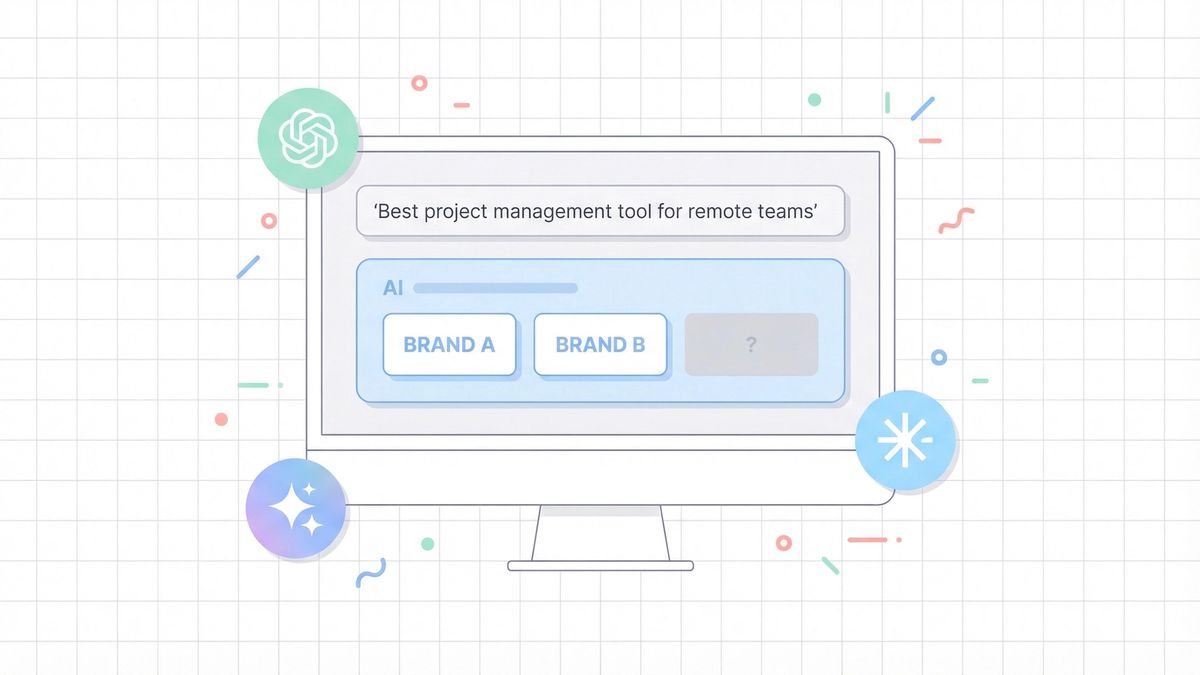
If you run a B2B SaaS company, you've spent years thinking about Google rankings, domain authority, and organic traffic. That's still worth doing. But there's a new layer of the buying journey that most SaaS teams haven't figured out yet: what happens when a potential buyer asks ChatGPT or Perplexity to help them choose a tool in your category.
The answer might be your competitor's name. It might describe your product in a way that's six months out of date. It might not mention you at all. And the buyer moves on without ever clicking through to your site.
Most SaaS teams are either ignoring this or throwing tactics at it without a clear system. This playbook gives you one: three stages that build on each other, from understanding where you actually stand, to optimizing what AI systems see, to tracking it like the channel it's becoming.
Why AI Visibility Is Different for B2B SaaS
Traditional SEO is about winning clicks. AI visibility is about earning mentions inside AI-generated answers, answers that increasingly don't include a list of links for the buyer to browse. The model just... tells them what to use. That's a fundamentally different dynamic.
This matters more for SaaS than almost any other category because the buying process is built on comparison. Nobody buys project management software after a single search. They ask AI assistants to compare options, explain pricing differences, recommend tools for their specific team size. If you're not showing up in those conversations, you're not in the shortlist.
The consistency problem makes this harder. Only 30% of brands appear in AI answers consistently from one run to the next, and just 20% stay present across five consecutive runs of the same prompt. AI visibility isn't a binary state you achieve once. It fluctuates, and most brands have no idea when they drop out.
If you're still working out what AI search means for your overall strategy, the differences between AEO and SEO are worth understanding before you get into the tactical detail here. They overlap more than people think, but the gaps matter.
Stage 1: Get Your Baseline
The most common mistake I see SaaS teams make is jumping straight into optimization without knowing what they're starting from. You can't fix a visibility problem you haven't measured. Before touching a single page, run the audit.
Run prompts your buyers are actually asking
The prompts that drive SaaS buying decisions aren't branded. Buyers at the awareness and evaluation stage are asking:
- "What's the best [category] tool for [use case]?"
- "Compare [Your Product] vs [Competitor]"
- "[Category] software for [company size/vertical]"
- "What tools do [job title] use for [problem]?"
Run these across ChatGPT, Perplexity, and Gemini separately, and don't assume the results transfer. These platforms have genuinely different citation behavior: ChatGPT skews heavily toward Reddit and community content, Perplexity indexes in real time and deprioritizes anything stale, and Google AI Overviews pull almost entirely from top-10 organic results. Same prompt, three different answers, three different problems if you're not showing up.
Run each prompt at least three times across different sessions. Variance between runs is high, and a single result tells you almost nothing. What you're looking for is whether you appear consistently, not whether you appear once.
Audit your crawlability
73% of sites have technical barriers that block AI crawler access. This is one of those problems that's easy to fix and rarely gets looked at, because most teams set up robots.txt for Google bots years ago and never revisited it.
AI crawlers use different user-agents. Your existing SEO allowlists probably don't cover them. Check and explicitly allow:
- OpenAI:
GPTBot,OAI-Searchbot,ChatGPT-User - Anthropic:
ClaudeBot,Claude-Searchbot - Perplexity:
PerplexityBot,Perplexity-User
CDN configurations are a separate issue and more often the real culprit. Cloudflare, Fastly, and Akamai all have settings that can block crawlers at the network level even if your robots.txt is clean. If you're running a heavily client-side rendered app, AI crawlers may not be executing JavaScript either, which means large parts of your content are effectively invisible to them regardless of what your headers say.
Map your off-site footprint
85% of brand mentions in AI answers come from third-party sources, not your own site. That means your baseline isn't just about what's on your domain. Your off-site footprint matters just as much, and most teams have never properly mapped it.
- G2, Capterra, Trustpilot reviews
- Comparison articles ("vs." pages on other sites)
- Reddit discussions in relevant subreddits
- Listicles and roundups that include your category
Search your brand name across all of these sources. Note where you appear, how you're described, and what's missing. Pay attention to whether the descriptions are accurate and current: an outdated G2 profile or a stale Reddit thread can actively hurt your AI visibility if it's the source a model is pulling from.
Stage 2: Optimize for How AI Engines Read Your Content
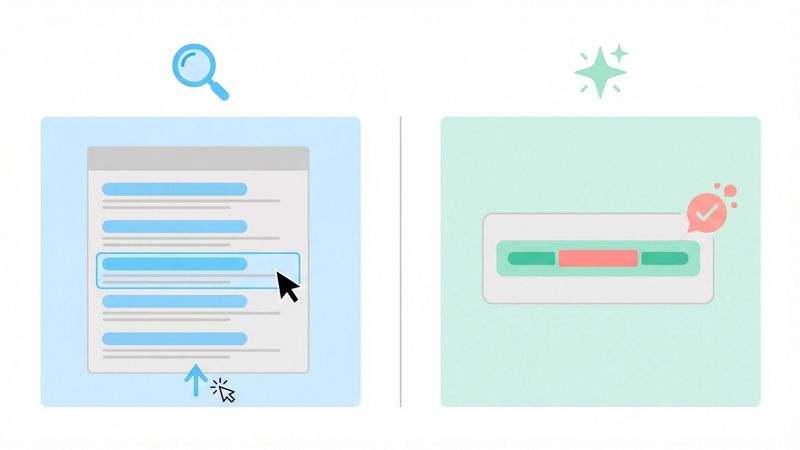
Once you know where you stand, the work is making it easy for AI engines to understand and cite your content. This has very little to do with keywords and a lot to do with structure and how credibly your brand appears across the web.
Fix the fundamentals on your highest-intent pages
The structural properties of pages that consistently get cited are pretty consistent across the research. None of this is complicated, which is part of why it's frustrating when teams overlook it:
- Single H1, with a logical heading hierarchy underneath (2.8x higher citation rates for sequential heading structures)
- List-based formatting throughout: ordered lists, bullet points, tables
- At least 3 schema markup types (FAQ schema, Product schema, and SoftwareApplication schema are all relevant for SaaS)
- Content that answers a specific question directly, not content that gradually builds to a point
For B2B SaaS, your highest-priority pages are pricing, use case pages, and integration pages. These are the pages buyers are actively researching during evaluation, and they’re what AI systems reach for when answering comparison and recommendation queries.
As content formats evolve, it’s also becoming increasingly valuable to diversify content beyond text. For example, some SaaS brands now create videos to explain features, comparisons, and use cases, which can strengthen their overall presence across AI-driven platforms.
Refresh your content on a schedule
Pages not refreshed quarterly are 3x more likely to lose citations. 83% of commercial intent citations go to pages updated in the last year, 60% to pages updated in the last six months. I'd argue this is the most underrated problem in SaaS content: teams publish well, then let things sit, and wonder why visibility fades.
SaaS companies actually have an edge here. Your product legitimately changes: pricing tiers shift, features ship, integrations get added. That's a built-in reason to keep pages current. Use it. Treat every major product update as a trigger for a content refresh on the pages that cover it.
Build off-site credibility deliberately
Because most AI citations come from third-party pages, your off-site strategy directly determines how visible you are in AI answers. The moves that actually move the needle for B2B SaaS:
- Get into comparison and alternatives content. When a buyer asks 'alternatives to [Competitor],' you want your name there. The sites hosting these comparisons get cited heavily, and being accurately represented on them is one of the fastest ways to show up in competitive queries.
- Earn community presence without manufacturing it. Reddit contributions from real users and genuine forum participation correlate strongly with AI citations, particularly in Perplexity. You can't fake this effectively and it's not worth trying. But you can make it easier for real users to talk about your product by being genuinely helpful in the communities where they already are.
- Keep G2 and Capterra current. Review platforms are high-authority citation sources across all major AI engines. A well-maintained profile with regular reviews matters well beyond lead generation now. An outdated profile with old pricing or a deprecated feature set can actively mislead AI models about what you offer.
- Follow up systematically on your outreach. Getting mentioned on comparison sites, review platforms, and editorial content requires persistent outreach and most teams drop the ball on follow-up. Tracking your team's email response times and open SLA alerts with a tool like EmailAnalytics ensures no publisher conversation goes cold.
Stage 3: Track It Like a Channel
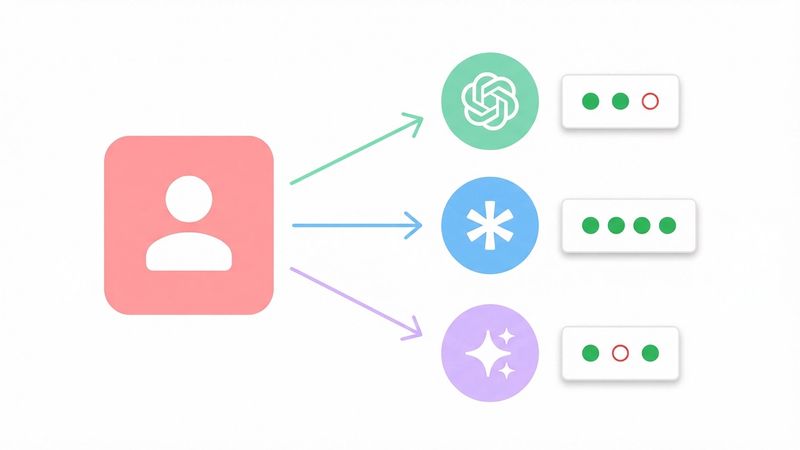
The biggest mistake SaaS teams make with AI visibility is treating it as a project with a completion date. It isn't. Visibility fluctuates: 50% of brands that lose their position in AI answers resurface within two weeks if they've built the right signals. The other 50% stay invisible for much longer because nobody noticed the drop.
Separate your metrics by platform
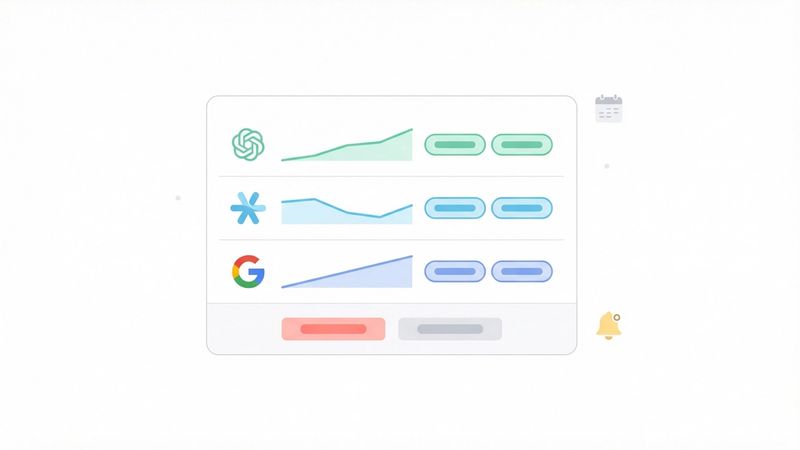
ChatGPT, Perplexity, and Google AI Overviews behave differently enough that a single tracking view across all three will mislead you. A brand can be solid in Google AI Overviews (because it ranks well organically) and nearly absent in ChatGPT (because it lacks entity corroboration in knowledge graphs). Those are different problems requiring different fixes.
At minimum, track separately per platform:
- Mention rate per platform (how often your brand appears in relevant answers)
- Citation rate per platform (how often your site is actually linked)
- Competitor mention rates for the same prompts
- Which third-party sources are being cited in answers about your category
Watch for content decay
Citation loss in AI is often quiet. A competitor publishes a sharper comparison page. A batch of negative reviews changes how your product is described in the sources models pull from. Your pricing page goes six months without an update while a competitor's is refreshed monthly. None of these feel like emergencies until you look at the trend.
Build a core prompt set, the queries your buyers are actually using, and run them on a weekly or at minimum monthly schedule. Treat a drop in mention rate the same way you'd treat a drop in organic traffic: investigate the cause before deciding on the fix.
Manual tracking across three platforms doesn't scale past a handful of queries. If you're evaluating tooling for this, there's a good breakdown of the AI visibility tools built specifically for SaaS teams worth reading before you commit to anything.
What the Playbook Looks Like in Practice
Abstract playbooks are easy to nod along with and hard to actually execute. Here's what this looks like on a real timeline:
Month 1: Run the baseline. Map where you appear across ChatGPT, Perplexity, and Gemini for your core buyer queries. Fix robots.txt and CDN blockers. Identify your five highest-intent pages and audit each one against the structural checklist.
Month 2: Implement structural fixes on those priority pages. Set up a quarterly refresh cycle and add the first round of updates. Pick three off-site targets (a comparison page, a review platform, a community forum) and start building legitimate presence on each.
Month 3 and beyond: Set up ongoing prompt monitoring. Track competitor mention rates weekly. Review your off-site footprint monthly. Add AI visibility as a standing metric in your regular reporting, alongside organic traffic and branded search volume.
The compounding effect here is real. A brand with consistent off-site presence, technically accessible pages, and freshly updated content builds citation stability over time. The 20% of brands that show up consistently across five runs of the same prompt aren't just lucky. They've built the underlying signals that give AI models something reliable to pull from.
Where AI Peekaboo Fits
If you want to handle the monitoring layer without building a manual process, AI Peekaboo tracks citation frequency across ChatGPT, Perplexity, Gemini, Google AI Overviews, and Google AI Mode in one dashboard. It's designed for teams running multiple products or client accounts, with unlimited seats and white-label reporting built in.
SEO agencies running this playbook across several SaaS accounts get two more pieces from Peekaboo: a REST API and an MCP server, so Claude or ChatGPT can pull visibility numbers into a weekly account review, and Google Search Console and Analytics 4 connections tie citations back to sessions and signups.
If you're still evaluating options, this breakdown of the best AI monitoring tools for marketing teams covers the main differences and who each tool is actually suited for.
Frequently Asked Questions
How consistently do brands appear in AI answers?
Only 30% of brands appear in AI answers consistently from one run to the next, and just 20% stay present across five consecutive runs of the same prompt. AI visibility fluctuates, so most brands drop out without ever noticing.
Why do so many sites block AI crawlers by accident?
73% of sites have technical barriers that block AI crawler access. Most teams configured robots.txt for Google bots years ago and never revisited it, so the fix is usually quick once someone actually audits crawlability.
Do AI answers mostly cite my own website?
No. 85% of brand mentions in AI answers come from third-party sources rather than your own site. Your off-site footprint carries most of the weight, which is why the baseline stage includes mapping where you are already mentioned.
How often should I refresh content for AI visibility?
At least quarterly. Pages not refreshed quarterly are 3x more likely to lose citations. 83% of commercial intent citations go to pages updated in the last year, and 60% go to pages updated in the last six months.
What happens if my brand drops out of AI answers?
About 50% of brands that lose their position in AI answers resurface within two weeks if they have built the right signals. The other 50% stay invisible far longer, usually because nobody was tracking the drop.
What are the three stages of the AI visibility playbook?
Baseline, optimize, then track. Stage 1 runs buyer prompts, audits crawlability, and maps your off-site footprint. Stage 2 fixes high-intent pages, refreshes content on a schedule, and builds off-site credibility. Stage 3 treats it as a channel.