Writesonic is excellent for content generation, but its GEO tracking is secondary for the price. This guide breaks down Writesonic, then compares 8 alternatives across engine coverage, reporting, and best-fit use cases.
I’ve tested a lot of AI visibility tools, and Writesonic is one that always makes the list. It’s a capable platform that blends content generation with GEO tracking, but the GEO features feel secondary. At $199 per month for the professional tier, it’s a stretch if your main goal is tracking AI visibility.
In this article I’m going to walk you through what Writesonic actually offers, what it costs, and the alternatives that I think deliver stronger visibility tracking for less in 2026. Here's a brief overview of my top alternatives:
Tool
Starting Price
Ideal for
Pros
Cons
Peekaboo
$50 per month
SEO agencies and brands starting to measure their AI search presence
Most affordable, white-label included, agency-focused, Looker Studio connector, MCP integration, REST API
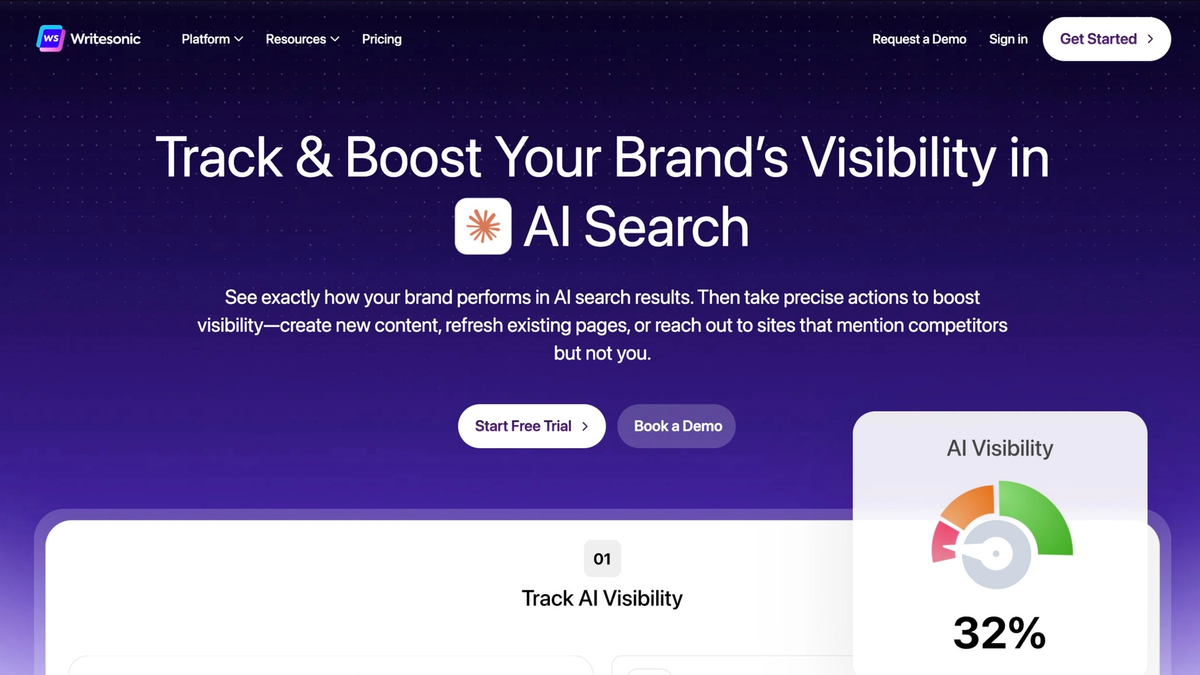
Writesonic is a content creation platform that's evolved into a quasi-GEO tool. The core pitch is that it handles content generation and AI visibility tracking in one place. You write with their AI, optimize for GEO, monitor how your brand shows up in ChatGPT and Gemini, and get action recommendations. Everything comes from one dashboard.
The platform was built primarily as an AI writing assistant. Then they bolted on GEO capabilities starting around 2024. So while it's not bad at AI visibility tracking, it's not laser-focused on it the way dedicated platforms are.
Writesonic Core Features
AI Visibility Tracking
Writesonic monitors brand mentions across five major AI engines: ChatGPT, Google Gemini, Claude, Google AI Overviews, and Perplexity. You define the prompts you want to track, and daily the platform runs those prompts and captures how often your brand gets mentioned, what sentiment the mentions carry, and where the AI is pulling source material from.
Brand Presence and Citation Monitoring
The platform tracks citations separately from mentions, which is useful. A mention means your brand name appeared. A citation means an AI platform referenced specific content from your site. This distinction matters because citations are higher-value signals for AI search visibility.
Content Strategy Planner
This feature integrates with Ahrefs data to suggest content gaps. Writesonic analyzes competitors' content, identifies topics where you're missing coverage, and surfaces those as action items. It's useful, though the recommendations are fairly obvious if you've already done basic competitive analysis.
Site Audit and Technical Optimization
Limited crawler analytics for WordPress, Cloudflare, and Vercel. The tool tries to identify which pages are most visible to AI crawlers and which pages have technical barriers (broken schemas, robots.txt issues) that prevent AI bots from seeing your content.
AI Content Generation
Writesonic's real strength is here: Chatsonic (their conversational AI), template-based article writing, landing page generation, SEO-optimized content workflows. If you're buying Writesonic, you're mostly buying the content generation side. GEO tracking is the add-on.
Action Center
Writesonic identifies citation gaps and generates a structured brief: "You're missing a citation here. Here's how to fix it. Here's reference material from the winning competitor." The quality of these recommendations varies. Sometimes they're actionable. Sometimes they state the obvious.
Writesonic Pricing
Lite Plan: $39/month
15 articles/month
6 site audits/month
Unlimited Chatsonic
2 writing styles
No GEO features
Best for freelancers
Standard Plan: $79/month
40 articles/month
15 site audits/month
Unlimited Chatsonic
4 writing styles
No GEO features
Best for small teams
Professional Plan: $199/month
100 articles/month
40 site audits/month
GEO features unlock here
Brand presence tracking
API access
Multi-team support
This is where GEO starts
Advanced Plan: $399/month
200 articles/month
80 site audits/month
Full GEO suite
Multiple user seats
Priority support
20% annual discount available
Enterprise: Custom pricing
Unlimited articles and audits
SSO and advanced security
Dedicated account manager
Custom AI model development
Compliance features (SOC 2, etc.)
The catch: If you're mainly interested in GEO, you're paying for 100 monthly articles you might not need. And $199/month is expensive compared to dedicated GEO platforms.
Why I'm writing about Writesonic alternatives
Here's my honest take: Writesonic is good at two things. It's good at content generation and bundled platform convenience. But if your primary need is AI visibility tracking, you're overpaying for features you won't use.
I've spent the last six months testing platforms in this space, and I've noticed a clear pattern: specialized GEO tools do one thing better than Writesonic's generalist approach. They track more AI engines. They provide deeper insights. They cost less when you strip away the content generation side. And they integrate better with the tools you're already using.
For agencies, the story is even clearer. White-label capabilities matter. Unlimited seats matter. Customer support that understands your multi-client workflow matters. Writesonic can't match the best AI monitoring tools for marketing teams on any of these fronts.
So here are the alternatives I recommend, ranked by use case.
Best alternatives to Writesonic
AI Peekaboo
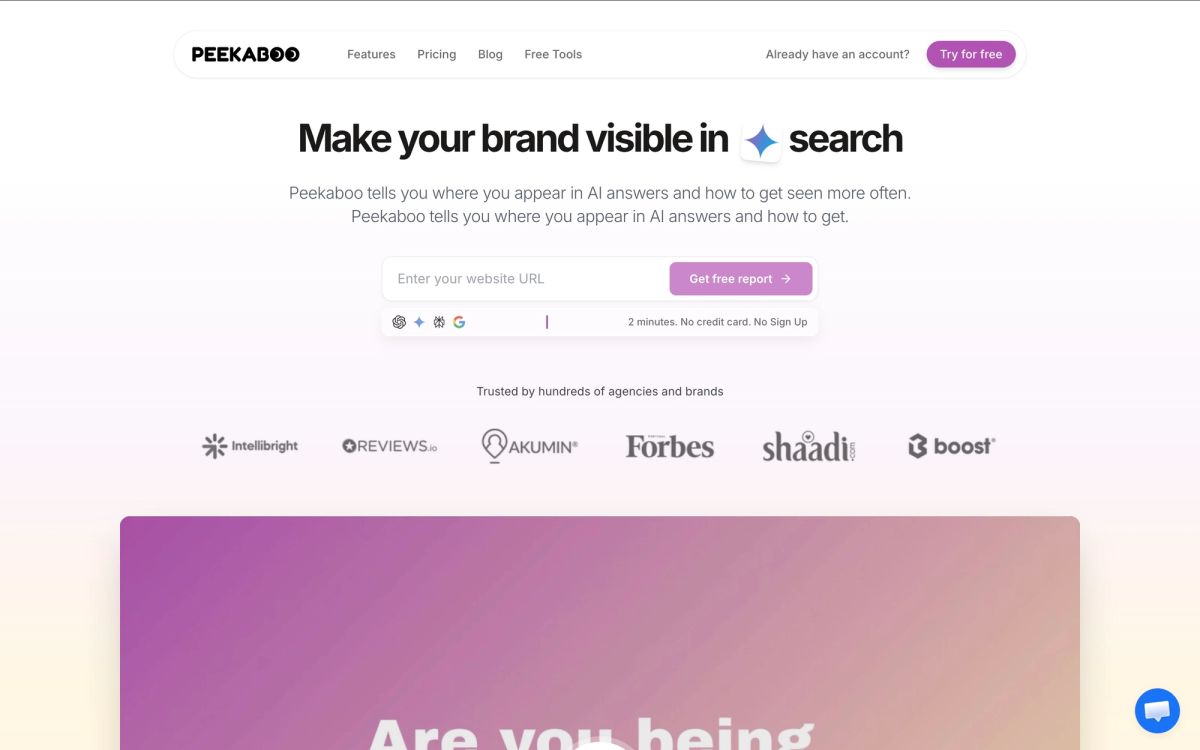
AI Peekaboo is a white-label AI visibility platform built specifically for agencies. It tracks your brand's presence across ChatGPT, Perplexity, Google AI Overviews, Claude, and Gemini. You get the ability to white-label everything: custom domain, your branding, your logo. Right from the $50/month plan.
Key Features
Multi-engine tracking (ChatGPT, Perplexity, Google AI Overviews, Gemini)
White-label dashboard and reports on all plans
Google Search Console integration
Looker Studio connector for custom reporting
AI chatbot for client interaction
Share of voice tracking and competitive benchmarking
Unlimited team seats (all plans)
14-day free trial
Dedicated Slack support
Google Analytics 4 integration
Pros
AI Peekaboo is the cheapest option that includes white-label right out of the gate. No "pay more for white-label" nonsense. At $50/month, you can set up client-branded dashboards, customize the branding, and deploy to dozens of clients without hitting a paywall. The Looker Studio connector is gold for agencies that want custom reporting flexibility. GSC integration means you're pulling real search data into your visibility picture, not just AI assumptions. Unlimited seats on all plans means your entire team can access client data without paying per user. Slack support is solid. They've built a dedicated community channel and respond within hours.
I've talked to 50+ agencies now using AI Peekaboo, and the common theme is: "This is what white-label should look like." One agency owner told me she's managing 30 clients on AI Peekaboo and spending less monthly than she would on one competitor's "mid-market" tier.
Cons
AI Peekaboo's prompt database is smaller than enterprise competitors. If you need to track 1,000+ unique prompts simultaneously, you'll hit limits faster. The platform is also newer, so advanced features like multi-language sentiment tracking or competitor impersonation come later in the roadmap. Integration ecosystem is tighter than Writesonic. You're working with what's available (GSC, Looker Studio, Slack), not an open API for custom builds.
All plans come included with a 14-day free trial, and annual billing gets your 15% off.
Is AI Peekaboo the best alternative to Writesonic?
Yes, for marketing agencies and brands starting to track AI visibility. If you're reselling AI visibility services, managing multiple client accounts, or building white-label reporting, AI Peekaboo is the strongest alternative to Writesonic. The economics alone show $50/month with white-label versus $199+ at Writesonic. This makes it a no-brainer for agencies. AI Peekaboo also has 50+ agencies already running their client work on the platform, so community and use case validation are there. The tradeoff is fewer advanced enterprise features, but if you're reading this, you probably don't need those yet.
Otterly AI
Otterly AI is the budget champion. At $29/month for 15 daily prompts, it's the lowest-cost entry point into AI visibility tracking. The platform runs your prompts daily across ChatGPT, Google AI Overviews, Perplexity, and Microsoft Copilot. It surfaces mentions, brand citations, and keyword visibility trends.
Key Features
15 to 400 tracked prompts daily (depends on plan)
ChatGPT, Google AI Overviews, Perplexity, Microsoft Copilot (included)
Google AI Mode and Gemini available as add-ons
1,000 to 10,000 GEO URL audits monthly
Link and brand mention monitoring
Sentiment tracking on mentions
Prompt research and trend identification
Quick setup (no long onboarding)
No long-term contracts
Pros
At $29/month, Otterly is accessible for startups that are just beginning to care about AI visibility. The interface is clean. There are no overwhelming dashboards or learning curves.
Daily tracking is standard on all plans, which matters. Many competitors charge extra for daily versus weekly refreshes. Otterly's prompt research tool helps you identify trending queries you should optimize for. The platform integrates with Semrush's app marketplace, so if you're already a Semrush user, it's a one-click add. Prompt add-ons are cheap: $99 gets you 100 more tracked prompts, so you can scale as you grow.
Cons
Otterly's reporting is limited when filtering across multiple segments. Sentiment analysis only works at the individual prompt level, not across your whole account. Citation source attribution sometimes misattributes domains. There's no AI traffic analytics to track visitors coming from AI sources. The GEO audit feature lacks comprehensive content optimization recommendations. Agencies managing multiple clients need separate workspaces, adding administrative overhead.
Pricing
Lite: $29/month (15 prompts)
Standard: $189/month (100 prompts)
Premium: $489/month (400 prompts)
Add-ons: $99 for 100 additional prompts. $25-$50/month for Gemini and Google AI Mode
Free trial available.
Is Otterly the right alternative to Writesonic?
Yes, if you're a solopreneur or small startup testing AEO. Otterly is pure monitoring at an affordable price. You're not paying for content generation or advanced enterprise features you don't need. The tradeoff is limited analytics depth and no content tools. But if your question is simply "Where does my brand show up in AI search?" Otterly answers that clearly and cheaply.
Profound
Profound is the enterprise workhorse. It tracks across 10+ AI engines (ChatGPT, Perplexity, Google AI Overviews, Claude, Gemini, Grok, Meta AI, DeepSeek, Microsoft Copilot, and more). It offers real-time data refresh, provides dedicated strategist support on higher tiers, and integrates with GA4 to tie AI visibility back to actual revenue.
Key Features
10+ AI engine coverage
400M+ real user conversation data (not synthetic prompts)
Full agent analytics showing how AI bots crawl and interpret your site
Conversation-level insights
Custom prompt library
Real-time data refresh (hourly versus daily)
GA4 integration for revenue attribution
SOC 2 Type II certification
Role-based access control (RBAC)
Dedicated strategist on Growth+ plans
Supports ChatGPT Shopping and emerging AI features
Pros
Profound's biggest advantage is breadth. If you're competing in markets where multiple AI platforms matter (Perplexity for tech, ChatGPT for general, Claude for enterprise research), Profound tracks all of them accurately. The GA4 integration is powerful. It lets you connect AI visibility improvements directly to business outcomes, not just vanity metrics.
Real-time data refresh means you're working with current information, not yesterday's snapshot. The platform is built for AI visibility from the ground up, unlike Writesonic which layered it on top of content generation. Enterprise security features (SOC 2, SSO, RBAC) are table stakes for large organizations. Customers report 7x visibility growth in 30 days with proper implementation.
Cons
Profound's entry-level Starter plan ($99/month) only tracks ChatGPT and comes with 50 prompts and limited monthly responses. To get meaningful multi-engine tracking, you need the Growth plan ($399/month), which unlocks Perplexity and Google AI Overviews. Enterprise-grade features and custom pricing are where the real power is, but at that level you're talking $1,000+/month.
The platform has a steep learning curve for teams not familiar with detailed GEO workflows. And unlike AI Peekaboo or Otterly, Profound doesn't include white-label as a default feature. You're paying for enterprise customization separately.
Yes, for enterprise companies prioritizing measurement and scale. If you're tracking revenue impact of AI visibility and competing across multiple AI platforms globally, Profound's depth justifies the cost. Smaller teams and agencies should look elsewhere. The price-to-value ratio doesn't click until you have serious GEO needs. But for enterprises, Profound is the best-in-class platform.
AthenaHQ
AthenaHQ is a mid-market platform with a unique angle: unlimited seats and AI-powered content generation integrated directly into the GEO workflow. The platform tracks your brand across 8 major AI engines and uses AI to generate brand-voice-consistent content designed to boost visibility.
Key Features
8 AI engine coverage (ChatGPT, Perplexity, Google AI Overviews, Google AI Mode, Gemini, Claude, Microsoft Copilot, Grok)
Credit-based pricing (3,500 to 10,000 credits/month depending on plan)
Unlimited team seats with role-based access control
Brand voice AI content generation
Competitor monitoring and impersonation
LLM traffic analytics
Citation intelligence and source tracking
Content gap identification
GA4 integration (Growth+ plans)
Deep research AI agent for content strategy
Pros
AthenaHQ's unlimited seats feature is huge for mid-market teams. You're not paying per user, so you can add team members without watching costs climb. The brand voice generation means you're not just getting insights. You're getting AI-optimized content in your brand's tone, ready to publish.
The platform covers 8 AI engines, which is broader than Writesonic's 5. Competitor impersonation (seeing what competitors' queries surface) is a clever feature you don't find everywhere. The GA4 integration on higher tiers connects visibility to conversions. Credit system means you only pay for what you use.
Cons
AthenaHQ's pricing is confusing. The base plan ($295/month) includes 3,500 credits, but credits consume fast. Running 10 prompts across all 8 engines with AI analysis can burn through those credits in two weeks. You end up upgrading, and suddenly you're paying $500 to $1,000/month. No free trial means you're committing blind. The platform feels newer and less polished than Writesonic in some areas. Onboarding can be lengthy for teams unfamiliar with credit-based pricing.
Annual billing discounts available. Credit packs can be purchased à la carte.
Is AthenaHQ the right alternative to Writesonic?
Yes, for mid-market brands that want AI content generation alongside visibility tracking. AthenaHQ is stronger than Writesonic on the GEO side (8 engines versus 5) and the unlimited seats model scales better for teams. The credit system is a drawback compared to fixed pricing, but if you're comfortable with that, it's a viable alternative. Agencies should note that white-label isn't available at any price tier.
Peec AI
Peec AI is a European platform positioned squarely at SMEs and growing teams. Brand pricing starts at €85/month (Starter), with a separate agency tier from €205/month. The platform now includes Actions (beta), a GEO roadmap feature that clusters your AI visibility data into Owned Media and Earned Media opportunities scored by Relative Opportunity Score.
Key Features
25 to 300+ prompts tracked daily
1 to 25+ countries monitored depending on plan (brand or agency)
Choose 3 from 6 standard models including ChatGPT, Perplexity, Google AI Overviews, Gemini, Claude, and DeepSeek
Add-ons available for models beyond your 3 plan selections: €30/month (Starter), €70/month (Pro), €140/month (Advanced)
Unlimited team seats on all plans
7-day free trial
Looker Studio connector for custom reporting
Daily tracking standard (not an upgrade)
Actions (beta): Prioritized GEO roadmap from visibility data — Owned and Earned Media clusters, each scored by Relative Opportunity Score
Email support (Starter), Slack support (Pro+)
Dedicated account manager (Enterprise)
Pros
Peec AI's pricing is fair for what you get. €85/month gets you 50 prompts daily on the Starter. Unlimited seats across all plans keeps costs predictable as teams scale.
The Looker Studio connector, shared with AI Peekaboo, is gold for custom reporting. Daily tracking is standard, not a premium feature. The platform is straightforward. No credit system, no confusing tiers, just "pay this, get these features." Slack support kicks in at the Pro tier, which is standard in the industry.
Cons
Each plan includes 3 model selections from 6 standard options. Adding models beyond your 3 costs €30 to €140/month depending on tier. If you need all models included at a flat rate, consider other options.
Yes, for growing European SMEs or US teams that don't need 8+ AI engine coverage. Peec AI is simpler than Writesonic, cheaper, and includes features like Looker Studio that competitors charge extra for. The tradeoff is fewer AI engines by default and narrower advanced features. If you're in Europe and want affordable daily tracking, . For a full comparison, see the best alternatives to Peec AI.
Scrunch AI
Scrunch AI is an enterprise platform for brands and agencies that care deeply about brand safety and misinformation detection. The platform tracks how your brand appears across 6 to 8 major AI engines and provides source-level transparency so you know exactly which content influenced AI responses.
Key Features
6 to 8 AI engine coverage (ChatGPT, Claude, Gemini, Perplexity, Google AI Overviews/Mode, Meta AI, Microsoft Copilot)
350 to custom prompts
Source-level citation tracking (shows exact URLs AI platforms pulled from)
Misinformation detection (identifies outdated or incorrect information AI references)
Brand sentiment monitoring across engines
Agent Experience Platform (AXP) for AI-optimized parallel site for LLM crawlers
Persona-based tracking (3 to unlimited personas)
AI crawler traffic monitoring (attribute AI-sourced visits)
The AXP (Agent Experience Platform) lets you create AI-friendly versions of your content specifically optimized for LLM crawlers. This is forward-thinking. The platform has real traction: 500+ customers, Series A funding, strong brand validation. Multi-platform coverage (6 to 8 engines) is solid. Enterprise compliance features are top-tier.
Cons
Scrunch's starting price ($250/month ) is limited to just 125 prompts. The platform is monitoring-only. There's no content generation, no optimization tools, no workflow automation. You get insights, not actions. This means your team needs the capacity to execute on recommendations. The public feature set is less documented than competitors, so expect to work closely with their sales team to understand capabilities. Pricing for higher tiers (Growth, Enterprise) isn't published, suggesting custom negotiation required.
No free trial. No published annual discount. Year-long commitment typical.
Is Scrunch AI the right alternative to Writesonic?
Yes, for enterprise brands prioritizing brand safety and regulatory compliance. If your competitive landscape includes misinformation risks, or you operate in heavily regulated industries, Scrunch's source-level tracking and compliance features justify the cost. For most marketing agencies and brands, the price for value and feature narrowness (monitoring-only) are drawbacks. Writesonic still wins on breadth for content-focused teams, but Scrunch wins on brand safety depth.
Relixir AI
Relixir AI is the full-stack GEO platform for teams that want end-to-end automation: monitoring, research, content generation, and lead sequencing in one system. The platform simulates thousands of buyer questions, identifies content gaps, generates blog posts at scale, and tracks which AI-sourced visitors become customers.
Key Features
500 to unlimited prompts tracked
20 to 100+ blog posts auto-generated monthly
Deep research agents (3 to unlimited)
ChatGPT, Google AI Overviews, Perplexity, Gemini tracking
Weekly AI search reports
Visibility analytics and social tracking (Reddit, forums, news)
Content generation with AI agents
Backlink outreach automation
AI traffic lead sequencing (attribute customers to AI source)
Multi-country support
Direct CMS integrations
Dedicated GEO/SEO strategist (Pro+)
Monthly site audits (SEO/GEO health)
Pros
Relixir is the only platform that integrates deep GEO research with automated content generation at scale. If you need 20 to 100 blogs written monthly based on real GEO insights, Relixir does this automatically. The deep research agents identify buyer questions and content gaps directly from AI conversations. They don't rely on keyword approximations. Backlink outreach automation is a bonus most competitors don't offer. The lead sequencing angle (tracking AI-sourced traffic into your CRM) is sophisticated. Dedicated strategist on Pro+ plans brings external expertise. YC backing (YC X25) signals serious capital and product vision. The platform is ambitious. It's trying to solve the full funnel from visibility to revenue attribution.
Cons
Relixir's starting price ($500/month for 500 prompts plus 20 blogs) is expensive and assumes you want the full automation package. If you just need monitoring, you're overpaying for content generation you might not need. The platform requires serious execution capability. You need to act on insights, publish content, update your site. No free trial. The learning curve is steep. You need a strategist to extract full value (which they provide, but adds cost and setup time). Enterprise feature set means this is positioned for growth-stage companies, not startups.
Add-ons: $0.50 per additional prompt. $10 per additional blog.
Annual contracts typical. No free trial.
Is Relixir the right alternative to Writesonic?
Yes, but only if you want full-stack GEO automation with heavy content generation. Relixir is to Writesonic as Writesonic is to AI Peekaboo. It's bigger, more ambitious, more expensive. If your team has the capacity to publish 20 to 100 blogs monthly and you want AI research powering that content, Relixir is exceptional. For SMBs, agencies, or teams wanting monitoring-only, it's overkill.
8. GetCito
GetCito (formerly AI Monitor) is the transparent, open-source alternative. It offers a free self-hosted version on GitHub, paid SaaS tiers starting at $19/month, and a commitment to data privacy and no vendor lock-in.
Key Features
Free self-hosted version (GitHub) with full control
10 to 100 prompts tracked (paid plans)
1 to 5 regions monitored
1 to 5 languages supported
Multi-brand and multi-domain tracking (Growth+)
100M+ AI prompt research database (proprietary)
Sentiment analysis dashboard
AI prompt explorer (trending queries)
Basic to advanced analytics (depends on plan)
Team collaboration features
Custom dashboards (Enterprise+)
Open-source license (MIT) for self-hosted
Pros
GetCito's free self-hosted option is powerful if you have technical resources. You own your data completely with no vendor lock-in and no SaaS terms to negotiate. The paid tiers are incredibly cheap: $19/month for the Starter plan (10 prompts, 1 region, 1 language) is approachable for bootstrapped teams. The platform is transparent about what you get at each tier. Open-source community means continuous improvement and no risk of the tool disappearing. The 100M+ AI prompt database is proprietary and useful for trend identification. Sentiment analysis is included on all paid plans.
Cons
The self-hosted version requires DevOps skills. You're running infrastructure. Paid SaaS tiers have limited features compared to enterprise competitors. At $19/month, you're getting monitoring for one region and one language. Scaling beyond that gets expensive fast. The UI/UX is less polished than Writesonic or AthenaHQ. Integrations are minimal. You're mostly working with the dashboard and CSV exports. No dedicated support on lower tiers. Not recommended for teams wanting turnkey simplicity.
Yes, if you're technical and value transparency and data privacy over ease of use. GetCito is the right tool if you want to own your infrastructure, operate in privacy-sensitive regions, or are bootstrapped and need the cheapest possible entry. For non-technical teams or those wanting turnkey simplicity, it's a harder sell.
So, what’s the best alternative to Writesonic for GEO?
I've found that Writesonic works well if you need content generation and want GEO tracking added on top. At $199 per month, that's fair for what you get. But if AI visibility is your main focus, you're paying for features you won't use. Here's what I recommend.
If you're an marketing agency or brand looking for the most accessible white-label option, go with AI Peekaboo at $50 per month. It includes white-label branding, Looker Studio integration, and has validated its approach with over 50 agency customers.
If you're a startup or solopreneur testing the waters, Otterly AI at $29 per month gets you daily tracking and a simple interface without the complexity.
If you're an enterprise with serious scale needs, Profound is worth the investment. You get 10+ AI engine coverage, revenue attribution, and dedicated strategist support that justifies the cost.
The best alternative really depends on where you sit. For agencies, Peekaboo wins on price and white-label capabilities. For startups getting started, Otterly AI is unbeatable. For enterprise teams, Profound delivers the sophistication you need.
Full transparency: I’m the Founder and CEO of AI Peekaboo, and we’re included in this list. I’ve seen firsthand how AI Peekaboo drives a measurable understanding and results for agencies and brands to better understand their presence in AI answers. That said, I’ve made every effort to provide an honest, balanced comparison. The other tools featured here are genuinely strong options, each with unique strengths and proven track records. My goal isn’t to claim that AI Peekaboo is the best alternative to Writesonic. It’s to help you find the right fit for your specific needs, budget, and growth stage.
Despite my connection to AI Peekaboo, this comparison offers value because I’ve done the research you don’t have time for. I’ve analyzed various tools, compared pricing models, and identified what differentiates each tool's approach to AI SEO (or AEO/GEO). Rather than hiding my bias, I’m acknowledging it upfront so you can factor it into your decision-making.
Frequently Asked Questions
Is Writesonic worth it if I only care about AI visibility tracking?
Not really. Writesonic's GEO features start at $199/month, but you're paying for 100 monthly articles you probably won't use. If monitoring is your main goal, Peekaboo ($50/month) or Otterly ($29/month) deliver better value for pure tracking. Writesonic makes sense only if you need both content generation and GEO monitoring.
Which Writesonic alternative is best for managing multiple client accounts?
AI Peekaboo. It includes white-label on all plans starting at $49/month per brand, plus unlimited team seats. You can customize dashboards for each client without paying extra or upgrading. No other platform in this comparison offers white-label as a core feature across all tiers.
Can I switch from Writesonic to another platform without losing my tracking history?
Most platforms don't import historical data from competitors. You'll start fresh with a new baseline. However, the good news is that GEO tracking data resets frequently anyway as AI models update. Most teams are focused on forward-looking trends, not historical comparisons.
Why would I pay $500/month for Relixir when Peekaboo costs $49?
Relixir isn't just monitoring. It generates 20 to 100 blog posts monthly based on GEO research, automates backlink outreach, and tracks which AI-sourced visitors become customers. It's a full-stack platform for growth-stage companies executing aggressive content strategies. Peekaboo is monitoring plus white-label reporting.
Do all these alternatives track the same AI engines as Writesonic?
No. Writesonic tracks 5 engines (ChatGPT, Gemini, Claude, Google AI Overviews, Perplexity). AI Peekaboo and Otterly track 4 core engines. Profound and Scrunch track 8 to 10+. Choose based on which AI platforms your audience actually uses, not the total number available.
What if I want content generation plus GEO tracking like Writesonic offers?
AthenaHQ ($295/month) includes both with brand voice AI content generation and 8 AI engine tracking. Relixir ($500/month) goes further with automated blog creation at scale. Both offer the bundled approach Writesonic does, but with stronger GEO capabilities and more flexible pricing models.
Start with your own visibility.
See where your brand appears in AI answers and which competitors get mentioned.
 Filipe Lins Duarte