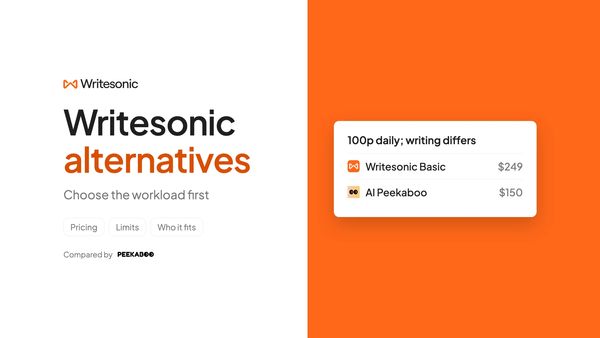
Replace the AI-search job that needs a different setup. Semrush research and custom tracking have different scopes; the right alternative depends on the work your team will maintain.
The best Semrush AI Visibility Toolkit alternative depends on the job you need it to take over. I would choose AI Peekaboo for an agency maintaining client questions and turning answer evidence into work. The agency can preserve its existing writing process while using the answers to decide what deserves attention.
Other teams have different reasons to move:
Otterly fits a marketing team following a small daily list.
You can make that choice without replacing Semrush for everything else. Its keyword research and site work may still be useful. The important question is whether the AI observation you need, and the work that follows it, fit inside your current setup. That is where the alternatives differ, including a separate enterprise option for larger teams.
Semrush AI research, tracking and pricing
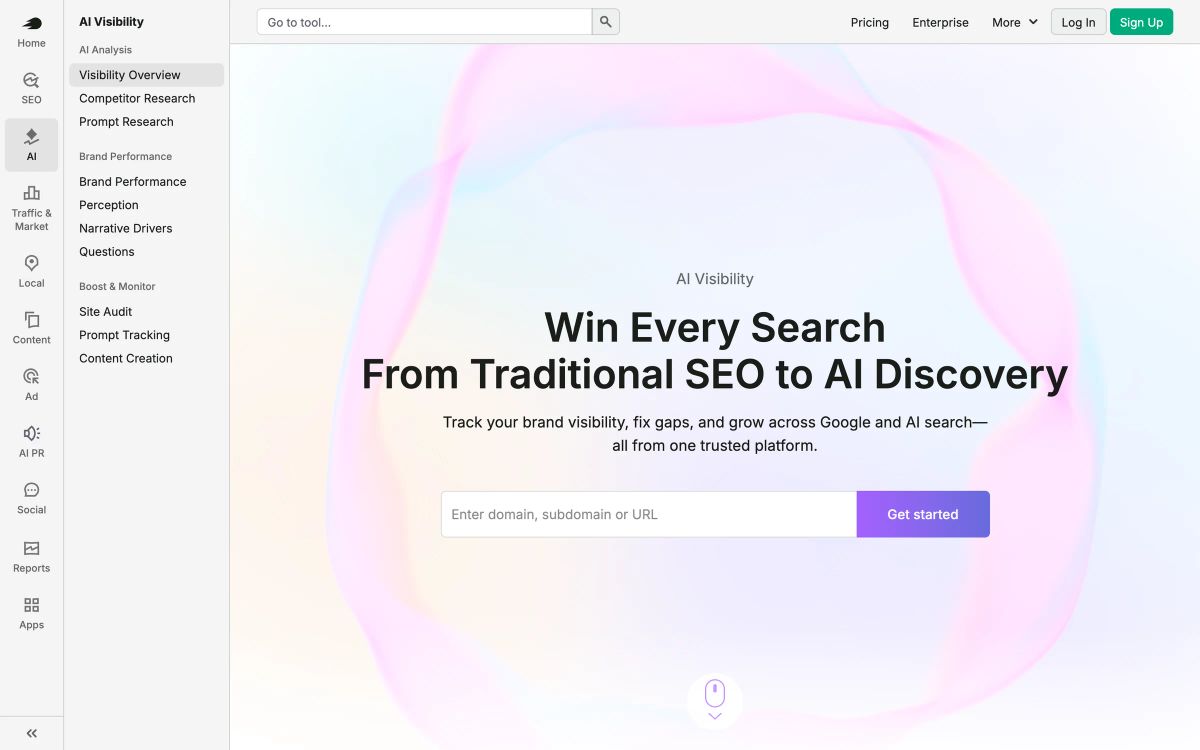
Semrush can research AI visibility for domains you have not configured as tracked brands. That does not mean it observes your chosen questions daily on every platform named in its reports.
Its three useful observation sets are:
General visibility and prompt research, for investigating a domain or topic.
Brand Performance, a weekly investigation for the configured brand domain.
Prompt Tracking, daily observations of questions you select.
The custom tracker's daily platforms are:
ChatGPT Search.
Google AI Mode.
Gemini.
Perplexity appears elsewhere in Semrush's research and brand coverage, but that does not make it part of this custom daily panel.
That distinction can decide the purchase. If your important questions fit the supported tracker and you use the wider SEO work, staying with Semrush is reasonable. If a required platform is missing from that recurring panel, a focused tracker can fill a specific gap.
Av. António Augusto de Aguiar 122C 1050-046 Lisboa, Portugal
Minnesota
202 N Cedar Ave, Suite 1 Owatonna, MN 55060, USA
The standalone AI Visibility Toolkit costs USD 99 monthly. It does not require a paid full-suite subscription.
The standalone allowance includes:
Twenty-five custom prompts.
One Brand Performance domain.
Its important expansion terms are:
Each subuser accessing the toolkit needs a separate USD 99 monthly license.
Another Brand Performance domain or location costs USD 99 monthly.
Another 50 custom prompts costs USD 60 monthly.
The domain fee concerns the configured Brand Performance investigation, rather than every competitor domain you research. Budget the work and the people who need access before treating USD 99 as the entire agency bill. The standalone toolkit has no free trial.
Its AI-readiness site audit covers up to 100 pages and investigates crawler blockers. That is another reason to retain useful Semrush site work: a page that cannot be accessed needs a different fix from a page that leaves a buying question unanswered.
If the remaining decision is where to keep broad research, compare Ahrefs Brand Radar vs Semrush AI Visibility Toolkit. It examines the analyst’s discovery purchase and colleague-access cost, beyond the narrower daily-panel replacement considered here.
How to choose a Semrush alternative
Reject an incompatible observation panel before comparing entry prices. Work through these priorities in order:
Observation scope: the questions, required platforms and locations.
Team job: monitoring, source investigation or content production.
Output: evidence for an editor or a report a client can use.
Funded capacity: enough recurring observations and colleague access.
The entry order reflects those different jobs, rather than a measured performance ranking.
Alternative
Team and job
Limit that changes the choice
AI Peekaboo
Agencies maintaining client questions and delivering findings
Branded reports require at least USD 100 monthly list price
Otterly
Lean marketing teams following a fixed daily list
Lite has 15 prompts; Gemini is a paid addition
Peec AI
Marketing and SEO teams sharing source analysis
Starter has one project and three selected base platforms
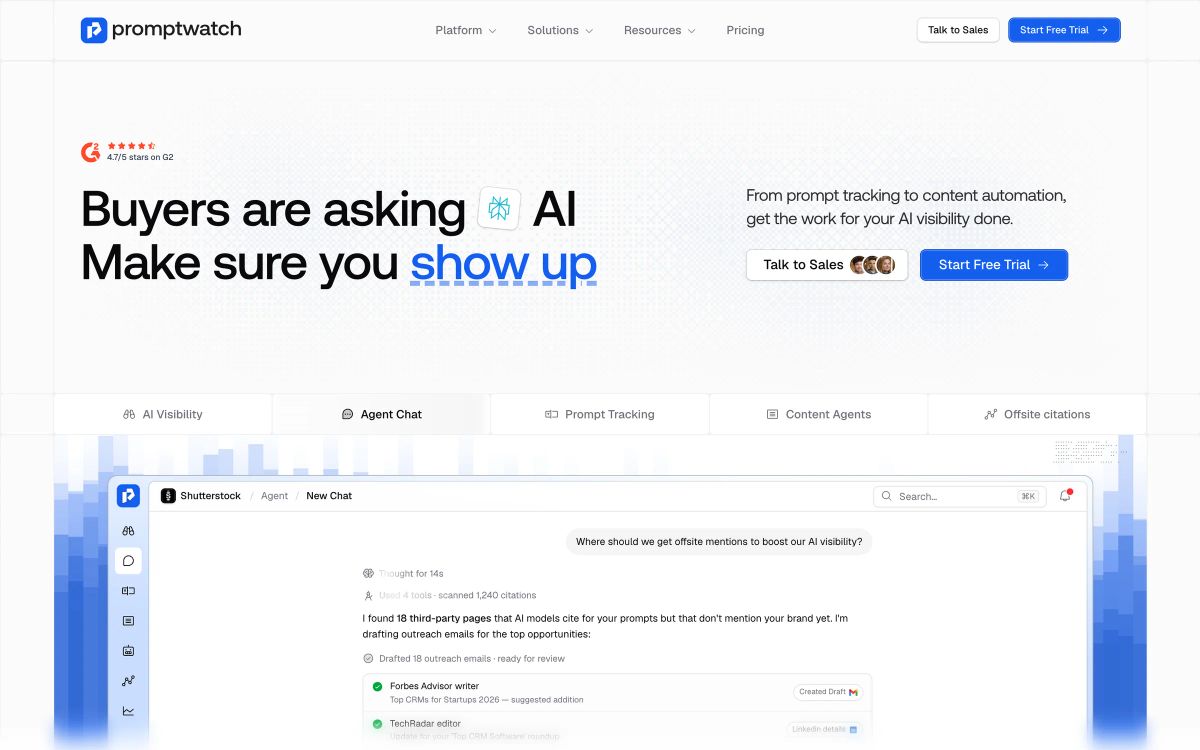
Promptwatch
Content teams producing work from monitoring
Essential includes no AEO articles; responses remain finite
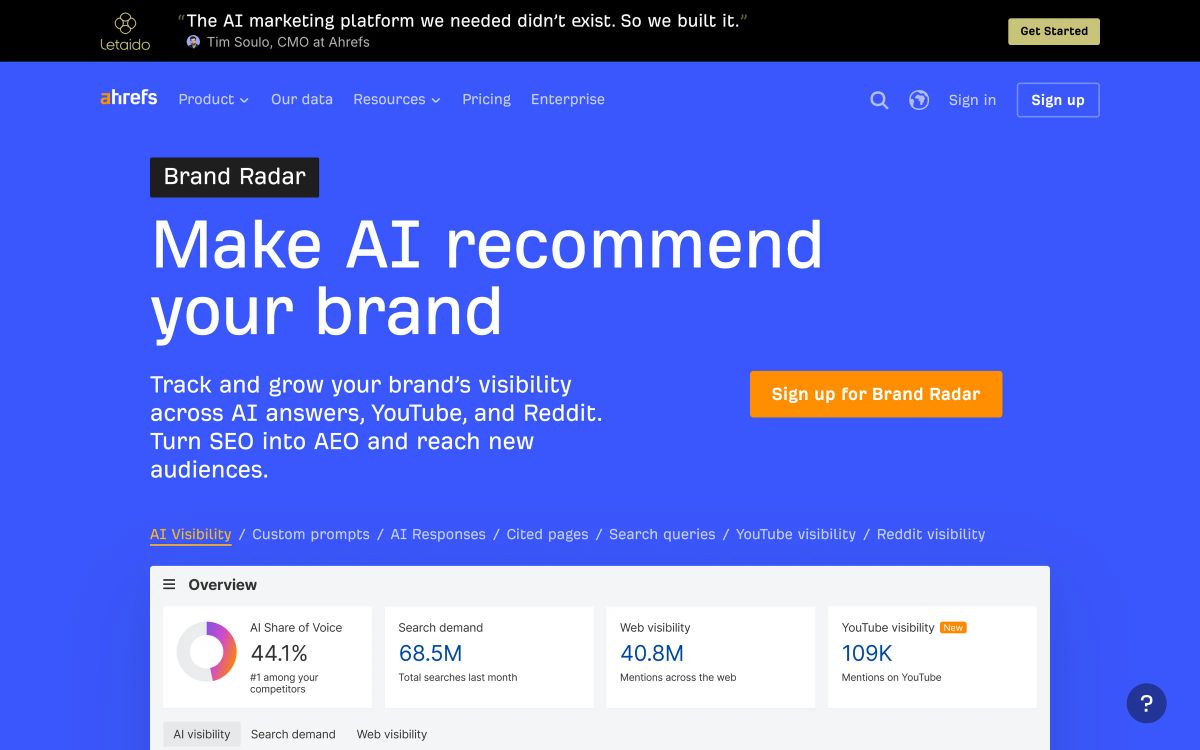
Ahrefs Brand Radar
SEO analysts discovering questions, then tracking selected ones
The broad index and custom checks are separate purchases
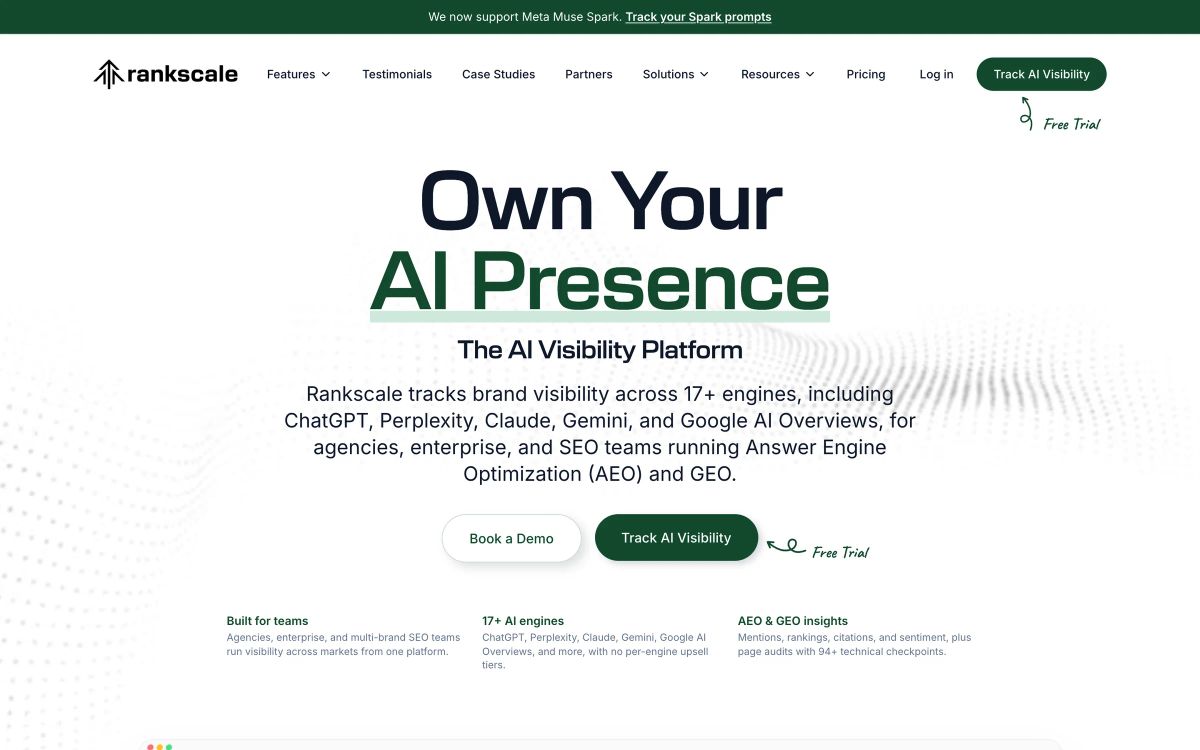
Rankscale
Analysts varying model selection and checking schedules
Engine weights determine how far credits go
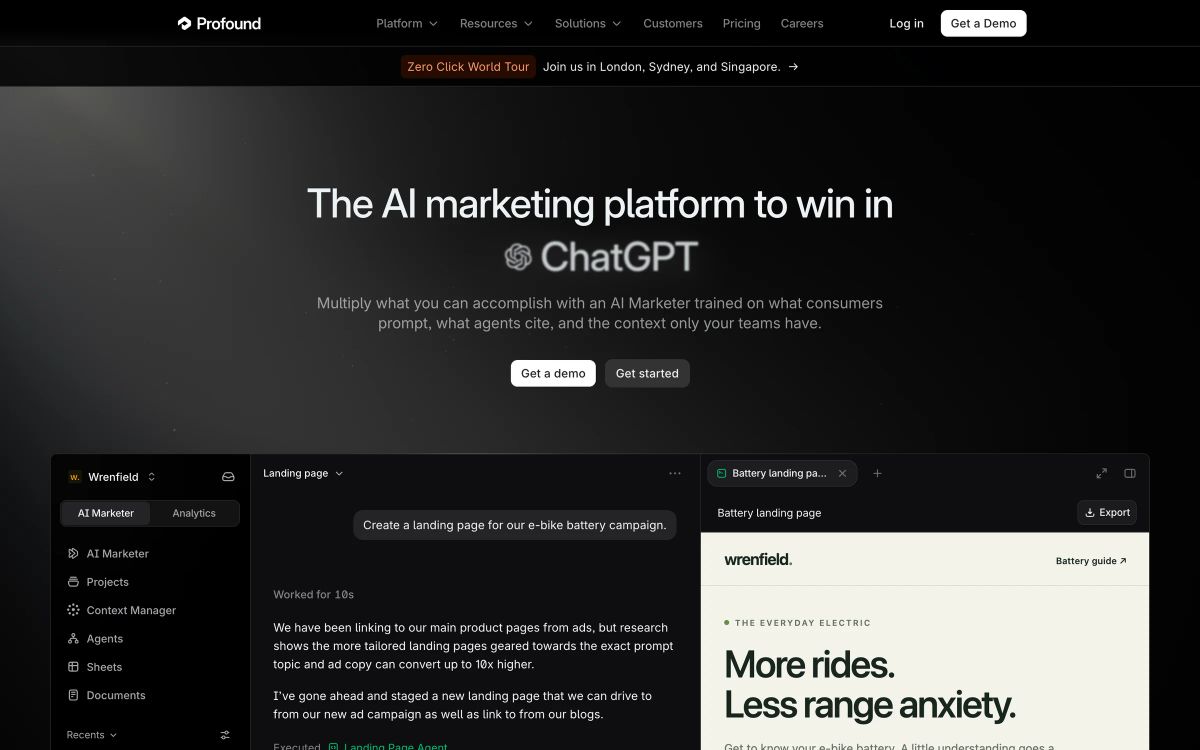
Profound
Large enterprise AEO, content and PR teams coordinating across markets
Custom enterprise pricing; trial prompts cannot be customized
How to compare AI visibility scores
Read the returned answer before interpreting the score. The measures answer different questions:
A mention means the brand appeared in the returned answer, even if the wording was unfavorable.
An answer's citation sources identify returned URLs worth investigating; they do not establish that your page caused a mention.
Share of voice describes a brand's share of observed mentions within a defined competitor comparison. It does not measure sales or total market demand.
Compare rivals within a fixed scope:
The same questions.
The same platforms.
The same dates.
The same competitor set.
Adding a competitor changes the comparison's scope, even if your own answers stay unchanged.
Visibility percentages also need their denominator attached. AI Peekaboo keeps eligible non-mention runs in its score as zero. Profound's visibility measure divides responses containing your brand by responses containing at least one brand. Those percentages are not interchangeable. Otterly's Net Sentiment Score runs from -100 to +100, while Peec separates sentiment from visibility and position. A higher number only helps when you know which question it answers.
Collection surface belongs in that comparison too. Otterly collects through public interfaces, with Claude as an API exception. AI Peekaboo's Claude option is also an API answer with web search. Rankscale offers both interface and API engines. Match the surface to the answer experience you need to observe; a shared platform name alone does not establish equivalent results. None of those methods makes a tool an accuracy winner.
The alternatives in detail
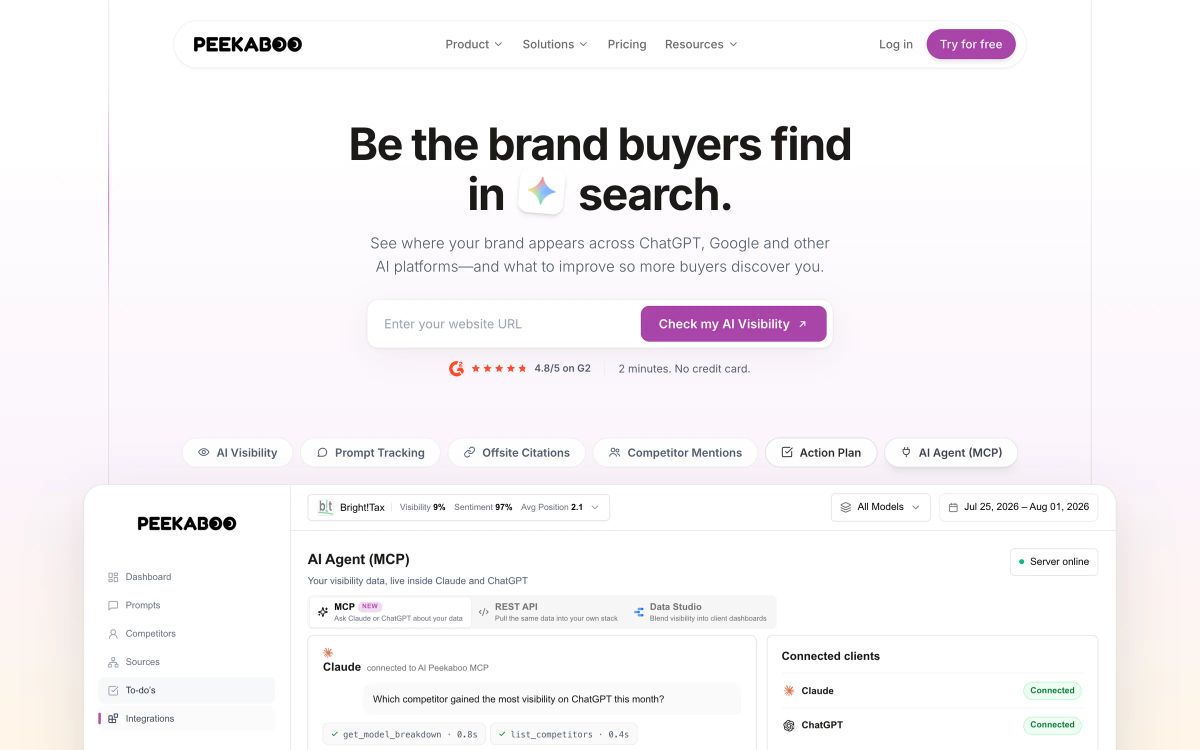
1. AI Peekaboo: best for agency monitoring and reporting
If your agency wants the same buying questions running for every client brand, month after month, and wants those answers turned into tasks, AI Peekaboo is the one I'd put first. Your writing process stays as it is. AI Peekaboo points out the answers and sources worth your attention, and its recommendations help you sort what comes first.
Whenever a client's numbers change, the AI answers that changed them are right there, along with the sources they cited. You can show the client exactly why, and your team starts the next job knowing what it is.
Key features
Keep each client's buying questions in its own brand, with its own prompts, competitors and dashboard, and open the AI answers and cited sources behind any score.
Run those questions on the AI platforms you pick, up to 7: ChatGPT, Gemini, Perplexity, Google AI Overviews, Google AI Mode, Microsoft Copilot and Claude API.
Turn findings into work with prompt suggestions, recommendations and content briefs that show what to track next and give your writers an outline.
Link GA4 and Google Search Console, and each client's AI visibility appears next to the traffic its site already gets.
Deliver results with a read-only client link, or pipe the data into Looker Studio or your own reporting through the API.
Use AI Peekaboo's MCP server to ask Claude or Cursor how a client compares with its competitors across the platforms you track.
Pitch new clients from unlimited pitch workspaces, all powered by one extra brand slot that you reuse for any prospect's brand.
Pricing
You build this price from four settings: brands, prompts for each brand, AI platforms (up to 7) and how often the prompts run. Adjust one and the total follows. Six platforms cost the same per check, while a Claude API check costs more, so review the total before adding it. Example plans to compare:
Brands
Prompts per brand
AI platforms
How often prompts run
USD monthly
3
50
3
Weekly
30
15
60
3
Monthly
45
3
100
3
Weekly
60
1
40
4, one of them Claude API
Weekly
62
1
150
3
Every 2 days
113
5
100
4
Weekly
133
Your choice of platforms, your plan. Six cost the same per check, so the rows apply to any of them, and Claude API costs extra.
Paying for a year up front cuts the monthly list price by 15%.
White-label reports and client share links are included from $100 a month.
Each person on your team joins at no cost, because there is no per-seat charge.
How often prompts run is a single account setting that every client shares, so pick it before you build your plan.
Who should choose it
Agencies that report AI visibility to several clients, and need branded reports that explain what moved and what to do next, are who I'd send to AI Peekaboo. Keep Semrush too if its keyword research and site work still earn their place. A single brand that just wants to see whether AI answers mention it, and get ideas for appearing more often, can use AI Peekaboo the same way.
If you expect finished articles, it will disappoint you: AI Peekaboo hands you briefs, and the writing stays with your writers or a writing tool. Clients who want city-level results inside the same report are the other case to check first, since standard exports and Looker Studio drop local-tracking data.
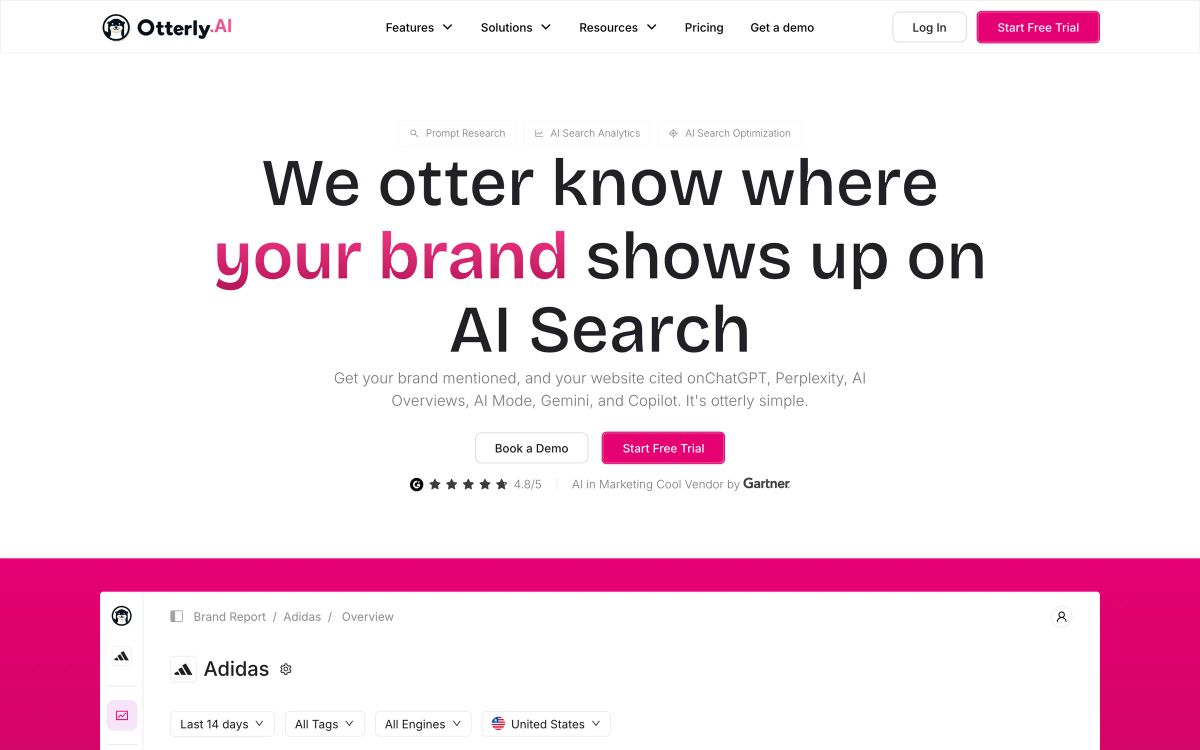
2. Otterly: Best for a Small Daily Question List
Otterly suits a lean marketing team that already knows which questions it wants to check each day. Its fixed limits make that routine easy to size, as long as you include the platforms you have to add.
That matters if you are replacing Semrush's Gemini results: the USD 29 entry price is not the whole comparison.
Key features
Check your questions daily on ChatGPT, Google AI Overviews, Perplexity and Microsoft Copilot.
Add unlimited team members on Lite and Standard.
Export raw answers as CSV or JSON and citations as CSV on all plans, so your editor keeps the evidence.
Run a GEO audit on one URL at a time to check crawlability and structured data. Passing those checks does not earn a citation.
Get Looker Studio from Standard.
Pricing
Monthly Otterly field
Lite
Standard
Price
USD 29
USD 189
Prompts
Fifteen
100
Workspaces
One
Unlimited
Team members
Unlimited
Unlimited
Cadence
Daily
Daily
Gemini on Standard costs USD 59 monthly.
Google AI Mode and Claude are paid additions.
The trial runs seven days, needs no card and includes fifty prompts, more than Lite's paid fifteen.
Who should choose it
Choose Otterly if you want a defined daily list checked without fuss. A team sending recurring dashboard reports needs Standard for Looker Studio; a team sharing occasional files can stay on Lite. The Otterly review explains its monitoring routine in more detail.
Skip it if you expect it to replace the wider SEO suite. I would use it for continuity around a set daily list, not as a Semrush replacement for everything.
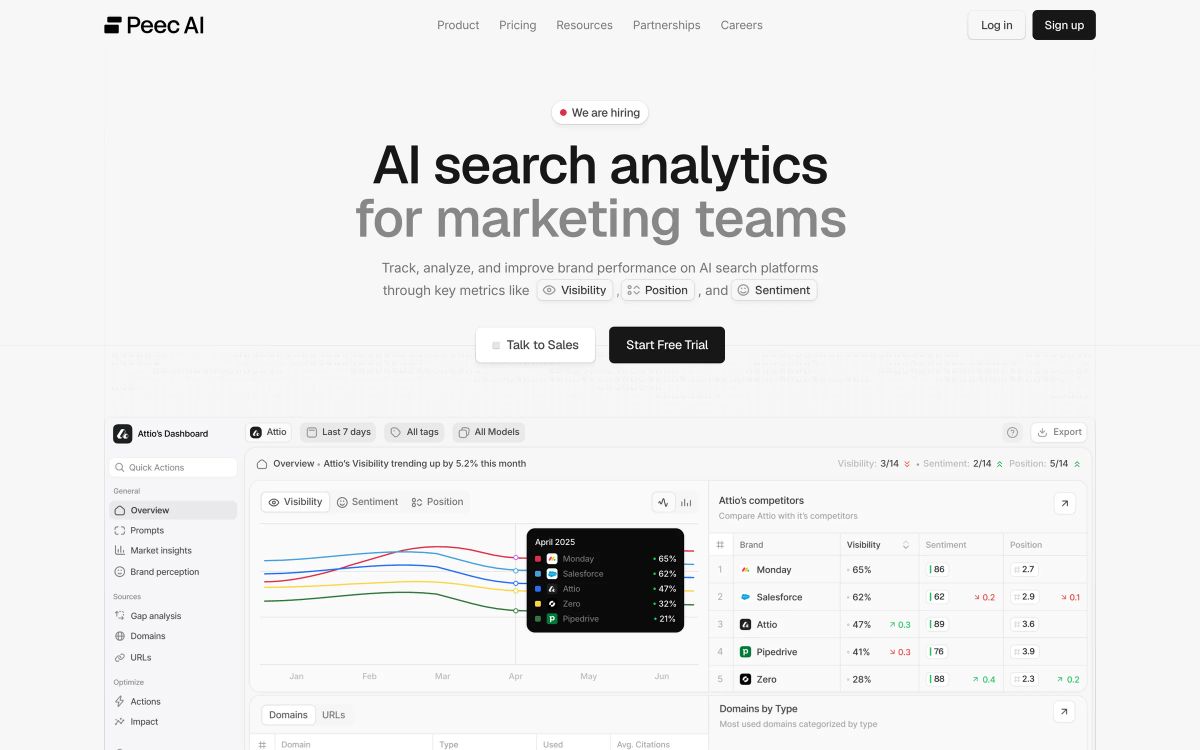
3. Peec AI: Best for Shared Source Analysis
Peec fits marketing and SEO teams that need to understand the sources behind a result together. Its source analysis shows pages worth examining, while recommended actions separate work on your own content from opportunities on other sites.
That helps when the next task is an editorial decision rather than another score report. You can inspect the cited URL, decide which explanation is missing and give the content owner a brief. You still need to judge whether the work helps the buyer.
Key features
See which sources sit behind each result with source analysis.
Split recommended actions into work on your own content and opportunities on other sites.
Track daily with unlimited users.
Pick three base platforms, for example ChatGPT, Gemini and Google AI Overviews.
Get Looker Studio from Advanced; Enterprise explicitly includes API access.
Pricing
Peec AI Starter
Monthly price
Prompts
Projects
Base platforms
Cadence
Users
Starter
EUR 85
Fifty
One
Three
Daily
Unlimited
Perplexity is an additional option, so do not budget it as an included third platform.
If you buy a lower brand plan, confirm whether it includes the data access you need.
Who should choose it
Choose Peec when shared source investigation is your team's main need.
Skip Starter if you need more than one project or a specific integration: those needs can change the right plan even when the prompt limit looks big enough.
4. Promptwatch: Best for a Content Production Team
Promptwatch makes more sense when you want monitoring to feed content production. Its Content Agent supports briefs and drafts, then connects the work to publishing. That is a different purchase from following a daily percentage.
Essential covers monitoring but none of the article production that probably made you look at the tool. I would choose Professional when an editor will use that included capacity.
Key features
Draft briefs and articles with the Content Agent and send them into your publishing workflow.
Get included AEO articles each month on Professional.
Investigate technical issues with crawler logs on Professional, so not every missing mention becomes a content task.
Use MCP and API access on Essential, without upgrading just for access.
Choose more models if you need them, but they use your response limit faster.
Pricing
Monthly brand-plan field
Essential
Professional
Price
USD 95
USD 245
Prompts
Fifty
150
Monthly monitoring responses
6,000
18,000
Included monthly AEO articles
None
Five
Projects
One
Two
Seats
One
Two
The four-model label sizes the response limit; it is not a hard ceiling.
Monitoring pauses when the response limit runs out unless you expand it.
Agent credits are a separate limit.
Who should choose it
Choose Promptwatch if your editor will turn the findings into published content and Professional's article and crawler-log features fit that work.
Skip it if you only need tracking: the MCP and API connections do not remove the response limits, and a dedicated tracker can be simpler.
5. Ahrefs Brand Radar: best for AI prompt research
Ahrefs is useful for an SEO analyst who suspects the team's chosen questions miss part of the market. Its broad index can show answers and sources worth investigating before you build your own list. You can then follow the important questions through a separate custom tracking purchase.
I would buy discovery breadth when the team needs better questions, and custom checks when it already has a list worth keeping. The Ahrefs Brand Radar review explains the difference.
Key features
Explore answers and sources across the broad index without writing your own prompts first.
Follow chosen custom questions daily; broad chatbot index refreshes are monthly.
Buy custom checks without the index or a full SEO subscription.
Track Claude through its API with web search, though each update uses eight checks.
Pricing
Ahrefs purchase
Monthly price
Included custom checks
One broad research-platform index
USD 199
Separate custom purchase
All-platform broad research index
USD 699
2,500
Standalone Custom Basic
USD 50
2,500
A custom check is one prompt run on one platform in one location.
The index is not included in the USD 50 custom offer.
Who should choose it
Choose Ahrefs Brand Radar if you need to find better questions before you track them.
Skip the index if you already have a list of questions you trust: Standalone Custom Basic covers that tracking on its own.
6. Rankscale: best for flexible tracking schedules
Rankscale fits an analyst who wants to check some questions more often than others. Schedules run from hourly to monthly, and weighted credits tie the cost to the engines you pick.
Check the questions your team can act on more often, and keep a steady baseline for the rest. An hourly schedule adds results and uses credits; it does not make every small change a useful task.
Key features
Set schedules from hourly to monthly for each question.
Run the three platforms in the worked example below at 0.25 credit per run each; Claude uses two credits.
Add unlimited users and ten brand dashboards on Pro.
Get exports and Looker Studio from Pro, and MCP on every plan.
Share white-label dashboard links from Growth.
Pricing
Rankscale plan
EUR monthly
What it adds
Pro
99
1,200 credits, ten brand dashboards, unlimited users, exports, Looker Studio
Pro+
229
REST API access
Growth
385
White-label dashboard links
Unlimited saved search terms do not mean unlimited runs; scheduled monitoring pauses when credits run out.
Who should choose it
Choose Rankscale for a deliberately varied checking schedule. Pro's exports and Looker reporting suit an internal analyst's delivery work.
Skip the Growth upgrade unless a client needs the branded dashboard link, and do not assume a broad engine list makes every set of questions affordable: a more expensive model changes how far your credits go.
7. Profound: Best for Large Enterprise Companies
Profound fits a large enterprise whose AEO team needs to coordinate answer analysis with content and PR colleagues across markets. Tailored languages and regions matter when those teams need more than one country's answers.
Its Agents workflow builder supports repeatable work that connects research with content tasks. Someone still needs to decide whether that work answers a buyer's concern.
Key features
Track prompts daily on up to nine answer engines, with tailored prompt tracking.
Set custom languages and regions, with unlimited seats.
Control access with SSO/SAML and SOC 2 compliance.
Export CSV and JSON, plus API access.
Build repeatable research and content work in the Agents workflow builder.
Pricing
Enterprise pricing is custom, with no published monthly brand-plan figure.
The free trial runs 50 recommended prompts daily for seven days. You cannot customize those questions, and the trial includes neither exports nor API access.
Who should choose it
Choose Profound for a coordinated enterprise program across markets.
Skip using the trial as your test: it cannot match your exact Semrush question list or prove that your reporting handoff works, so evaluate those requirements separately.
AI visibility tool pricing for 25 prompts
A specified question panel is more useful than advertised starting prices. Consider this hypothetical requirement:
Requirement
Scope
Brand and location
One of each
Chosen buying questions
25, unchanged
First platform
ChatGPT
Second platform
Gemini
Third platform
Perplexity
Observation schedule
Daily over 30 days
Total ordinary checks
2,250
These offers support that requirement, although their extra capacity and collection methods differ:
Offer
Monthly fee
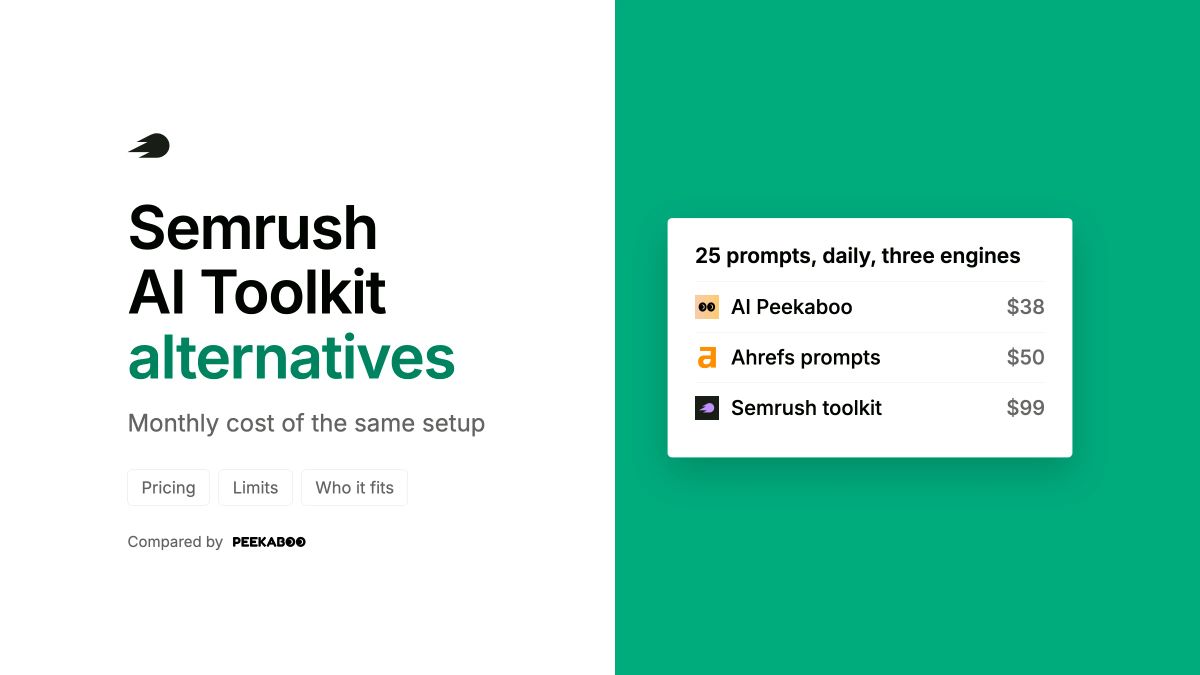
Consequence
AI Peekaboo, pay for what you track
USD 38, calculated
Below the USD 100 branded-report gate
Ahrefs Custom Basic
USD 50
2,500 checks; the broad index is separate
Promptwatch Essential
USD 95
6,000 responses; no included AEO articles
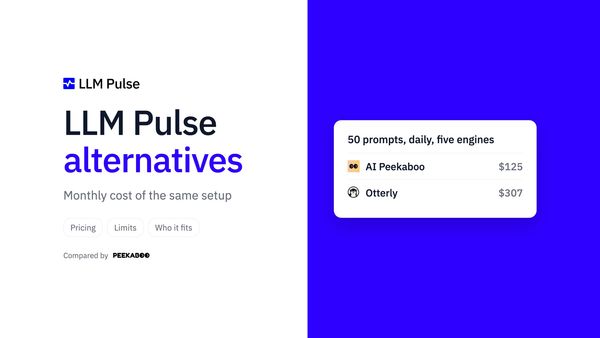
Otterly Standard with Gemini
USD 248, calculated
The 100-prompt plan plus the required Gemini addition
Rankscale Pro
EUR 99
Uses 562.5 of its 1,200 credits at the ordinary engine weights
Semrush's custom tracker does not match this Perplexity requirement. Peec's base price does not establish the total with Perplexity added. Neither belongs in the table as though it supplied the same panel at its minimum.
Use the table to find the offer that funds your questions, then check the output you need. Agency reporting and content production can require a higher purchase than monitoring alone. The currencies have not been converted, and the offers are not a promise of identical answers.
Should you replace Semrush's AI tracker?
I would retain Semrush when its supported custom questions and broader research fit the work your team does. Add or replace the AI tracker when an important observation or follow-up task needs a different setup.
Evaluate one actual buying question from your existing panel. Inspect the returned answer and cited URL, then produce the output a colleague or client needs. Assign a next action from that evidence. If the tool cannot support that handoff, a bigger dashboard is not a useful replacement.
Promptwatch offers a seven-day trial on Essential and Professional, plus the agency Kick-off and Growth plans. Ahrefs has no standalone free trial. Otterly's larger trial allowance and Profound's fixed recommended questions mean trial scope cannot stand in for the paid panel you intend to maintain.
Before switching, preserve:
The questions and buying concerns the team has agreed to follow.
The selected platforms.
The chosen country or location, keeping its scope explicit.
The agreed cadence.
A useful answer and its cited source, alongside the task it supports.
A country panel does not establish every branch's local visibility. Otterly assigns one country per prompt; Ahrefs counts each prompt/platform/location execution separately. AI Peekaboo's enabled local tracking keeps separate history and is outside standard exports and Looker reporting. Preserve those boundaries when planning regional delivery.
Expect a new history boundary when moving. AI Peekaboo has no pre-tracking history and uses one cadence across the subscription. Otterly's daily history belongs to the prompt, with no backfill. Keep saved evidence from the old tool rather than expecting the replacement to recreate it.
If the new tool uses a different question set, a changed score is not proof that visibility improved. Keep the investigation understandable enough to explain what changed.
Use the free AI visibility checker to see an initial set of answers for your domain. Its generated questions produce a one-time report, so carry a relevant buying concern into your chosen recurring panel before replacing Semrush's tracker. The useful move is a funded observation your team can turn into work.
How we checked this
Last checked: 2 October 2026.
Prices and plan limits: each vendor's public pricing page. Features: vendor help docs and product pages.
Frequently asked questions
Should I reduce my question panel to fit a cheaper plan?
No, not just to reach a lower price. Keep the buying concerns that matter to your team, then judge whether some questions cover the same concern. A smaller panel can be a sensible editorial choice, but it changes what you observe. I would record any removals before moving, so a later report cannot mistake narrower coverage for better brand visibility.
Does a higher share of voice justify the subscription cost?
No, a higher share of voice alone does not justify the fee. It describes observed mentions, rather than sales. I would judge the subscription by whether its findings help the team make a worthwhile decision, such as resolving a specific gap in a comparison article. Keep the commercial outcome separate from the visibility measure when deciding whether that work deserves continued funding.
Who should manage the tracker if external writers produce the content?
An internal marketing or agency lead should own the tracking scope and decide which findings deserve a brief. The writer can work from the relevant answer evidence without managing the entire panel. AI Peekaboo supports a Markdown brief handoff, while Otterly can export raw answers. Choose the handoff your writers can use, and keep responsibility for reviewing new findings with the person who commissions the work.
Start with your own visibility.
See where your brand appears in AI answers and which competitors get mentioned.
 Filipe Lins Duarte