Ahrefs Brand Radar vs. Semrush AI Visibility Toolkit Review (2026)
Choosing between Ahrefs and Semrush for AI visibility? Ahrefs Brand Radar wins on data and channel coverage. Semrush AI Toolkit wins on integration and price. We compare both tools across five feature areas with clear winners, honest pros and cons, and AI Peekaboo alternative starting at $50.
The two giants of the SEO world, Ahrefs and Semrush, have both entered the AI visibility ring. Ahrefs has launched its standalone Brand Radar, while Semrush has integrated its AI Visibility Toolkit into its existing platform. Both promise to help you navigate the new world of AI search, but they do so in very different ways.
This article will break down the key differences between these two powerful tools, so you can decide which one is the right fit for your business. We'll cover:
A quick comparison table
What is Ahrefs Brand Radar?
What is Semrush AI Visibility Toolkit?
Feature-by-Feature Comparison
Pricing Comparison (2026)
Ahrefs Brand Radar Pros and Cons
Semrush AI Visibility Toolkit Pros and Cons
An Alternative to Ahrefs and Semrush: AI Peekaboo
Final Verdict
Ahrefs Brand Radar vs. Semrush AI Visibility Toolkit: At a Glance
Av. António Augusto de Aguiar 122C 1050-046 Lisboa, Portugal
Minnesota
202 N Cedar Ave, Suite 1 Owatonna, MN 55060, USA
Semrush AI Visibility Toolkit
Best For
Data-driven marketers and enterprises
Agencies and existing Semrush users
Tie
What is Ahrefs Brand Radar?
Ahrefs Brand Radar is a standalone tool designed to give you a comprehensive view of your brand's visibility across AI answers, YouTube, and Reddit. It boasts the largest AI visibility database in the industry, with over 259 million search-backed prompts. Brand Radar is built for deep analysis, allowing you to research any brand, product, region, or person with zero setup and zero waiting time. It's a powerful tool for data-driven marketers who want to understand their brand's presence in the new AI-powered search landscape.
What is Semrush AI Visibility Toolkit?
Semrush AI Visibility Toolkit is an integrated solution that adds a new layer of AI visibility to the existing Semrush platform. It's designed for SEOs and marketers who want to monitor how their site and competitors are positioned across AI systems. The toolkit is built with SMBs, agencies, and mid-market companies in mind, offering a practical and scalable way to strengthen your presence in AI-driven search. It's a great option for existing Semrush users who want to add AI visibility to their existing SEO workflow.
Feature-by-Feature Comparison
Let's take a closer look at how Ahrefs Brand Radar and Semrush AI Visibility Toolkit stack up in a few key areas.
1. AI Model and Channel Coverage
Ahrefs Brand Radar: Tracks 6 AI models (AI Overviews, AI Mode, ChatGPT, Copilot, Gemini, Perplexity) plus YouTube and Reddit. This multi-channel approach gives you a more holistic view of your brand's online presence, extending beyond just AI search to include video and community platforms.
Semrush AI Visibility Toolkit: Tracks 4 AI models (ChatGPT, Google AI, Gemini, Perplexity). While this is a solid offering, it lacks the multi-channel capabilities of Brand Radar.
Winner: Ahrefs Brand Radar. With 6 AI models and the addition of YouTube and Reddit, Brand Radar offers a more comprehensive view of your brand's visibility across multiple channels.
2. Data and Prompts
Ahrefs Brand Radar: Boasts a massive database of over 259 million search-backed prompts, which they claim are more accurate than synthetic prompts. This means you're getting insights based on real user queries, not just educated guesses.
Semrush AI Visibility Toolkit: Provides topic-level volume, difficulty, and user intent data for AI prompts, similar to its traditional keyword research tools. This is a familiar workflow for Semrush users, but the data is not as extensive as Brand Radar's. Understanding topical authority is key to making the most of this data.
Winner: Ahrefs Brand Radar. The sheer size of its prompt database gives it a significant advantage in terms of data depth and accuracy.
3. Integration with Existing SEO Tools
Ahrefs Brand Radar: A standalone tool, but some features (Search Demand, Web Visibility) require a paid Ahrefs subscription. This means you'll need to switch between tools to get a complete picture of your online presence.
Semrush AI Visibility Toolkit: Fully integrated into the existing Semrush platform, including an AI Search Health widget in the Site Audit tool. This seamless integration provides a more unified workflow for SEOs and marketers.
Winner: Semrush AI Visibility Toolkit. The seamless integration with the rest of the Semrush toolkit provides a more unified workflow for SEOs and marketers.
4. Content and Technical Optimization
Ahrefs Brand Radar: Allows you to cluster AI prompts into topics to uncover content gaps and find new content opportunities. It also helps you find and secure valuable AI citations.
Semrush AI Visibility Toolkit: Offers AI-generated strategic recommendations, brand sentiment analysis, and an AI Search Site Audit to check for technical issues that might be blocking AI crawlers. This is a more proactive approach to optimization, helping you identify and fix issues before they impact your visibility.
Winner: Semrush AI Visibility Toolkit. The addition of AI-generated recommendations and a dedicated site audit for AI readiness gives it the edge in content and technical optimization.
5. Target Audience and Use Case
Ahrefs Brand Radar: Positioned as a powerful, data-rich tool for deep analysis of any brand, product, or person. It's ideal for users who want the most comprehensive AI visibility data available and are willing to pay for it.
Semrush AI Visibility Toolkit: Built for SMBs, agencies, and mid-market companies that need a practical, scalable solution for strengthening their presence in AI search. It's a great option for businesses that are already invested in the Semrush ecosystem.
Winner: Tie. Both tools are well-suited to their target audiences. Ahrefs is the choice for data purists, while Semrush is the practical choice for most businesses.
Pricing Comparison (2026)
Here's a breakdown of the monthly pricing for Ahrefs Brand Radar and Semrush AI Visibility Toolkit:
Ahrefs Brand Radar:
Individual platforms: $199/month per index
All AI platforms: $699/month
Custom prompts: From $50/month (add-on)
Semrush AI Visibility Toolkit:
Standalone: $99/month (25 prompts, 4 models)
Semrush One (Starter): $199/month (50 prompts, 4 models)
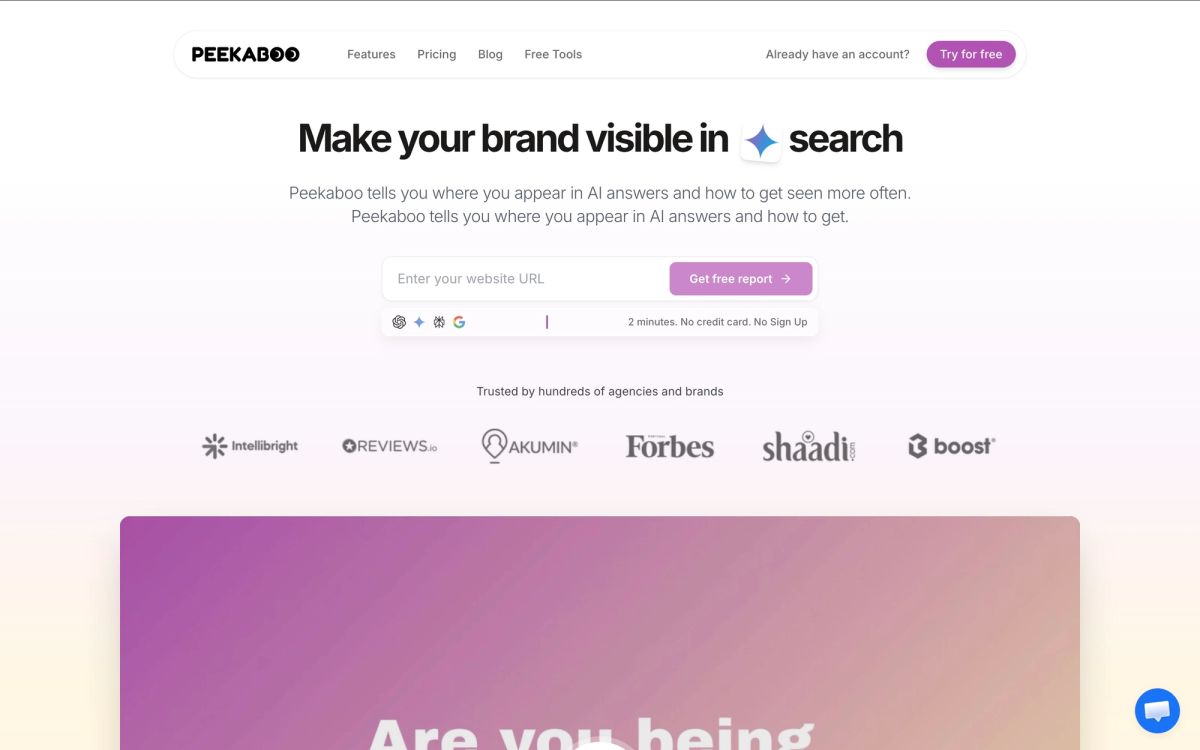
While Ahrefs and Semrush are the undisputed leaders in the SEO space, their AI visibility tools may not be the right fit for everyone. AI Peekaboo offers a compelling alternative, especially for agencies and businesses that need a dedicated, cost-effective AI visibility solution.
AI Peekaboo provides deep AI search analytics, competitor tracking, and citation analysis across 5 different AI engines. It's designed to be a high-ROI solution for businesses of all sizes, with plans starting at just $50/month. For agencies, Peekaboo offers full white-label capabilities and an API for custom data integrations. If you're looking for a powerful, affordable, and agency-friendly AI visibility tool without the complexity of a full SEO suite, AI Peekaboo is a great choice.
Final Verdict
So, which tool is right for you? Here's the bottom line:
Choose Ahrefs Brand Radar if: You need the most comprehensive AI visibility data available and want to monitor your brand across multiple channels, including YouTube and Reddit. You're a data-driven marketer who wants to dig deep into the numbers and uncover every possible insight.
Choose Semrush AI Visibility Toolkit if: You're an existing Semrush user or an SMB that wants a practical, affordable, and fully integrated AI visibility solution. You value a unified workflow and want to add AI visibility to your existing SEO strategy without breaking the bank.
Choose AI Peekaboo if: You're an agency that needs a white-label solution with an API, or a business that wants a dedicated, high-ROI AI visibility tool without the enterprise price tag. You want a powerful, focused tool that does one thing exceptionally well: AI visibility.
Ultimately, the best way to decide is to book a demo with both Ahrefs and Semrush to see which platform is the best fit for your specific needs.
Full transparency: I’m the Founder and CEO of AI Peekaboo, and we’re included in this list. I’ve seen firsthand how AI Peekaboo drives a measurable understanding and results for agencies and brands to better understand their presence in AI answers. That said, I’ve made every effort to provide an honest, balanced comparison. The other tools featured here are genuinely strong options, each with unique strengths and proven track records. My goal isn’t to claim that AI Peekaboo is the best alternative to Ahrefs Brand Radar and Semrush AI Visibility Toolkit. It’s to help you find the right fit for your specific needs, budget, and growth stage.
Despite my connection to AI Peekaboo, this comparison offers value because I’ve done the research you don’t have time for. I’ve analyzed various tools, compared pricing models, and identified what differentiates each tool's approach to AI SEO (or AEO/GEO). Rather than hiding my bias, I’m acknowledging it upfront so you can factor it into your decision-making.
Frequently Asked Questions
How much do Ahrefs Brand Radar and Semrush AI Toolkit cost?
Ahrefs Brand Radar starts at $199/month per index, or $699/month for all AI platforms, with custom prompts from $50/month as an add-on. Semrush AI Visibility Toolkit starts at $99/month for 25 prompts, and Semrush One Starter is $199/month for 50 prompts.
Which AI models does Ahrefs Brand Radar track?
Ahrefs Brand Radar tracks 6 AI models and channels, including YouTube and Reddit. Semrush AI Visibility Toolkit covers 4: ChatGPT, Google AI, Gemini, and Perplexity. Model coverage is the clearest area where Brand Radar wins this comparison.
Does either Ahrefs or Semrush offer a free trial?
No. Neither Ahrefs Brand Radar nor Semrush AI Visibility Toolkit offers a free trial, so you pay before you test either platform. A missing trial is listed as a con for both tools in this comparison.
Which is better for agencies, Ahrefs or Semrush?
Semrush AI Visibility Toolkit suits agencies and existing Semrush users, because it is fully integrated with the wider Semrush platform and its Site Audit. Ahrefs Brand Radar is a standalone tool aimed at data-driven marketers and enterprises.
What is a cheaper alternative to Ahrefs and Semrush?
AI Peekaboo starts at $50/month and covers AI search analytics, competitor tracking, and citation analysis across 5 AI engines. It includes full white-label capabilities and an API for custom data integrations, without the complexity of a full SEO suite.
How big is the Ahrefs Brand Radar prompt database?
Ahrefs Brand Radar is built on 259M+ search-backed prompts, which is why it wins on data in this comparison. Semrush AI Visibility Toolkit instead uses keyword-style topic and intent data pulled from its existing SEO platform.
Start with your own visibility.
See where your brand appears in AI answers and which competitors get mentioned.
 Filipe Lins Duarte