So what would I choose instead of xFunnel? I would start with the people doing the follow-up:
For an agency with its own writer and analyst, I think AI Peekaboo is the strongest fit because the monitoring can go into a branded client report and the next content task.
For a larger enterprise team organizing content execution, I would look at Profound.
The question I would challenge you on is what happens after the report. If nobody is going to use the finding, changing the dashboard doesn't solve much.
Which xFunnel services do you need?
HubSpot announced an agreement to acquire xFunnel on 31 October 2025. That is an announced agreement. It doesn't tell you there is a shutdown deadline or that every customer moves into HubSpot AEO with the same scope.
xFunnel Enterprise includes daily monitoring and weekly expert meetings. If you are an enterprise marketing team that needs someone to help decide what content or technical work to do, I can see a reason to keep that analyst-assisted model. Replacing it with software means your team needs to take over that responsibility.
I would separate the service into three jobs before choosing its replacement:
The analyst decides whether a change in the answers deserves attention and which finding matters most.
The editor turns a content gap into a brief, checks the claims and approves the page.
The web owner investigates access or technical issues and decides what can safely change.
xFunnel's Enterprise scope includes strategy assessment, content audits and technical AEO audits, alongside the daily monitoring. Its custom scope also covers languages and regions. If those were part of your program, replacing the charts alone leaves work behind. Weekly expert interpretation is a responsibility you need to preserve, whether an internal analyst or another service takes it on.
Av. António Augusto de Aguiar 122C 1050-046 Lisboa, Portugal
Minnesota
202 N Cedar Ave, Suite 1 Owatonna, MN 55060, USA
Take a hypothetical case where an answer cites a competitor's comparison page and a separate audit flags an access problem. The first finding could become an editor's assignment to improve the relevant comparison. The second belongs with the person responsible for the website. They need different evidence and different approvals. Sending both findings to a writer because the new platform has a content button doesn't make sense.
GA referral analysis adds information about visits reaching your site. Agent-traffic detection concerns agents visiting it. These can help the investigation, but an agent visiting a page is not proof that your brand gets recommended. An AI citation is not proof that it caused a sale either.
There is a separate one-time free 50-query audit. For new work, confirm when access can start and what continuing service is included. Don't plan a recurring program around a one-time audit.
xFunnel alternatives: team fit and pricing
Tool
Team I would choose it for
Useful job
AI Peekaboo
Agencies and teams with their own writers
Monitoring evidence and branded client delivery
HubSpot AEO
Existing Marketing Hub teams
Audience context in the content decision
Profound
Large enterprise content teams
Coordinated execution with company context
Scrunch
Single-brand technical and content teams
Investigating website access
AthenaHQ
Teams assigning optimization work
A content workspace with publishing routes
Peec AI
SEO analysts tracing cited sources
Directing owned or earned work
Otterly
Lean teams with a fixed question list
Keeping daily monitoring consistent
Use the monthly entry points to screen the scope, not to declare a winner:
Tool
Monthly cost basis
Engine boundary to keep in view
AI Peekaboo
From $30; pay for what you track
You pick up to 7 platforms
HubSpot AEO
USD 50 standalone
ChatGPT, Gemini and Perplexity
Profound
Custom brand Enterprise
Up to nine platforms in the agreed scope
Scrunch
USD 250 Core
Four included platforms; Gemini needs Enterprise
AthenaHQ
USD 295 Starter
Eleven available platforms; credit weights vary
Peec AI
From EUR 85 Starter
Three chosen base platforms; Perplexity additional
Otterly
From USD 29 Lite
Four base engines; Gemini, AI Mode and Claude additional
The alternatives in detail
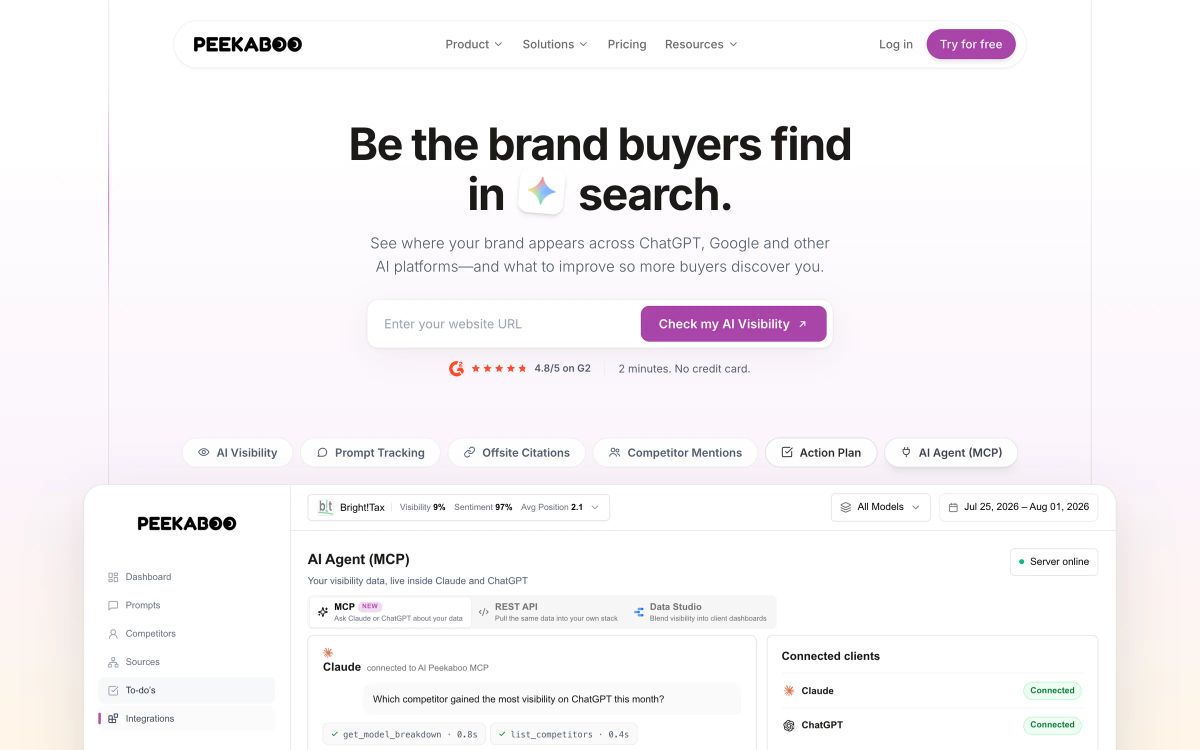
1. AI Peekaboo: best for agencies with writers
If you have writers on staff and want to keep your own editorial process, AI Peekaboo is the xFunnel replacement I'd look at first, whether you're an agency or an in-house marketing team. It gets the evidence to the person who writes, instead of selling you a system that claims it can do everyone's job.
Suppose a client loses ground in AI answers. You can read the answers that changed and see which sources they leaned on, so you bring the client a real example and give your team a concrete job to do, not just a smaller figure. What it won't replace is xFunnel's weekly expert meeting, so put someone on your side in charge of that review.
Key features
Get content briefs, prompt suggestions and recommendations that point your writers at the next piece and show you what else to track.
Set up each client brand with its own prompts, competitors and dashboard, and click through any score to the AI answers and cited sources behind it.
Decide which AI platforms to cover, up to 7: ChatGPT, Gemini, Perplexity, Google AI Overviews, Google AI Mode, Microsoft Copilot and Claude API.
Bring GA4 and Google Search Console in, so each client's AI visibility and site traffic can be read together.
Give clients a read-only link, or pull the numbers into Looker Studio or your own reporting with the API.
Give your writers tracked prompts and cited sources in Claude Code, ready to turn into the next draft, by connecting the MCP server.
Keep pitching without paying per prospect: add a single spare brand slot and it becomes an unlimited pitch workspace you reuse for each prospect.
Pricing
You put the plan together yourself from four parts: the brands, the prompts each brand gets, your AI platforms (up to 7) and the schedule prompts run on. Every change shows up in the price straight away. Claude API costs more per check than the other six platforms, which all cost the same, so check the difference before you include it. Some plans for reference:
Brands
Prompts per brand
AI platforms
How often prompts run
USD monthly
8
75
3
Monthly
30
3
100
3
Weekly
60
1
50
3
Daily
75
20
50
5
Monthly
83
1
25
4, one of them Claude API
Every 2 days
105
5
100
4
Weekly
133
Mix the platforms however you like. The price counts standard platforms equally and only treats Claude API differently.
Billed yearly, any plan costs 15% less than paying monthly.
Spend $100 a month or more and your plan includes white-label reports and client share links.
You can add as many teammates as you like with no per-seat charge.
The schedule for how often prompts run is chosen once and applies to the whole account, so every client runs on it. Settle it before you build the plan.
Who should choose it
I'd choose AI Peekaboo if you run an agency that reports on AI visibility for several clients and wants those reports under its own brand, backed by evidence of what moved and what to do about it. It also works for a brand that just wants to see whether it appears in AI answers and get some ideas on how to appear more.
Look elsewhere if you need finished articles. AI Peekaboo stops at briefs, so your writers or a writing tool still produce the finished piece. And if one client needs daily checks while another is fine with weekly ones, keep in mind that all your clients share one schedule.
2. HubSpot AEO: best for Marketing Hub teams
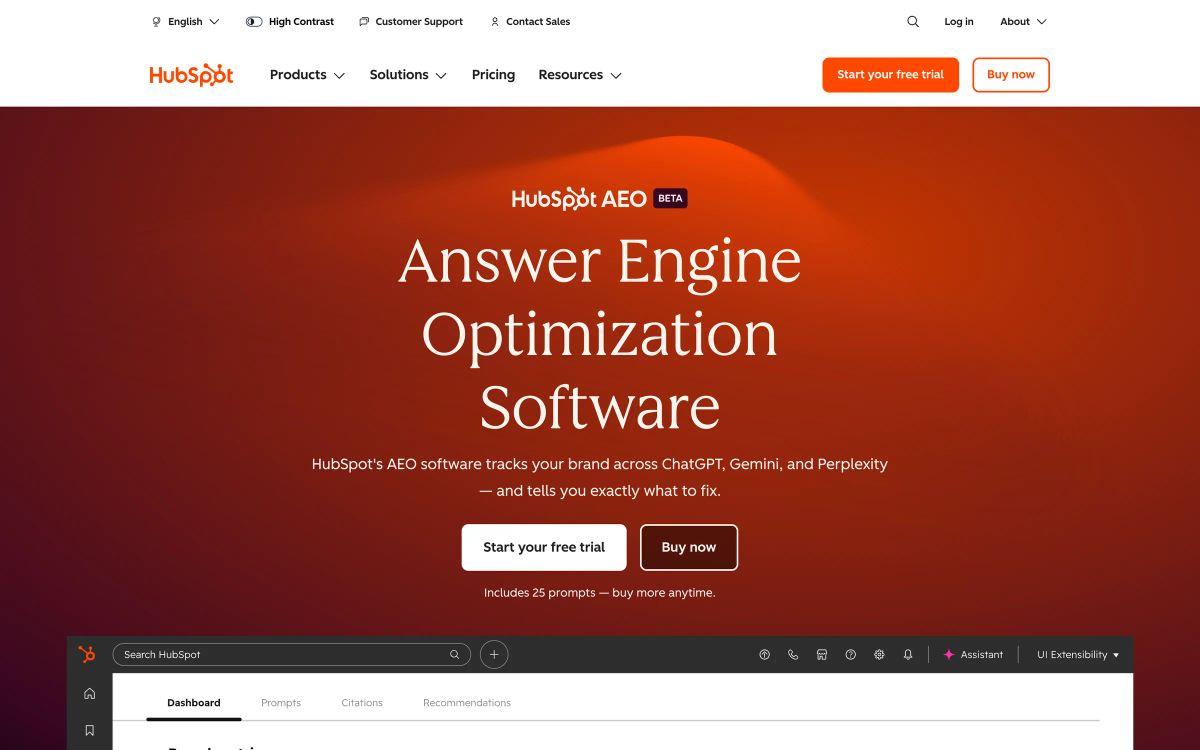
I think HubSpot AEO (currently in beta) makes sense if your team already works in Marketing Hub. Pro and Enterprise use your CRM data in their recommendations, so the content decision can reflect who your customers are and what matters to them.
Use its views together. Your brand can get mentioned while the answer favors a rival, and a cited domain can explain where that framing came from. If the answer to a question like "Which CRM works well for a small B2B sales team?" keeps favoring a competitor, check the reasons and sources before you act on a recommendation. The fix might be a clearer page on your own site, or outside coverage that needs work.
Key features
Tracks ChatGPT, Gemini and Perplexity.
Analyzes citations and sentiment, then ranks recommendations for you.
Compares your share of voice with competitors.
Marketing Hub Pro and Enterprise add your CRM data to the recommendations and can create content.
Pricing
The standalone product is a different purchase from Marketing Hub.
Standalone AEO field
Allowance or price
Monthly billing
USD 50/month
Annual payment
USD 45/month
Daily prompts
25
Monthly answers
2,500
Marketing Hub AEO version
Daily prompts
Monthly answers
Pro
25
2,500
Enterprise
50
5,000
Each generated blog or social post in Marketing Hub uses 1,000 HubSpot Credits. Budget for that separately from monitoring.
The twenty-eight-day trial needs no card and covers the included prompt list. A bigger list needs a bigger plan.
Who should choose it
Choose HubSpot AEO if your team already uses Marketing Hub: the customer data is a real reason to pick it. You are not buying the whole Marketing Hub system for USD 50, though. If you don't use HubSpot already, I would need a stronger reason than the xFunnel announcement to change your wider process.
3. Profound: best for large enterprise teams
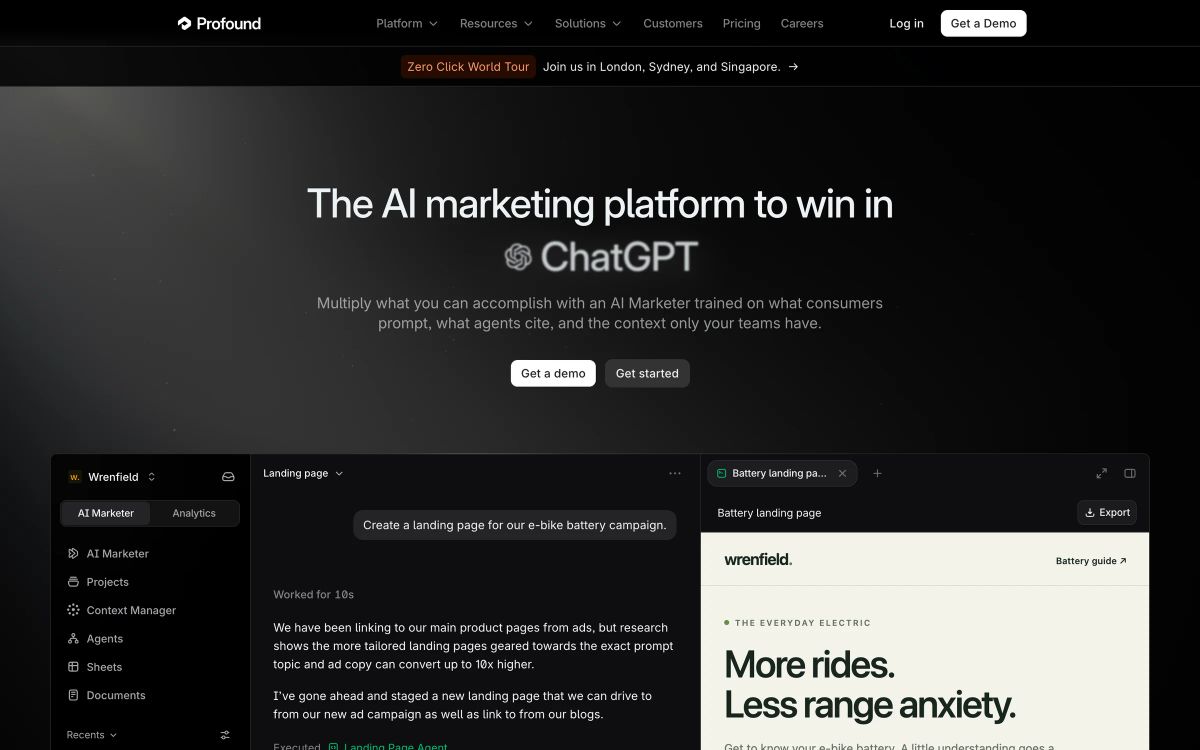
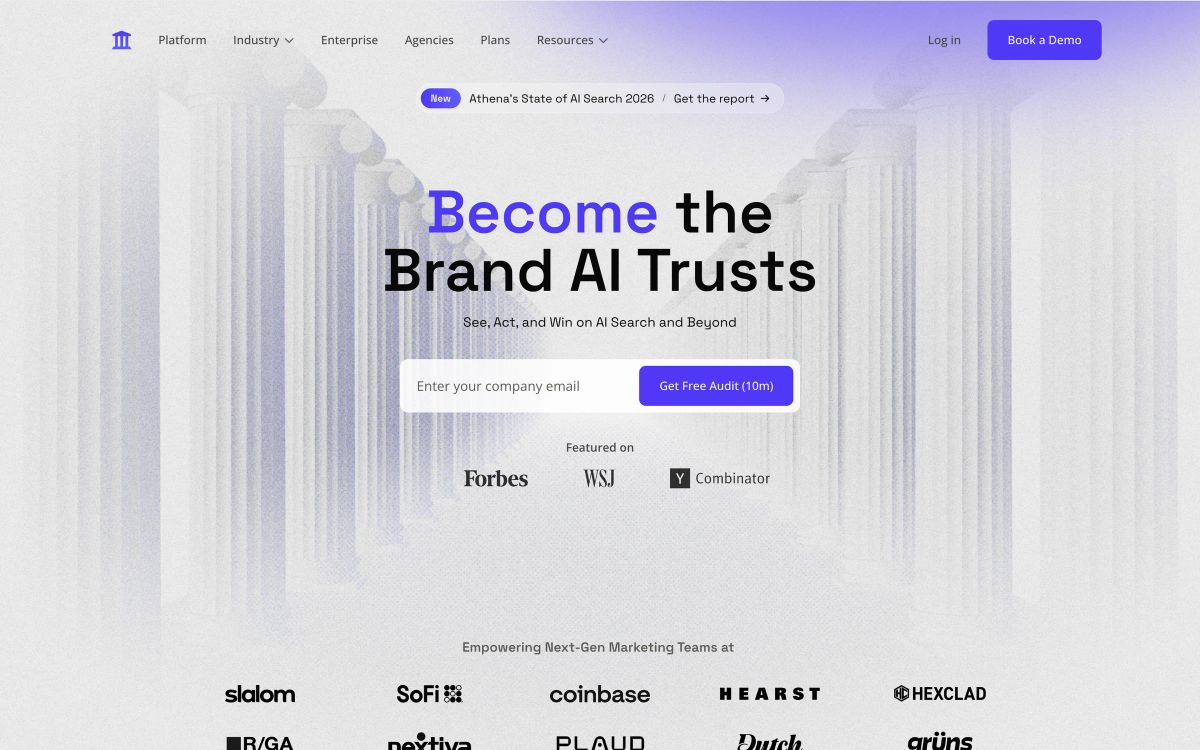
Profound fits a large enterprise team that needs to organize content production, not just watch answers. I think it is useful when coordinating the work is part of what you are buying.
Use the visibility data to pick the work before you send it into an Agent workflow. A product description that AI keeps getting wrong needs a different task from a missing comparison page. Projects can carry your company context into the writing, but your editor still has to check that the content answers the real concern.
Key features
Answer Engine Insights shows visibility, citations, sentiment and average position.
Agents and AI Marketer run content workflows. Agents use credits each time they run, so budget the production work next to monitoring.
Projects holds your company context for that production work.
Enterprise API access and data exports send the evidence into another team's systems.
SSO/SAML and SOC 2 compliance for your security review. Have your security team check the controls against its own requirements.
Pricing
Brand Enterprise field
Scope
Price
Custom
Platforms
Up to nine
Languages
Custom
Regions
Custom
API access
Included
Data exports
Included
SSO/SAML
Included
SOC 2
Compliance
Seats
Unlimited
Profound agency offer
USD monthly
What you get
Agency Growth base
99
Five agency seats
Each full client workspace
399
Client-workspace CSV/JSON exports; no API access
The free brand trial runs for seven days with fifty daily industry-preset prompts. You cannot customize the preset questions; Enterprise lets you.
The agency offer is separate, so its prices do not price brand Enterprise. Don't carry unlimited seats or API access from one offer to the other.
Who should choose it
Choose Profound if you are a large enterprise team that wants monitoring and content production in one place, with the security controls your company requires. Use the trial to see the product, then judge it on the actual program your team wants to run.
4. Scrunch: best for technical AEO audits
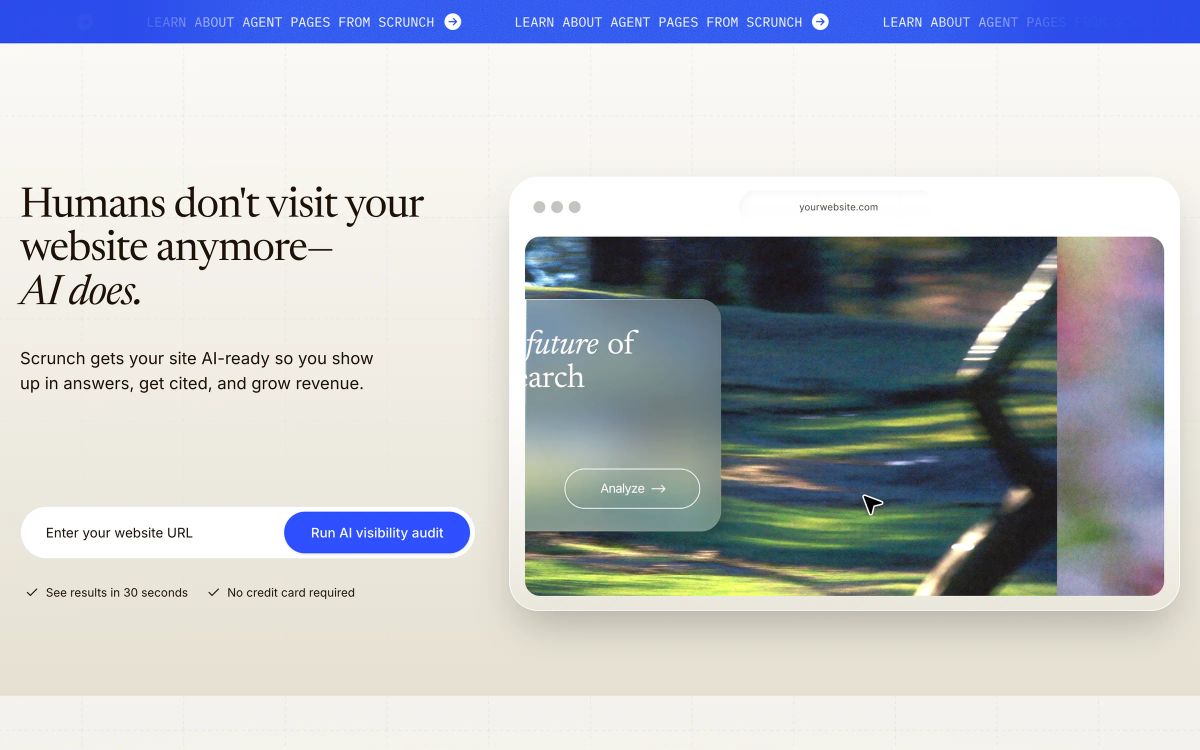
Scrunch fits a single-brand technical and content team checking whether AI agents can reach its website. Agent-traffic analysis shows activity for your web team to look at, and technical audits give it a concrete issue to fix.
Keep the citations next to that work, because each signal answers a different question. A citation shows a source used in an answer. An agent visit shows activity on your site. A technical audit points to an issue to fix. None replaces the others: if an answer cites a third-party comparison and none of your pages, fixing crawler access may help, but it doesn't explain why the third party was chosen.
Key features
Agent-traffic analysis shows which AI agents visit your site.
Technical audits flag access issues for your web team.
Domain and URL citations show which sources answers use.
Core tracks ChatGPT, Perplexity, Google AI Overviews and Copilot.
AXP and broader engine coverage, including Gemini, come with Enterprise.
Pricing
Scrunch Core field
Scope
Monthly price
USD 250
Brands
One
Users
Five
Unique prompts
125
Monthly responses
5,000
Monthly technical audits
Five
The monthly responses do not cover checking every question daily on all four platforms.
The trial lasts seven days, needs a card and charges you unless you cancel before it ends.
Who should choose it
Choose Scrunch when the technical findings will lead to work your web team can do. Bring that team into the trial while there is time to look at a real issue. If Gemini is essential to your customers, Core is the wrong plan: buying more responses won't add a platform the plan doesn't include.
5. AthenaHQ: best for content optimization teams
AthenaHQ fits a content team that wants to assign and publish optimization work inside the platform. If that becomes part of how your team gets work done, I can see the value.
The evidence leads two ways. An issue with your own content goes into the content workspace as an update and publishing task. A relevant third-party page that answers cite becomes an outreach task on the cited-page kanban board. I would give those to your editor and your outreach owner, rather than turn every citation gap into another article.
Key features
Starter includes the Base Optimization Agent for content updates.
Publishing integrations send updates to supported CMS platforms.
A cited-page kanban board turns third-party sources into outreach tasks.
Eleven AI platforms are available.
Enterprise adds the Advanced Optimization Agent, multiple countries and custom schedules.
Pricing
AthenaHQ Starter field
Scope
Monthly price
USD 295
Response credits
3,600
Members
Unlimited
Available platforms
Eleven
An ordinary response uses one credit; a heavier model response uses five credits; optional fan-outs use more.
ChatGPT, Gemini and Perplexity use ordinary credits. Claude, Grok, DeepSeek, Meta AI and Mistral use five credits per response, so the same number of answers can use very different amounts of your credits.
API access and extra credits are paid add-ons.
Starter covers a single country and a single language on the default schedule.
Free Essential is a one-off starting allowance, not a recurring monthly plan.
Who should choose it
Choose AthenaHQ when your team will use the optimization workflow, not just watch a question list. If you report across markets, settle the country and schedule limits first, because they need Enterprise. Pick heavier platforms because they answer a real business question, not because eleven sounds more complete.
6. Peec AI: best for citation analysis
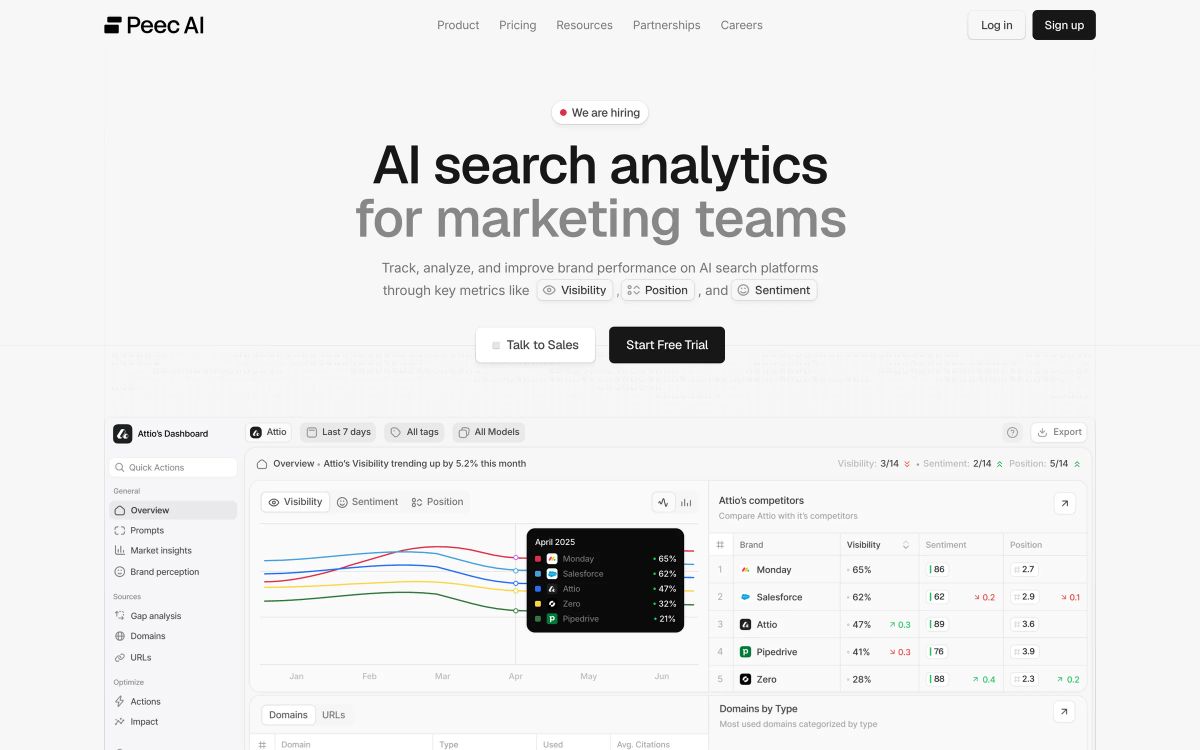
Peec AI fits an SEO analyst looking into the sources behind the answers. It sorts sources into owned and earned, which tells you whether the job is updating your own page or working on how a third party covers your category.
Suppose a comparison question keeps citing an editorial page about your competitors. I would read what it says about your category before assigning outreach. If the evidence shows your own page gives an incomplete answer, your editor has the clearer job. Peec's owned and earned action routes help you make that call, so the analyst gets a next task, not just a list of domains.
Key features
Sorts cited sources into owned and earned.
Suggests actions for your own pages and for outside sources.
Daily tracking on every monthly plan.
Unlimited users.
Pricing
Plan
Monthly price
Prompts
Projects
Starter
EUR 85
50
1
Pro
EUR 205
150
2
Advanced
EUR 425
350
5
Three chosen base platforms are included. Perplexity costs extra, so don't assume any three platforms you name fit the plan.
Enterprise expands the plan at a custom price.
Who should choose it
I would choose Peec when the source analysis changes your next assignment. Settle which platforms you need, and keep euro prices in euros before you compare the budget with a dollar subscription.
7. Otterly: best for daily AI visibility monitoring
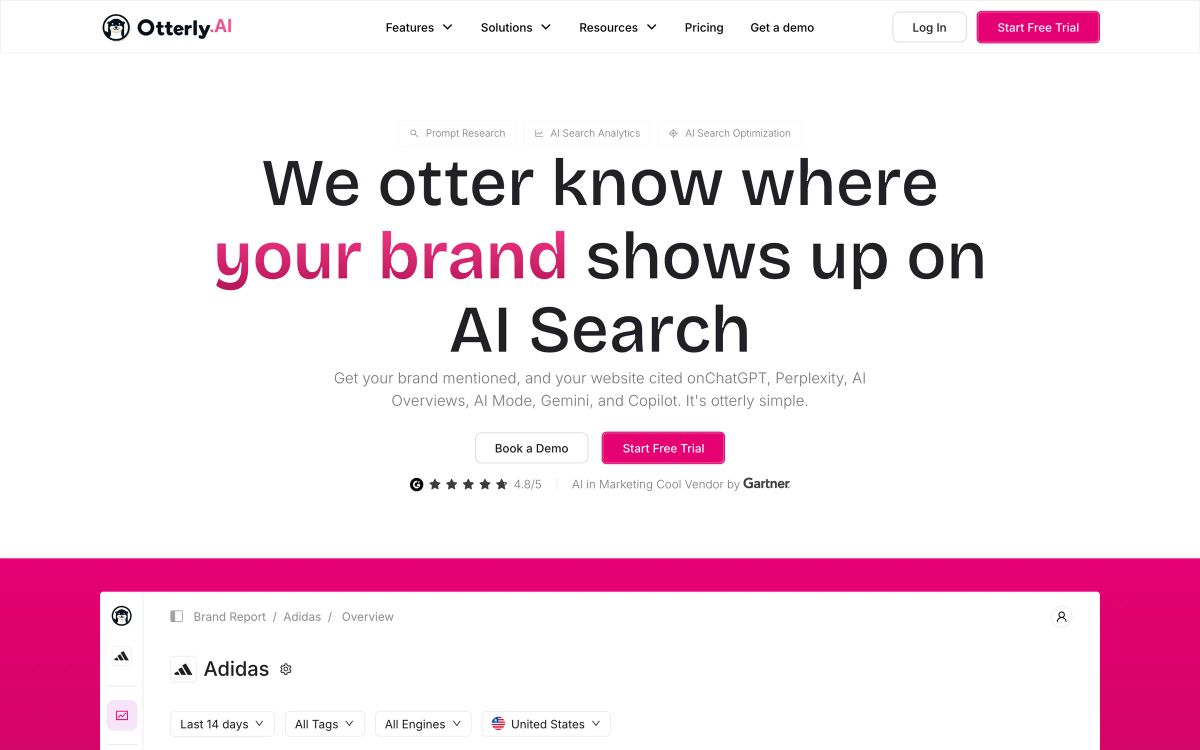
Otterly fits a lean marketing team with a stable list of questions and an existing content process. I would use it to keep daily monitoring going when your team already knows what to do with the findings.
Daily results are useful only when someone reviews them. They do not replace an analyst's weekly advice on their own.
Key features
Every prompt runs daily.
Tracks ChatGPT, Google AI Overviews, Perplexity and Copilot, with Gemini, Google AI Mode and Claude as paid additions.
Exports raw AI responses as CSV/JSON and citations as CSV, plus report and recommendation exports.
Looker Studio starts at Standard.
Unlimited team members on every plan.
Pricing
Plan
Monthly price
Daily prompts
Lite
USD 29
15
Standard
USD 189
100
Premium
USD 489
400
Lite allows one workspace; Standard and Premium allow unlimited workspaces.
The trial lasts seven days, needs no card and includes fifty prompts, separate from the paid Lite limit.
Who should choose it
Choose Otterly for steady daily monitoring of a fixed question list. Hand the raw answer to a writer when there's an issue, and use the report to explain the overall pattern to a client. For several client accounts, choose Standard: unlimited team members don't lift Lite's single-workspace limit. The Otterly review goes further into the reporting routine.
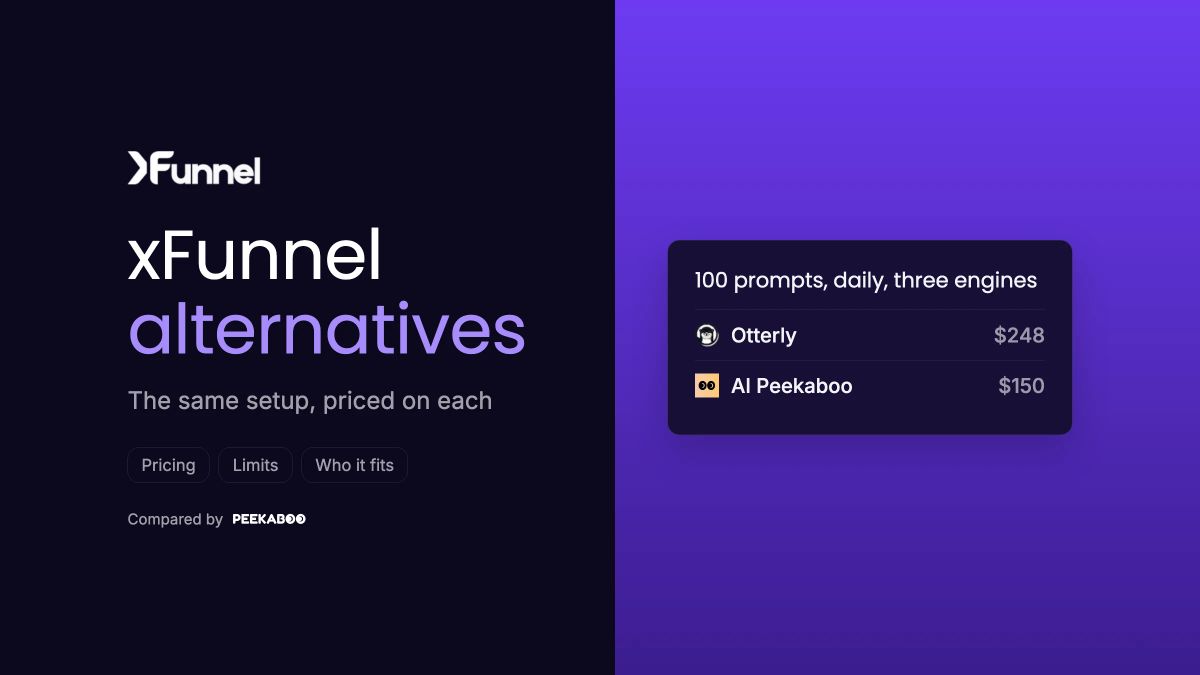
Cost for 100 questions across three platforms
Price this hypothetical monitoring routine:
Hypothetical monitoring field
Scope
Brands
One
Location
One, where supported
Unchanged commercial questions
100
Selected platforms
Three, listed below
Cadence
Daily for exactly 30 days
Required answer observations
9,000
Keep these selected platforms fixed:
ChatGPT
Gemini
Perplexity
Two plans fund that defined monitoring routine:
Plan
Monthly total
Scope distinction
AI Peekaboo, these three platforms
$150
Includes white-label reports and client share links, which start at $100
Otterly Standard with Gemini
USD 248
Retains other included base engines
These prices fund monitoring, while the wider products remain different. HubSpot needs expansion beyond its included 25 prompts for this list. Athena needs more than 3,600 ordinary credits. Choose the workflow you will use and fund the routine it needs.
Scrunch Core also misses both this panel's Gemini requirement and its 9,000-response volume. Peec's Pro prompt allowance is large enough for the question count, but Perplexity remains an addition. Profound's custom brand scope needs its own quote. I wouldn't assign an exact total to any of those without the missing scope and cost terms. A response allowance, an engine list and production credits are separate parts of the budget.
Why AI visibility scores differ between tools
I wouldn't rank these vendors by whose dashboard gives your brand the highest percentage. AI Peekaboo keeps nonmentions in the visibility denominator as zero. Profound's recorded visibility denominator uses responses that name at least one brand. A percentage calculated from those different observation sets cannot tell you which tool is performing better.
Use a consistent panel within the tool to understand change. Separate the questions about your category from named competitor comparisons and branded concerns, then review the answer evidence behind a movement. If your brand gains mentions while a rival gains more, your presence and relative share can tell different stories. If those mentions are negative, increased presence isn't the outcome you wanted either.
HubSpot advises reviewing across multiple days or weeks because responses change over time. I think that is the right reporting habit: inspect repeated patterns before making an assignment, and record when the question list or scope changes. Keep answer visibility separate from referral traffic and sales. Each measures a different part of what might be happening.
How to switch from xFunnel
I would judge the transition by whether your team can continue the useful work, rather than whether the first new chart resembles the old one. Before the handover:
Fix the selected engines, country, language and cadence. A different audience or engine mix needs a new comparison, even when the question text stays the same.
Keep competitor names and brand variations consistent. HubSpot's variations are case-sensitive, so check the names you expect the system to recognize.
Assign the weekly interpretation, editorial work and technical investigation to named people. Include the approval step for content or site changes.
Confirm the actual client deliverable: a share view, an export or a report in another system. Verify that the intended viewer can access the evidence needed for the discussion.
Establish a new baseline and record the handover. Judge subsequent movement against that scope, with the old reports retained for context.
Profound supports prompt CSV import, but its free brand trial uses industry-preset questions that cannot be customized. That trial can show the environment; it can't establish that your own panel works as intended. Use the actual agreed scope to evaluate that requirement.
For an agency, I would also check one complete client handoff before choosing the reporting configuration:
Can the account lead explain a finding?
Can the writer find its answer evidence?
Can the client see the agreed view?
That is a practical acceptance check, not a promise of better AI recommendations.
Does bringing over the questions restore the old history?
No, a question list doesn't carry the old answer observations with it. AI Peekaboo has no history before tracking starts, and Otterly has no historical backfill; its history is tied to the prompt. Keep prior reports as a separate record and mark the new baseline. I wouldn't promise a continuous historical chart or direct xFunnel data transfer without a confirmed transfer route.
Who will do the work that xFunnel’s weekly advice was meant to support? The free AI visibility checker can give your domain a generated-question report once, with a finding to start that conversation. I would turn a relevant customer concern into a question your team chooses to follow, then buy the replacement that helps its owner keep doing useful work with the answers.
How we checked this
Last checked: 2 October 2026.
Prices and plan limits: each vendor's public pricing page. Features: vendor help docs and product pages.
Frequently asked questions
Can I evaluate my own questions without giving a card?
Yes, but the no-card trials have different limits. Otterly gives you fifty prompts for seven days; HubSpot's twenty-eight-day trial evaluates its included list. I would choose a small group of questions that could change your team's next assignment, rather than try to fit the whole program into a trial. Profound's free brand trial uses fixed industry questions, so it cannot settle whether your own question panel is useful.
Can I use AI Peekaboo's trial to evaluate branded client reporting?
No, the trial and branded-report price gates don't overlap.
Trial eligibility requires:
• A new workspace.
• Monthly list price below USD 100.
• At least ten prompts per brand.
• A valid card.
The trial lasts fourteen days. White-label reports and branded share links start at USD 100, where billing begins at checkout. I would separate evaluating the answer evidence from evaluating the paid client deliverable, so you don't promise a trial that includes both.
Does AthenaHQ's response allowance tell me how many answers I can collect?
No, not until you decide which responses to collect.
Credit consumption depends on the response:
• Ordinary response: one credit.
• Heavier model response: five credits.
• Optional fan-outs: additional consumption.
Starter's 3,600 credits therefore aren't a promise of 3,600 answers for every selection. I would budget the engine mix your team will actually review, then decide whether the optimization workspace adds enough value to justify the purchase. A larger platform roster alone doesn't settle that decision.
Start with your own visibility.
See where your brand appears in AI answers and which competitors get mentioned.
 Filipe Lins Duarte