Relixir is powerful GEO automation, but the $500+ entry price is rarely the best fit for agencies and SMBs. Here are 8 alternatives for AI visibility tracking, citations, and practical reporting.
Relixir launched as Y Combinator's GEO automation solution, promising CMS integration that drives AI citations within 30 days without developer resources. While this model serves enterprises with substantial budgets and complex workflows, agencies, independent marketers, and brands beginning their AI visibility journey often find the $500+ entry price misaligned with their needs. After months of testing 50+ AI visibility platforms, the gap between enterprise solutions and practical alternatives becomes evident. In this article I am going to review Relixir as a tool, and talk about 8 great alternatives, depending on your needs and budget.
Tool
Starting Price
Ideal for
Pros
Cons
AI Peekaboo
$50 per month
SEO agencies & brands beginning their AI visibility journey
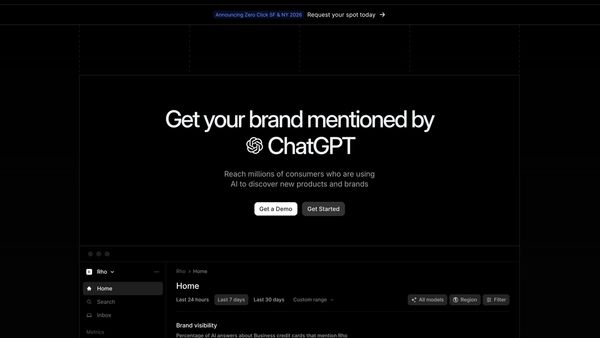
Backed by Y Combinator (Spring 2025 batch) with $1.7M in seed funding, Relixir serves over 200 of the fastest-growing companies. Its core promise is simple: show us your content, and we'll tell you what to write next, optimize it for AI engines like ChatGPT, Perplexity, and Gemini, and publish it all without any developer work on your end.
Unlike older SEO tools that treat AI visibility as a secondary feature, Relixir was built natively for the AI era. Every decision, from the data it tracks to the content it generates, is optimized around how large language models actually consume and cite information.
Relixir Core Features
AI Search Visibility Analytics
Relixir simulates thousands of fan-out queries across ChatGPT, Perplexity, Gemini, and Google AI Overviews to answer a single, critical question: How does AI actually see your brand?
Most tools stop at "you were mentioned 3 times." Relixir goes deeper. It reveals semantic understanding, contextual relevance, and where your brand falls in the competitive landscape. You get weekly AI search reports, visibility analytics, social mention tracking, and unlimited historical data storage. The platform tracks up to 2,000 prompts on the Professional plan and unlimited on Enterprise.
Competitive Gap Detection
Relixir identifies the exact blind spots where competitors are being cited in AI responses while you're not. Instead of guessing, you see actionable gaps: "Competitors appear in 45% of finance and AI queries, but you only appear in 12%. Here's why, and here's what to write."
This moves GEO from passive monitoring to strategic planning.
GEO Content Engine (Autonomous Publishing)
This is where Relixir stands apart. The platform doesn't just tell you what to optimize; it does the optimization for you.
The Content Engine automatically generates 20 to 100 blog posts monthly (depending on plan), publishes them directly to your CMS with enterprise-grade approval workflows, and tracks performance. Relixir claims it can "flip AI rankings in under 30 days with no developer lift," which has resonated with fast-moving B2B teams.
You configure agent guidelines, and the system deploys changes across your content inventory. One-click CMS integrations with WordPress, Webflow, and custom platforms mean no engineering lift.
Enterprise Guardrails and Approvals
The Professional and Enterprise tiers include mandatory approval workflows, brand safety controls, and dedicated strategists. Critical for regulated industries (finance, healthcare, legal) where publishing without review is a non-starter.
Keyword and Prompt Agents
Relixir's "deep research agents" monitor Reddit, forums, and news to surface trending topics and questions worth optimizing for. You get Social Mining, Keyword Trend Analysis, and automated Action Center suggestions every week.
Relixir Pricing
Relixir offers three main pricing tiers:
Starter: $500/month gets you 500 tracked prompts across major AI engines, 20 AI-optimized blog posts monthly, 3 keyword and research agents, weekly AI Search Reports, unlimited historical data, CMS integrations, and Help Center access.
Professional: Custom pricing (estimated $1,200 to $2,000/month) includes 2,000 tracked prompts, 100 blog posts monthly, 10 keyword agents, and 1:1 support.
Enterprise: Custom pricing with unlimited tracked prompts, unlimited content generation, unlimited keyword agents, and hands-on team support.
Additional costs apply: $0.50 per extra prompt tracked and $10 per extra blog generated monthly.
Best Alternatives to Relixir
1. AI Peekaboo
All-in-one AEO platform with white-labeling and agency superpowers.
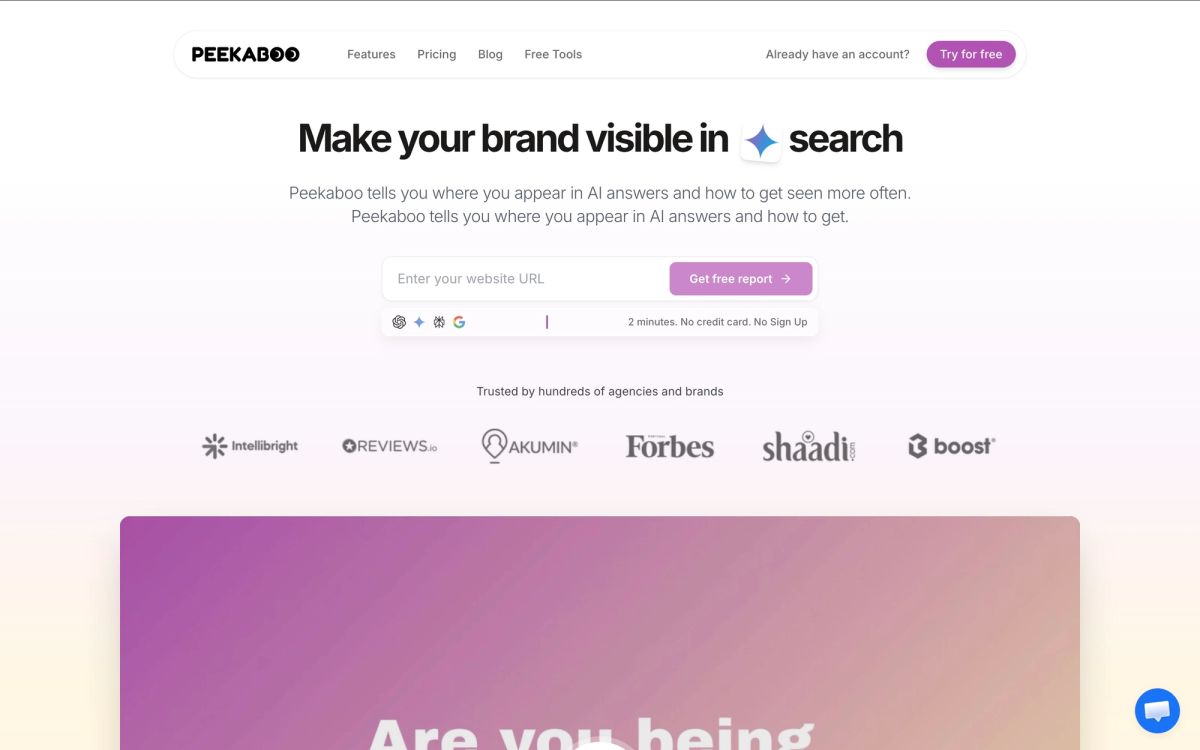
AI Peekaboo is built for marketing agencies and brands starting their AEO journey who want AI visibility without the enterprise price tag. At $50 to $200 per month, it's 10 times cheaper than Relixir's entry point, and it bundles features that Relixir charges extra for or doesn't offer at all.
Key Features
Multi-engine visibility tracking (ChatGPT, Perplexity, Gemini, Google AI Overviews)
White-label dashboards (rebrand as your own for clients)
Google Search Console integration
Looker Studio connector (instant, shareable reports)
AI-powered chatbot for client interaction
Daily prompt tracking and competitor benchmarking
Share of voice analytics
Pros
Most affordable entry ($50/month gets you started)
Purpose-built for agencies (50+ agencies actively use it)
White-labeling without expensive enterprise contracts
Looker Studio connector saves hours on report building
GSC integration connects AI visibility to organic search data
Exceptional support (personal attention from founders)
Cons
No autonomous content generation (you manage optimization manually)
Smaller prompt database than Profound or Relixir
Lighter on enterprise security features (no SOC 2 Type II)
No built-in content writer (requires separate tool)
Yes, if you're an agency or a brand starting to track AI visibility and report to clients without building a custom dashboard. AI Peekaboo trades Relixir's autonomous content generation for white-label reporting, lower cost, and ease of use. You still need to decide what to optimize (AI Peekaboo tells you the gaps, but you implement the fix), but for most SMBs, that's the right trade-off. The Looker Studio connector is genuinely clever and saves enormous time on client reporting.
If you're managing multiple client accounts, white-label AI monitoring for agencies mean you can layer profit into your service delivery without apologizing for tooling costs.
2. Promptwatch
Mid-market sweetspot: daily tracking and real-time insights without content creation.
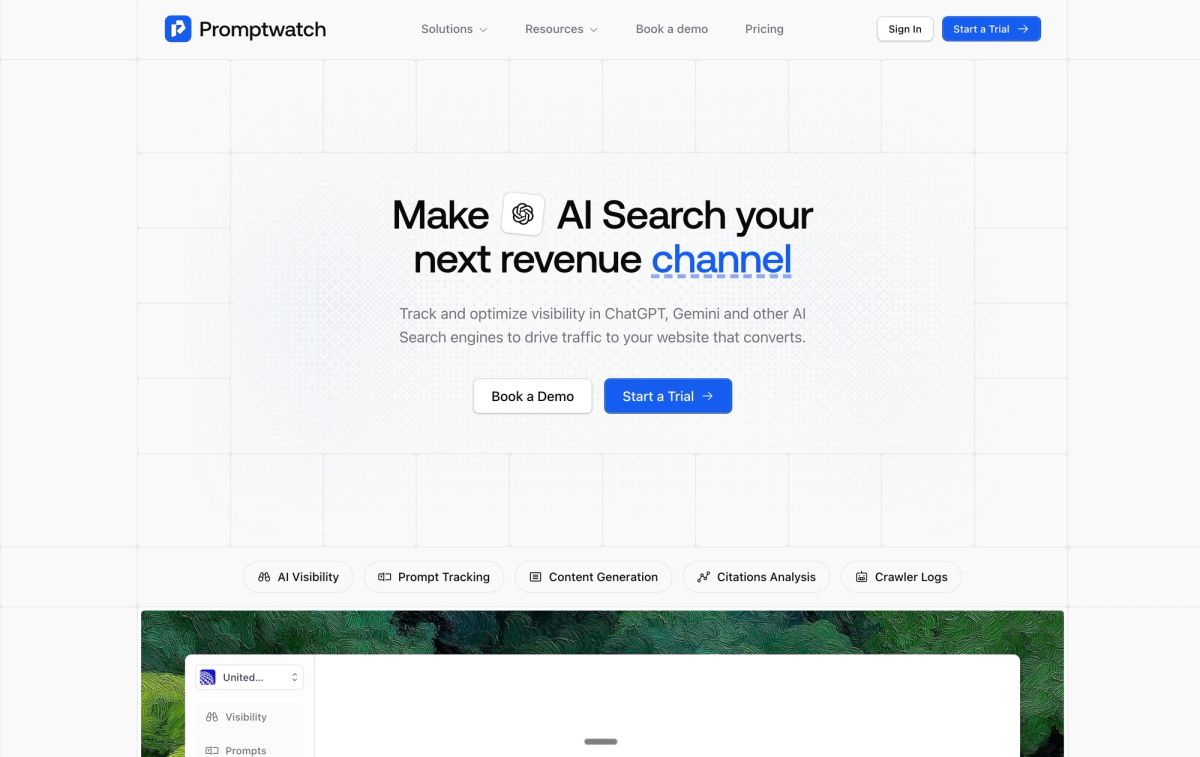
Promptwatch positions itself as the "thinking marketer's" AI visibility platform. It tracks your brand mentions daily across ChatGPT, Perplexity, Google AI Overviews, and Google AI Mode and provides the analytical depth that separates serious AEO practitioners from tool-checkers.
Key Features
Daily prompt tracking (50 to 100 prompts depending on plan)
Source-level citation tracking (exact URLs AI uses when citing you)
Brand sentiment analysis (tone of AI mentions)
Answer Gap reports (what you're missing, ranked by impact)
Google Search Console integration
Unlimited Monitors (organize prompts by campaign, product, region)
API access (Enterprise plan)
Server log analysis capabilities (Growth plan)
Pros
Daily data refresh (vs. weekly on some competitors) enables responsive strategy
Source-level attribution is exceptionally granular
Mid-tier pricing ($99 to $579/month) positions it perfectly between budget tools and enterprise suites
Answer Gap reports are actionable (not just vanity metrics)
Excellent for SaaS/Tech companies tracking competitive keywords
Users report exceptional ROI for the price
Cons
No content generation or publishing
No white-label reporting (limited for agencies)
Lighter on competitor benchmarking than Profound or Scrunch
No personal onboarding on lower tiers
Pricing
Essential: $99/month (50 prompts daily)
Professional: $249/month (150 prompts daily)
Business: $579/month (350 prompts daily)
Is Promptwatch the right alternative to Relixir?
If you want real-time visibility insights without the content generation overhead, absolutely. Promptwatch is for teams that say, “We know what to write; we just need to see what AI is actually citing.” It’s stronger on analytics and attribution than Relixir, but you own the optimization work. For SaaS marketing teams with in-house content, it’s often the smarter choice. For enterprises needing automated content publishing, Relixir is still the pick, but if you’re not bottlenecked on content creation and you want daily data updates, Promptwatch offers better value.
3. Rankshift
European-first, credit-based pricing, unlimited flexibility for global teams
Rankshift emerged as a lean alternative to Peec AI, approaching AEO from a credit-based model where you pay for what you use, not for seat limits or arbitrary prompt caps. It's particularly strong for global teams, agencies managing multiple clients, and companies that need deep reach into non-English markets.
Key Features
Credit-based pricing (1 credit = 1 prompt track in 1 model and 1 locale)
Unlimited users and unlimited projects on all plans
30-day free trial (no credit card needed)
Coverage expands across tiers: ChatGPT, Perplexity, Claude, Gemini, and more
Competitor benchmarking and prompt management
Global model coverage (no country restrictions)
Daily tracking updates
Slack community support
Pros
Transparent credit system means no surprise overage charges
Unlimited users and projects (agencies love this; scale without per-seat fees)
30-day free trial with full features (genuinely free)
No geographic restrictions (track any country, any language)
Budget flexibility (Starter at EUR 49/month scales to EUR 639/month for high volume)
Weekly feature releases (platform is actively evolving)
Strong European data privacy (GDPR-aligned)
Cons
Newer platform (less historical data than Profound or Relixir)
European pricing in EUR (currency fluctuation for US teams)
LLM coverage expands with higher tiers (starter has core models only)
Less prescriptive on optimization (gives data, not recommendations)
Pricing
Starter: EUR 49/month (5,000 credits, approximately 25 prompts daily)
Growth: EUR 99/month (12,500 credits, approximately 65 prompts daily)
Accelerator: EUR 179/month (25,000 credits)
Enterprise: EUR 339 to EUR 639/month (50,000 to 100,000 credits)
Is Rankshift the right alternative to Relixir?
Yes, if you're a global agency managing multiple clients or a SaaS company optimizing across regions. Rankshift's unlimited user and project model means you can onboard your entire team without per-seat charges, and the credit system scales smoothly. The 30-day free trial is genuine (no card required), making it easy to test. For European teams or companies with strict data privacy requirements, it's an even stronger choice. Trade-off: it's newer, so historical data is limited, and you won't get Relixir's content generation. But for visibility tracking and benchmarking, it's excellent value.
4. KNWN
The ultra-budget entry point with exceptional value: AI visibility for startups and SMBs
KNWN is the fastest way to start measuring your AI visibility. At $49 per month for the Pro tier, it offers exceptional value compared to competitors charging two to three times as much. It won't replace Relixir's enterprise automation, but for early-stage companies and small teams that need to know if AI is seeing them, KNWN delivers.
Key Features
AI Visibility Score (0 to 100 scale of your brand's discoverability)
Audience Fit Score (how well your content aligns with user intent)
Custom prompt tracking (10 prompts on Pro, 25 on Growth, 50 on Scale)
Coverage: ChatGPT, Gemini, Claude, Perplexity
Full Analytics Dashboard
Trending Queries and Topic Gap Analysis
GEO Analytics (topic gap analysis)
Answer Correction and Validation (manage AI misinformation about your brand)
LLMO Metrics (track which AI models mention you most)
Multiple brand support (1 brand on Pro, 2 on Growth, 5 on Scale)
Pros
Starting at $49/month Pro tier, exceptional value for price relative to prompt tracking
Visibility Score and Audience Fit Score are intuitive metrics
Answer Correction features are unique (useful for brand reputation)
Multiple brand support at all tiers (differentiated from many competitors)
No long contracts or minimum commitments
Simple, non-overwhelming interface
Growth tier at $99/month includes 25 prompts, still strong value
Cons
Pro tier limited to 10 prompts only (requires upgrade to Growth at $99/month for 25 prompts)
Basic feature set (no content generation, limited competitor benchmarking)
Country limits on lower tiers (need higher plan for multi-country)
Scale tier at $199/month becomes pricier for small teams
Only if you're just starting your AEO journey and need an affordable way to validate the concept, or if you're a small team managing just a few brands. KNWN is not a replacement for Relixir's end-to-end automation; it's a starting point. If your budget is under $100/month and you want to learn before committing to a heavier tool, the Growth tier at $99/month is excellent. But if you're serious about scaling AI search traffic and want content automation, you'll outgrow KNWN quickly. It's a stepping stone, not a destination.
5. Goodie AI
Enterprise content and visibility hybrid: monitoring and generation in one platform.
Goodie AI is the closest competitor to Relixir on feature parity. Like Relixir, it bundles visibility tracking, competitor benchmarking, and content generation in a single platform. The difference: Goodie is easier to onboard, has a more intuitive dashboard, and includes sentiment analysis that many teams find actionable.
Key Features
Real-time visibility monitoring across ChatGPT, Gemini, Claude, Perplexity, DeepSeek
Intelligent prompt engine (recommends what to optimize based on ICP and audience)
Attribution dashboard (connects AI visibility to website sessions and revenue)
AEO content writer (generates optimized content)
Sentiment analysis (tone of AI mentions, not just frequency)
Competitive benchmarking and gap analysis
Email and Slack support
Pros
Dashboard is more intuitive than Profound or Relixir
Content writer is focused on AEO (not generic copywriting)
Attribution to revenue is clearer than most competitors
Sentiment analysis helps with brand reputation, not just visibility
Teams report tangible results within 6 weeks
Smaller learning curve than enterprise alternatives
Cons
Quote-based pricing (approximately $495/month entry, but unclear publicly)
Onboarding requires hands-on support (not self-serve)
Data freshness can vary by engine
Not as transparent on pricing as competitors
Content generation is lighter than Relixir's (5 to 20 posts per month, not 100+)
Pricing
Starts at approximately $495/month (custom thereafter)
Enterprise: Custom
Is Goodie AI the right alternative to Relixir?
If you want content generation and monitoring without Relixir's enterprise overhead and complexity, Goodie is a legitimate choice. It's often cheaper to onboard and faster to show results. The sentiment layer is valuable for brand-conscious companies. Trade-off: Goodie's content generation is lighter than Relixir's (it won't write 100 blog posts per month), and pricing is opaque. If you need massive content automation, Relixir wins. If you want to balance monitoring, generation, and ease of use, Goodie is compelling.
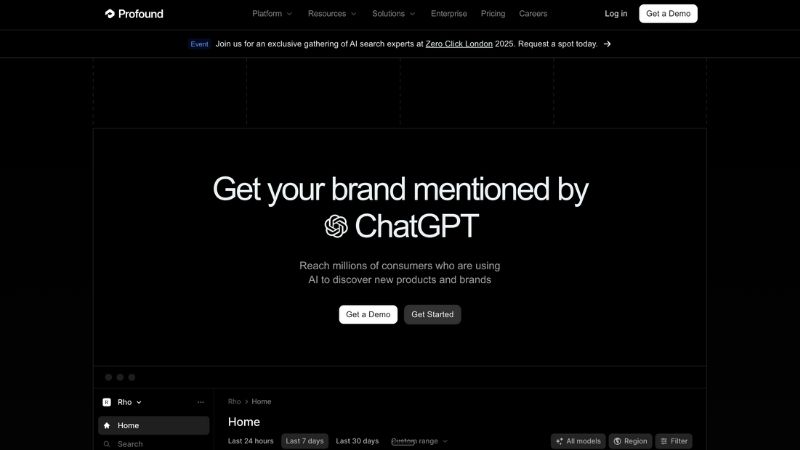
6. Profound
The G2 AEO leader: enterprise-grade analytics with unique data assets.
Profound is the only platform officially named G2's "definitive leader in Answer Engine Optimization" for its Winter 2026 report. It's built for enterprises that need exhaustive visibility data, advanced compliance, and the deepest possible attribution.
Key Features
Real-time monitoring across multiple AI engines
Prompt Volumes (130M real user conversations from opt-in panels, updated weekly)
Agent Analytics (server-log ingestion via Cloudflare, Vercel, AWS CloudFront to verify AI crawler behavior)
Citation Authority Scoring (measure source quality, not just mentions)
Sentiment Analysis (brand polarity across AI responses)
Content Workflows (automation layer for optimization execution)
Multi-region tracking (US, UK, France, Germany, Spain, more)
Only if you’re enterprise-sized and need the absolute deepest data. Profound’s Prompt Volumes and server-log integration are genuinely unique and justify the price for large organizations. But for brands starting their AI search journey, Relixir and Profound are both overkill. You’re better off with AI Peekaboo, Promptwatch, or Goodie. If you have $5K+/month budget and need exhaustive compliance and attribution, Profound is the safest choice.
7. Hall
Conversation-level intelligence: track how AI talks about your brand, not just if it's showing up.
Hall took a different angle, monitoring the conversation context a brand appeared in rather than raw mention counts. That approach is no longer purchasable on its own: Tracksuit acquired Hall in July 2026.
Not any more. Hall's conversation-level view was genuinely useful, but Tracksuit acquired it in July 2026 and it is closed to new customers, so it is not a Relixir alternative you can act on today.
8. Bear AI
Lean self-serve hybrid: visibility tracking and outreach automation at competitive pricing.
Bear AI is the scrappy alternative that combines visibility tracking with automated outreach and light content suggestions. Built by marketers for marketers, it's positioned as the self-serve alternative to enterprise tools, faster to deploy, easier to understand, cheaper to run.
Key Features
Real-time AI visibility monitoring (ChatGPT, Google AI, Perplexity, more)
Granular source analysis (which domains AI cites when mentioning you)
Automated content suggestions (rewrite tips based on visibility gaps)
AI-powered outreach (contact website owners to secure citations)
Competitor benchmarking
Share of mentions tracking
Self-serve setup (no sales process)
Pros
$200/month entry is reasonable for self-serve (less than Goodie or Profound)
Outreach automation is unique (not every platform includes it)
Automated content suggestions are practical and actionable
Lean interface (not overwhelming)
Fast deployment (no lengthy onboarding)
Transparent pricing (no hidden costs)
Cons
Smaller platform (less battle-tested than competitors)
Analytical depth is lighter than Profound or Relixir
No autonomous publishing (you still manage execution)
Limited content generation (suggestions, not full articles)
Newer to market (less historical data)
Pricing
Self-serve: $200/month (basic tracking and outreach)
Custom: Enterprise pricing available
Is Bear AI the right alternative to Relixir?
If you're a growing team (not yet enterprise) that wants tracking and outreach without the complexity of Relixir, Bear is worth testing. It's faster to deploy, cheaper, and more straightforward. The outreach angle is genuinely different. Trade-off: it's newer and has less analytical depth. If you're running a lean operation and need visibility and some execution help, Bear fits well. If you need massive content automation and exhaustive data, Relixir is still the answer.
So what’s the best alternative to Relixir AI?
Relixir is built for one use case: enterprise teams with deep content needs and bigger budgets. But for everyone else, and that's most teams, one of the eight alternatives above will serve you better.
Here's how I'd choose:
Fastest ROI and white-label reporting: AI Peekaboo ($50 to $200/month)
Best for SMBs starting AEO: KNWN ($49 to $199/month)
Best mid-market analytics: Promptwatch ($99 to $199/month)
Best enterprise data depth: Profound ($99 to custom enterprise pricing)
The right tool depends on three things: budget, team size, and content maturity. If you're bootstrapped or agency-focused, start with Peekabo. If you're mid-market and want to balance monitoring with execution, Promptwatch hits the sweet spot. If you're enterprise and need exhaustive data, Profound or Relixir are the best picks.
Full transparency: I’m the Founder and CEO of AI Peekaboo, and we’re included in this list. I’ve seen firsthand how AI Peekaboo drives a measurable understanding and results for agencies and brands to better understand their presence in AI answers. That said, I’ve made every effort to provide an honest, balanced comparison. The other tools featured here are genuinely strong options, each with unique strengths and proven track records. My goal isn’t to claim that AI Peekaboo is the best alternative to Relixir AI. It’s to help you find the right fit for your specific needs, budget, and growth stage.
Despite my connection to AI Peekaboo, this comparison offers value because I’ve done the research you don’t have time for. I’ve analyzed various tools, compared pricing models, and identified what differentiates each tool's approach to AI SEO (or AEO/GEO). Rather than hiding my bias, I’m acknowledging it upfront so you can factor it into your decision-making. For a broader view, see best AI monitoring tools for marketing teams.
Frequently Asked Questions
Why should I care about AI visibility if I'm already ranking well in Google?
Google is still dominant, but its search traffic is declining. ChatGPT has 3.8 billion monthly visits and is capturing the high-intent queries, especially for research and discovery. By 2027, over 90% of US internet users are projected to use AI for information retrieval. If AI doesn't see you, you're invisible to that growing segment. AEO is not a replacement for SEO; it's a complementary strategy that's becoming table stakes.
Which tool is best for agencies managing multiple clients?
Peekaboo. Its white-label functionality and per-client billing model are purpose-built for agencies. Rankshift is also strong if you need unlimited projects and users at a fixed monthly cost. Both are cheaper to run at scale than enterprise tools.
How long does it take to see results in AI visibility?
Relixir claims 30 days; other platforms typically show meaningful gains in 6 to 12 weeks. It depends on content gaps, competition, and your starting point. If you're not mentioned at all in AI responses, the first win is usually proving you can be cited. Then it's about scaling that visibility. A good benchmark: if you're starting from zero, expect 60 to 90 days before confident trends emerge.
Do I need content creation tools if I pick one of these alternatives?
If you choose Relixir or Goodie AI, no, they include content generation. If you choose Promptwatch, Rankshift, Hall, or Peekaboo, yes, you'll need to write the content yourself or use a separate tool like Writesonic, Jasper, or Claude. KNWN and Bear AI are middle-ground: they give suggestions, but you own the writing.
How do I know if Relixir or an alternative is actually moving the needle?
Track these metrics: mention frequency (how often your brand appears in AI responses), Share of Voice (your mentions vs. competitors), sentiment (tone of mentions: positive, neutral, negative), source attribution (which of your pages are cited), and traffic impact (referrals from ChatGPT, Perplexity, etc.). Most of the platforms in this guide track these automatically. Pick one, set a baseline, and re-measure after 90 days. If you're not moving 20 to 30% on any metric, either the tool or the strategy needs adjustment.
Start with your own visibility.
See where your brand appears in AI answers and which competitors get mentioned.
Start with Peekaboo ($50/month) or KNWN ($49/month) to prove the concept. Once you see traction (increasing mentions, traffic), you can invest in a heavier tool. Most teams regret not starting early with AEO, not investing "too much" in it. Begin small, measure, scale.
 Filipe Lins Duarte